Owaisi Criticizes Shah's UCC Push
BJP, RSS face criticism over Uniform Civil Code. Owaisi speaks out.
'%3E%3Crect%20width%3D'96'%20height%3D'96'%20fill%3D'%231A5276'%2F%3E%3Ccircle%20cx%3D'30'%20cy%3D'24'%20r%3D'44'%20fill%3D'%23fff'%20opacity%3D'.12'%2F%3E%3Ccircle%20cx%3D'60'%20cy%3D'74'%20r%3D'40'%20fill%3D'%23000'%20opacity%3D'.10'%2F%3E%3C%2Fg%3E%3Cg%20fill%3D'%23fff'%3E%3Cpath%20d%3D'M31%2041%20L48%2031%20L65%2041%20Z'%2F%3E%3Crect%20x%3D'33'%20y%3D'43'%20width%3D'4'%20height%3D'17'%2F%3E%3Crect%20x%3D'41'%20y%3D'43'%20width%3D'4'%20height%3D'17'%2F%3E%3Crect%20x%3D'51'%20y%3D'43'%20width%3D'4'%20height%3D'17'%2F%3E%3Crect%20x%3D'59'%20y%3D'43'%20width%3D'4'%20height%3D'17'%2F%3E%3Crect%20x%3D'30'%20y%3D'62'%20width%3D'36'%20height%3D'4'%20rx%3D'1'%2F%3E%3C%2Fg%3E%3C%2Fsvg%3E)
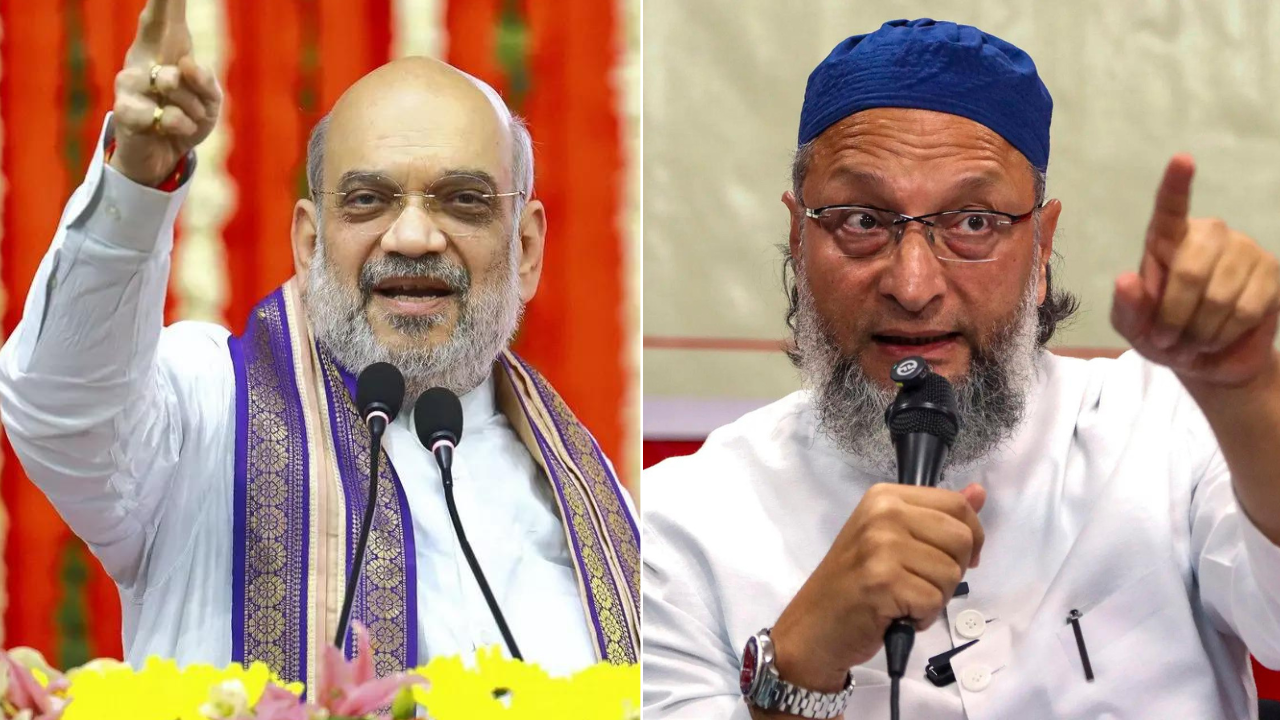
Asaduddin Owaisi, a prominent leader of the All India Majlis-e-Ittehadul Muslimeen, has criticized the Bharatiya Janata Party (BJP) and the Rashtriya Swayamsevak Sangh (RSS) for their push to implement a Uniform Civil Code (UCC) in India. Owaisi's comments came in response to recent statements made by Home Minister Amit Shah, who has expressed support for the UCC.
According to Owaisi, the BJP and RSS are attempting to impose Hindu law on non-Hindus, which he believes is a threat to the country's diverse population. He argued that the UCC would undermine the rights of minority communities, including Muslims, Christians, and others.
The Uniform Civil Code is a long-standing demand of the BJP and RSS, who argue that it would help to promote national unity and consistency in the country's laws. However, critics like Owaisi argue that the UCC would be an attempt to impose a single, dominant culture on the country's diverse population.
India is a secular country with a diverse population, comprising people from various religions, castes, and cultures. The country's laws and regulations are designed to protect the rights of all citizens, regardless of their religion or background. The debate over the UCC has sparked a heated discussion about the role of religion in Indian law and the potential impact on minority communities.
Owaisi's criticism of the BJP and RSS is not surprising, given his party's strong stance on issues related to minority rights and secularism. The All India Majlis-e-Ittehadul Muslimeen has consistently argued that the rights of minority communities must be protected and that any attempts to impose a single, dominant culture on the country would be resisted.
The debate over the UCC is likely to continue in the coming days and weeks, with various stakeholders weighing in on the issue. While some argue that the UCC would promote national unity and consistency, others believe that it would undermine the rights of minority communities and threaten the country's secular fabric.
In conclusion, the controversy surrounding the UCC highlights the complex and sensitive nature of issues related to religion and law in India. As the debate continues, it is essential to consider the potential impact on minority communities and the country's secular fabric.
The UCC issue has significant implications for India's political and social landscape. The outcome of this debate will likely have far-reaching consequences for the country's minority communities and its secular identity.
What the UCC push means for Mumbai and India is that the country is at a critical juncture, where the rights of minority communities are being debated and discussed. The outcome of this debate will shape the country's future and its commitment to secularism and diversity.
Frequently asked questions
What is the Uniform Civil Code?
The Uniform Civil Code is a proposed law that aims to unify the personal laws of all citizens in India, regardless of their religion.
Why is Owaisi criticizing the BJP and RSS over the UCC?
Owaisi believes that the UCC would impose Hindu law on non-Hindus and undermine the rights of minority communities.