India Blocks Forced Labour Imports
India tightens trade policy, blocks forced labour imports. New clause takes effect soon.
'%3E%3Crect%20width%3D'96'%20height%3D'96'%20fill%3D'%234A235A'%2F%3E%3Ccircle%20cx%3D'30'%20cy%3D'24'%20r%3D'44'%20fill%3D'%23fff'%20opacity%3D'.12'%2F%3E%3Ccircle%20cx%3D'60'%20cy%3D'74'%20r%3D'40'%20fill%3D'%23000'%20opacity%3D'.10'%2F%3E%3C%2Fg%3E%3Cg%20fill%3D'none'%20stroke%3D'%23fff'%20stroke-width%3D'3'%3E%3Ccircle%20cx%3D'48'%20cy%3D'48'%20r%3D'16'%2F%3E%3Cellipse%20cx%3D'48'%20cy%3D'48'%20rx%3D'6.5'%20ry%3D'16'%2F%3E%3Cline%20x1%3D'32'%20y1%3D'42'%20x2%3D'64'%20y2%3D'42'%2F%3E%3Cline%20x1%3D'32'%20y1%3D'54'%20x2%3D'64'%20y2%3D'54'%2F%3E%3C%2Fg%3E%3C%2Fsvg%3E)
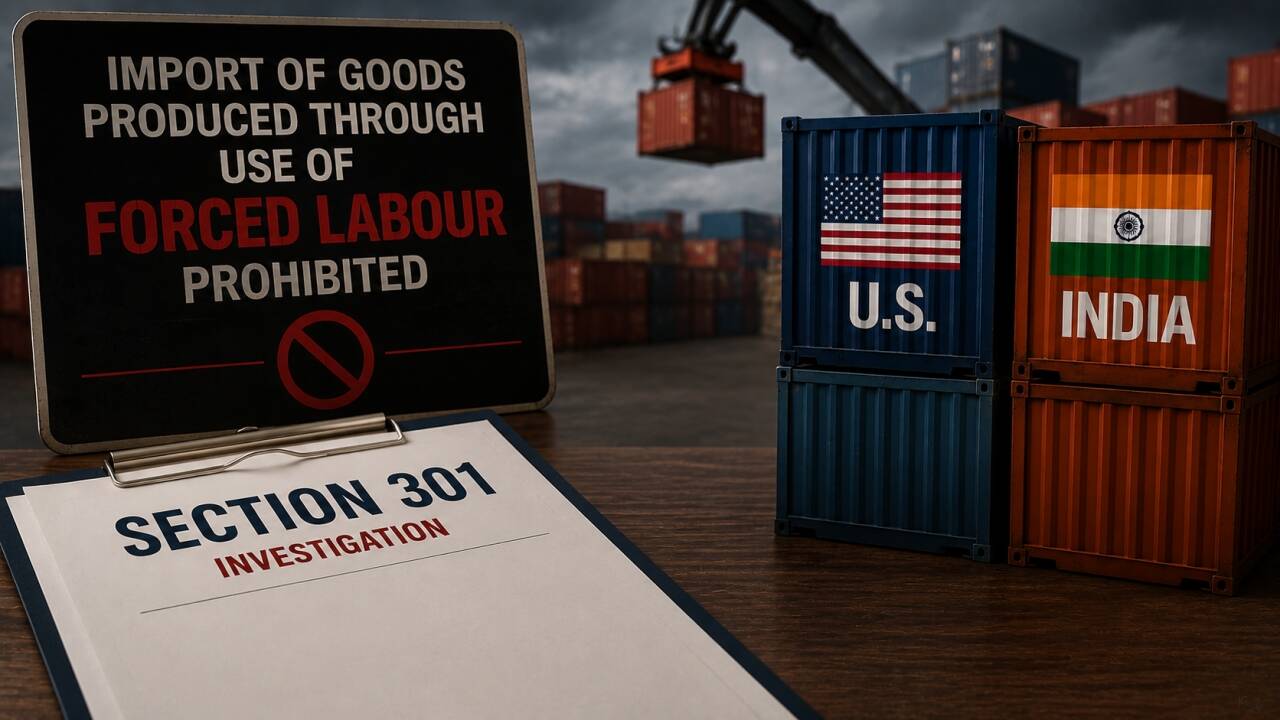
India has introduced a significant amendment to its foreign trade policy, allowing the government to block imports of goods produced using forced labour. This move comes as the US Trade Representative (USTR) conducts a probe into India's trade practices.
The new clause, which will be incorporated into the policy, will utilize the International Labour Organisation's (ILO) definition of forced labour to identify and restrict such imports. This definition encompasses various forms of coercion, including threats, violence, and deception, used to exploit workers.
According to the notification, the government will be empowered to take action against imports that violate the ILO's forced labour standards. The move is seen as a strengthening of India's legal framework for trade negotiations, enabling the country to better comply with international labour standards.
The notification will become effective thirty days after its issuance, giving importers and exporters a brief period to adjust to the new regulations. This change is expected to have a significant impact on India's trade relationships, particularly with countries that have been accused of using forced labour in their industries.
India's decision to block imports linked to forced labour is a response to growing international pressure to address the issue of modern slavery in global supply chains. The US, in particular, has been vocal about the need for countries to take action against forced labour, and the USTR's probe is a reflection of this concern.
The ILO estimates that there are over 40 million victims of modern slavery worldwide, with many being forced to work in industries such as textiles, construction, and agriculture. By incorporating the ILO's definition of forced labour into its trade policy, India is taking a crucial step towards combating this issue and protecting the rights of workers.
The move is also seen as a positive development for India's trade relationships, as it demonstrates the country's commitment to upholding international labour standards. This, in turn, is expected to enhance India's reputation as a responsible trading partner and improve its chances of negotiating favourable trade agreements with other countries.
In the context of India's trade policy, this amendment is a significant step towards promoting fair labour practices and protecting the rights of workers. It is also a reflection of the government's efforts to strengthen its legal framework and comply with international standards.
Overall, India's decision to block imports linked to forced labour is a welcome move that is expected to have a positive impact on the country's trade relationships and its reputation as a responsible trading partner. The move is also a crucial step towards combating modern slavery and protecting the rights of workers worldwide.
As the notification becomes effective, importers and exporters will need to ensure that their supply chains are free from forced labour, and that they are complying with the ILO's standards. This will require a significant effort from industries that have been accused of using forced labour, and it will be important for the government to monitor and enforce the new regulations effectively.
In conclusion, India's move to block imports linked to forced labour is a significant development that is expected to have a positive impact on the country's trade relationships and its reputation as a responsible trading partner. The move demonstrates India's commitment to upholding international labour standards and protecting the rights of workers, and it is a crucial step towards combating modern slavery worldwide.