Oil Prices Rise For 4th Day Amid Middle East Tensions
Oil prices surge past $85, US-Iran conflict escalates, and shipping routes are under threat.
'%3E%3Crect%20width%3D'96'%20height%3D'96'%20fill%3D'%234A235A'%2F%3E%3Ccircle%20cx%3D'30'%20cy%3D'24'%20r%3D'44'%20fill%3D'%23fff'%20opacity%3D'.12'%2F%3E%3Ccircle%20cx%3D'60'%20cy%3D'74'%20r%3D'40'%20fill%3D'%23000'%20opacity%3D'.10'%2F%3E%3C%2Fg%3E%3Cg%20fill%3D'none'%20stroke%3D'%23fff'%20stroke-width%3D'3'%3E%3Ccircle%20cx%3D'48'%20cy%3D'48'%20r%3D'16'%2F%3E%3Cellipse%20cx%3D'48'%20cy%3D'48'%20rx%3D'6.5'%20ry%3D'16'%2F%3E%3Cline%20x1%3D'32'%20y1%3D'42'%20x2%3D'64'%20y2%3D'42'%2F%3E%3Cline%20x1%3D'32'%20y1%3D'54'%20x2%3D'64'%20y2%3D'54'%2F%3E%3C%2Fg%3E%3C%2Fsvg%3E)
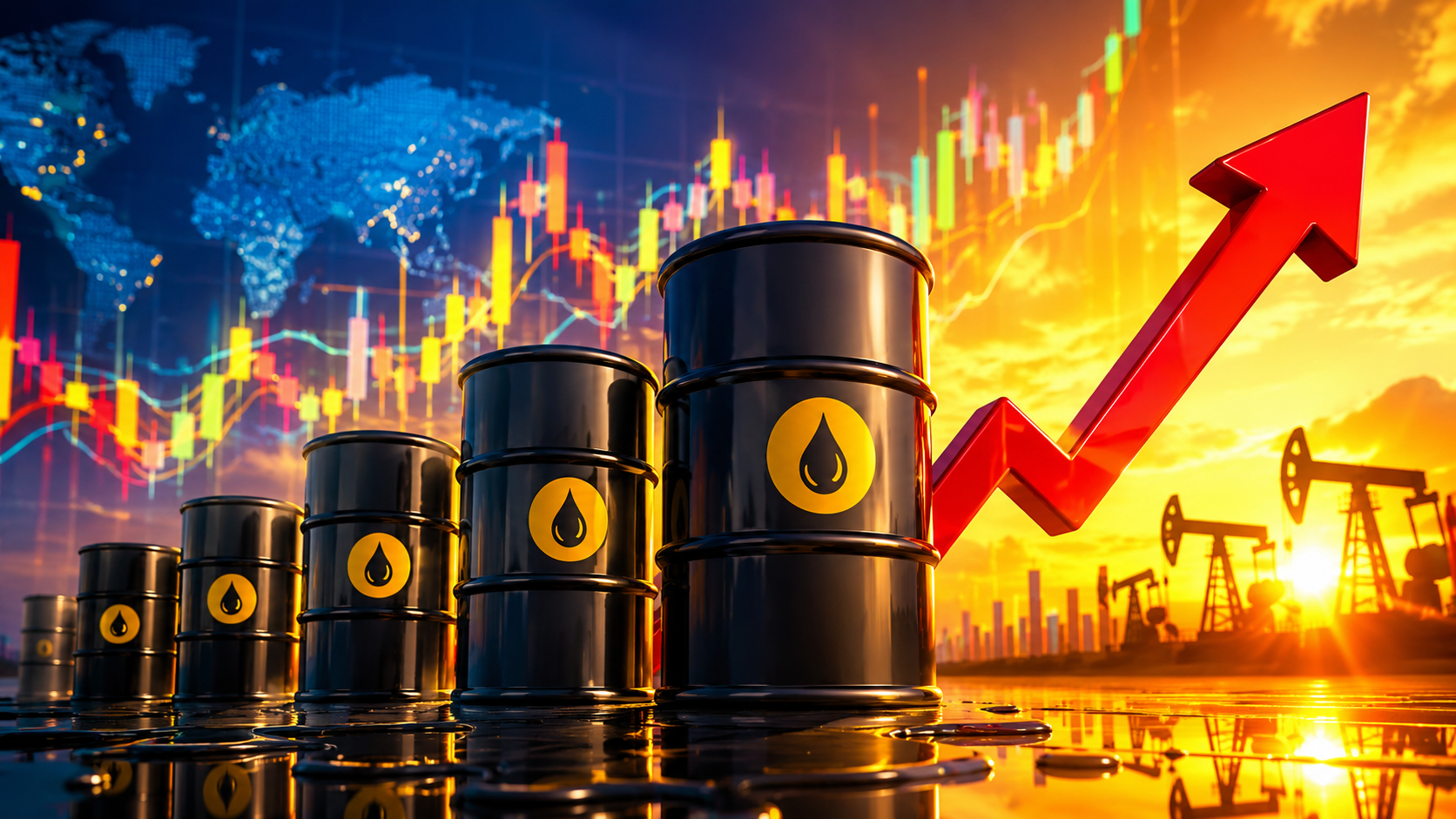
Oil prices have increased for the fourth consecutive day, surpassing the $85 per barrel mark. This surge is largely attributed to the escalating tensions between the United States and Iran, which has sparked concerns over the security of shipping routes in the region.
The conflict between the two nations has been intensifying, with the United States conducting strikes on Iran's missile sites and coastal defense positions. This has led to heightened worries over the safety of oil shipments passing through the Strait of Hormuz, a critical waterway that connects the Persian Gulf to the Arabian Sea.
Analysts believe that the ongoing conflict could lead to further increases in oil prices, depending on how the situation develops. The Strait of Hormuz is a vital shipping route, with a significant portion of the world's oil supply passing through it. Any disruption to the flow of oil through this route could have a significant impact on global oil prices.
The current situation in the Middle East is complex and volatile, with multiple nations involved in the conflict. The United States and Iran have been at odds for some time, and the recent escalation in tensions has raised concerns about the potential for further conflict.
The impact of the conflict on oil prices is being closely watched by investors and analysts around the world. As the situation continues to unfold, it is likely that oil prices will remain volatile, reacting to any developments in the region.
In recent years, the Middle East has been a source of instability in the global oil market, with various conflicts and tensions affecting oil prices. The region is home to some of the world's largest oil-producing nations, including Saudi Arabia, Iraq, and Iran.
The Indian economy, which is heavily reliant on imported oil, is likely to be affected by the increase in oil prices. Higher oil prices could lead to increased costs for consumers and businesses, potentially impacting the country's economic growth.
As the situation in the Middle East continues to evolve, it is likely that oil prices will remain a key focus for investors and analysts. Any further escalation in tensions could lead to increased volatility in the oil market, potentially impacting economies around the world.
In conclusion, the current surge in oil prices is a result of the escalating tensions between the United States and Iran, and the potential disruption to oil shipments through the Strait of Hormuz. As the situation continues to unfold, it is likely that oil prices will remain volatile, with potential implications for economies around the world.
The increase in oil prices is a significant development, and its impact will be closely watched by investors, analysts, and policymakers. The situation in the Middle East is complex and volatile, and any further escalation in tensions could have far-reaching consequences for the global economy.
The rise in oil prices is also likely to have an impact on the Indian economy, which is heavily reliant on imported oil. The government will need to closely monitor the situation and take steps to mitigate the impact of higher oil prices on the economy.
Overall, the current situation in the Middle East is a significant concern for the global economy, and the increase in oil prices is just one of the potential implications of the escalating tensions in the region.
The world will be watching the situation in the Middle East closely, as any further escalation in tensions could have significant consequences for the global economy. The increase in oil prices is just one of the potential implications of the conflict, and it is likely that the situation will continue to evolve in the coming days and weeks.
As the global economy continues to navigate the challenges posed by the conflict in the Middle East, it is likely that oil prices will remain a key focus for investors and analysts. The situation is complex and volatile, and any further escalation in tensions could have far-reaching consequences for economies around the world.
In the end, the impact of the conflict on oil prices will depend on how the situation develops in the coming days and weeks. The world will be watching the situation in the Middle East closely, as any further escalation in tensions could have significant consequences for the global economy.