Centre Sells Onions At ₹35/Kg In Delhi
Onion prices surge, Centre intervenes with subsidised sales. Kanda Express brings 800 tonnes to Delhi.
'%3E%3Crect%20width%3D'96'%20height%3D'96'%20fill%3D'%23B3261E'%2F%3E%3Ccircle%20cx%3D'30'%20cy%3D'24'%20r%3D'44'%20fill%3D'%23fff'%20opacity%3D'.12'%2F%3E%3Ccircle%20cx%3D'60'%20cy%3D'74'%20r%3D'40'%20fill%3D'%23000'%20opacity%3D'.10'%2F%3E%3C%2Fg%3E%3Cg%20fill%3D'%23fff'%3E%3Crect%20x%3D'29'%20y%3D'49'%20width%3D'8'%20height%3D'19'%20rx%3D'1'%2F%3E%3Crect%20x%3D'39'%20y%3D'40'%20width%3D'9'%20height%3D'28'%20rx%3D'1'%2F%3E%3Crect%20x%3D'50'%20y%3D'45'%20width%3D'8'%20height%3D'23'%20rx%3D'1'%2F%3E%3Crect%20x%3D'60'%20y%3D'53'%20width%3D'7'%20height%3D'15'%20rx%3D'1'%2F%3E%3Crect%20x%3D'41'%20y%3D'34'%20width%3D'5'%20height%3D'6'%2F%3E%3C%2Fg%3E%3C%2Fsvg%3E)
The Centre has announced plans to sell onions at a subsidised rate of ₹35 per kg in Delhi, in an effort to curb the sharp seasonal increase in prices. This move represents a discount of about 36 percent to Tuesday’s average retail price in the national capital.
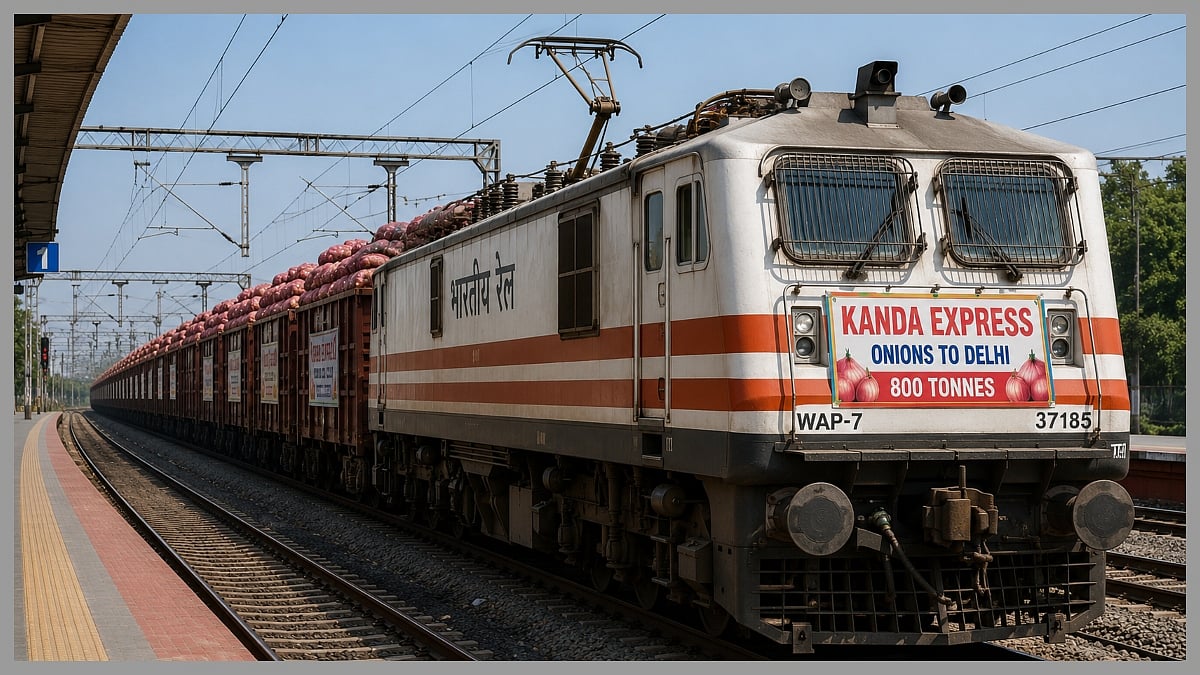
Consumer Affairs Secretary Nidhi Khare stated that Nafed, NCCF, and Kendriya Bhandar outlets will undertake the retail intervention. The first 'Kanda Express', carrying 800 tonnes of onions, is scheduled to reach Delhi on Wednesday.
In addition to Delhi, dedicated railway rakes are also transporting bulk supplies to other major cities, including Chennai, Ernakulam, Madurai, and Guwahati. The onions are being released from the Centre’s buffer stock maintained in Nashik, Maharashtra, to improve availability across major consuming markets.
India’s average retail onion price has risen significantly, increasing by more than 28 percent within a month to ₹44.72 per kg on August 25, from ₹34.80 on July 25. This represents a 56 percent annual increase, with the rate being ₹28.67 a year earlier.
On Tuesday, onion prices varied across cities, with prices reaching ₹60 per kg in Chennai, ₹55 in Delhi, ₹60 in Kolkata, ₹48 in Mumbai, and ₹38 in Ranchi. These prices are significantly higher than the corresponding year-earlier prices, which were ₹35, ₹33, ₹32, ₹32, and ₹25, respectively.
The average wholesale price of onions has also climbed, increasing by 63 percent year-on-year to ₹36.73 per kg, from ₹22.54. This surge in prices is attributed to various factors, including festive demand, weather disruptions, supply-chain movements, and changing consumption patterns.
The Kanda Express programme, which began in 2024-25, aims to improve efficiency in large-scale onion transportation. The programme has expanded significantly, with 86 rakes carrying about 88,000 tonnes to 16 major cities in 2025-26.
The Centre has maintained an onion buffer of about 1.21 lakh tonnes for 2026 under the Price Stabilisation Fund scheme. Despite the current surge in prices, the Centre expects domestic availability to remain comfortable, supported by estimated 2025-26 production of 307.37 lakh tonnes, which is broadly matching the preceding year’s production.
The Centre’s decision to sell onions at a subsidised rate is expected to provide relief to consumers, who have been facing high prices due to the seasonal surge in demand. The move is also expected to help stabilize prices and ensure a steady supply of onions to major consuming markets.
In conclusion, the Centre’s intervention in the onion market is a significant step towards addressing the current price surge. With the Kanda Express programme and the release of buffer stocks, the Centre aims to improve availability and stabilize prices, providing relief to consumers across the country.
The impact of this move will be closely watched, as it has the potential to influence the overall food inflation scenario in the country. As the festive season approaches, the Centre’s efforts to stabilize onion prices will be crucial in ensuring that consumers are not burdened with high prices.
Overall, the Centre’s decision to sell onions at a subsidised rate is a welcome move, and its success will depend on the effective implementation of the programme and the ability to maintain a steady supply of onions to major consuming markets.
Frequently asked questions
Why are onion prices surging in India?
Onion prices are surging due to festive demand, weather disruptions, supply-chain movements, and changing consumption patterns.
What is the Kanda Express programme?
The Kanda Express programme is an initiative to improve efficiency in large-scale onion transportation, which began in 2024-25.