Minnesota Trees Adapt to 3.4°C Warming
Scientists test tree resilience, find adaptation to heat. Minnesota study reveals surprising results.
'%3E%3Crect%20width%3D'96'%20height%3D'96'%20fill%3D'%23B3261E'%2F%3E%3Ccircle%20cx%3D'30'%20cy%3D'24'%20r%3D'44'%20fill%3D'%23fff'%20opacity%3D'.12'%2F%3E%3Ccircle%20cx%3D'60'%20cy%3D'74'%20r%3D'40'%20fill%3D'%23000'%20opacity%3D'.10'%2F%3E%3C%2Fg%3E%3Cg%20fill%3D'%23fff'%3E%3Crect%20x%3D'29'%20y%3D'49'%20width%3D'8'%20height%3D'19'%20rx%3D'1'%2F%3E%3Crect%20x%3D'39'%20y%3D'40'%20width%3D'9'%20height%3D'28'%20rx%3D'1'%2F%3E%3Crect%20x%3D'50'%20y%3D'45'%20width%3D'8'%20height%3D'23'%20rx%3D'1'%2F%3E%3Crect%20x%3D'60'%20y%3D'53'%20width%3D'7'%20height%3D'15'%20rx%3D'1'%2F%3E%3Crect%20x%3D'41'%20y%3D'34'%20width%3D'5'%20height%3D'6'%2F%3E%3C%2Fg%3E%3C%2Fsvg%3E)
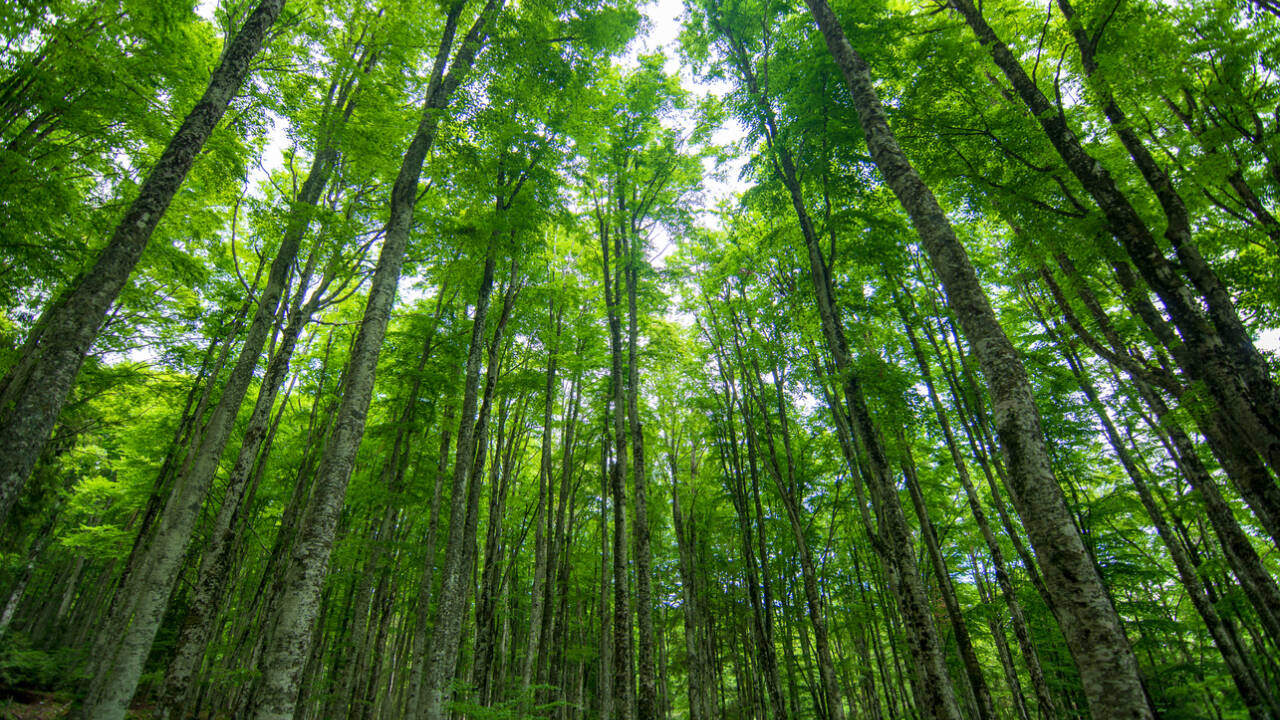
A recent study in Minnesota has shown that trees can adapt to significant temperature increases. Scientists conducted an experiment where they warmed a group of trees by 3.4°C, observing their response to the increased heat. The results were surprising, as the trees were able to adapt to most of the heat.
The study aimed to understand how trees would respond to the rising temperatures caused by climate change. By artificially warming the trees, the scientists were able to simulate the effects of a warmer climate. The experiment was designed to test the resilience of the trees and their ability to adapt to changing environmental conditions.
The trees in the study were able to adapt to the increased heat, with some minor exceptions. The scientists found that the trees were able to adjust their growth patterns and physiological processes to cope with the warmer temperatures. This adaptation was observed in most of the trees, with only a few showing signs of stress or damage.
The study's findings have important implications for our understanding of how trees will respond to climate change. As temperatures continue to rise, it is essential to understand how trees will adapt and what steps can be taken to support their resilience. The study's results suggest that trees may be more resilient to temperature increases than previously thought, which could have significant implications for forest management and conservation.
The experiment was conducted in a controlled environment, allowing the scientists to carefully monitor the trees' response to the increased heat. The results were compared to a control group of trees that were not warmed, providing a baseline for comparison. The study's methodology was rigorous, ensuring that the results were accurate and reliable.
The study's findings are relevant to the global effort to understand and mitigate the effects of climate change. As temperatures continue to rise, it is essential to understand how different species will respond and adapt. The study's results provide valuable insights into the resilience of trees and their ability to cope with changing environmental conditions.
In the context of climate change, the study's findings are significant. Rising temperatures are expected to have a profound impact on ecosystems around the world, with many species facing significant challenges. The study's results suggest that trees may be more resilient than previously thought, which could have important implications for forest management and conservation.
The study's results also highlight the importance of continued research into the effects of climate change. As temperatures continue to rise, it is essential to understand how different species will respond and adapt. Further studies are needed to fully understand the implications of the study's findings and to develop effective strategies for supporting the resilience of trees and other species.
In conclusion, the study's findings are significant and provide valuable insights into the resilience of trees. The results suggest that trees may be more adaptable to temperature increases than previously thought, which could have important implications for forest management and conservation. As temperatures continue to rise, it is essential to continue researching the effects of climate change and to develop effective strategies for supporting the resilience of trees and other species.
The implications of the study's findings are far-reaching, with potential applications in forest management, conservation, and climate change mitigation. The study's results provide a foundation for further research and highlight the need for continued investigation into the effects of climate change on ecosystems around the world.
Frequently asked questions
How much were the Minnesota trees warmed by?
The Minnesota trees were warmed by 3.4°C.
Did the trees adapt to the increased heat?
Yes, the trees were able to adapt to most of the heat, with some minor exceptions.