Mumbai Hospital Performs Western India's First Pulsed Field Ablation
A 62-year-old woman recovers from heart rhythm disorder, discharged in a day. Pulsed Field Ablation is a new treatment approach.

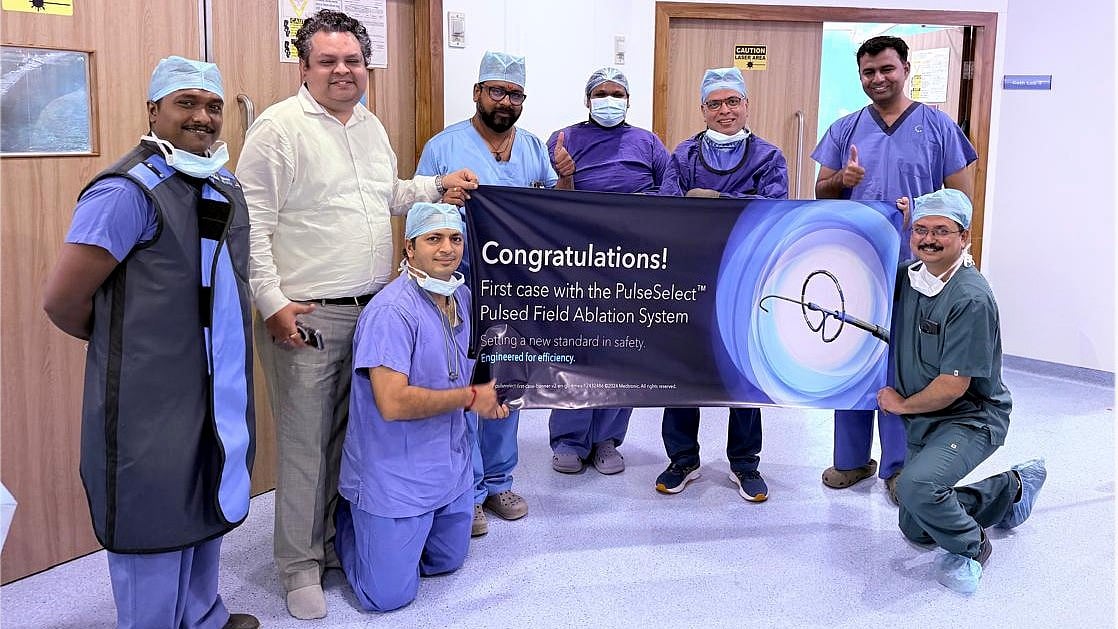
Mumbai's Kokilaben Dhirubhai Ambani Hospital has successfully performed Western India's first Pulsed Field Ablation procedure, helping a 62-year-old woman recover from a heart rhythm disorder. The patient, who had been experiencing irregular heartbeats for nearly two months, underwent the procedure on June 16 and was discharged the following morning.
The patient had been taking medication to stabilize her heart rhythm, but it was slowing her heart to dangerously low rates. She described her rapid recovery, saying she never expected to be walking out of the hospital the very next day. The procedure has given her a new lease on life, and she is expected to resume normal activity within a week.
Pulsed Field Ablation is a new treatment approach that uses high-energy electrical pulses to selectively destroy abnormal cardiac cells. This approach is different from conventional ablation techniques, which use heat or cold to destroy abnormal heart tissue. The procedure was performed using the Medtronic PulseSelectTM Pulsed Field Ablation System and was completed in under 90 minutes, a reduction of nearly 60 per cent compared to conventional techniques.
Atrial fibrillation, the disorder the patient was suffering from, is the world's most common heart rhythm disorder, affecting nearly 50 million people globally. It causes the heart's upper chambers to beat chaotically, disrupting the coordinated pumping of blood and raising the risk of clot formation. Approximately one in five strokes worldwide is attributed to atrial fibrillation.
The procedure marks a significant advancement in the treatment of atrial fibrillation, according to Dr. Venkat D Nagarajan, Consultant Cardiologist and Electrophysiologist at Kokilaben Dhirubhai Ambani Hospital. Pulsed Field Ablation is a more precise and safer procedure compared to conventional techniques, with a lower risk of collateral damage.
The introduction of Pulsed Field Ablation in Western India brings a new treatment option to patients in Maharashtra and the wider western region. The technology has been adopted in leading European centers and was first introduced in the United States approximately 18 months ago.
Atrial fibrillation often goes undetected, as approximately one-third of all patients are asymptomatic, and many experience paroxysmal AF, which is difficult to identify using regular ECG. This lack of awareness and limited screening contribute to the low priority given to AF screening in India.
The successful completion of the Pulsed Field Ablation procedure at Kokilaben Dhirubhai Ambani Hospital is a significant milestone in the treatment of heart rhythm disorders in Western India. It offers new hope to patients suffering from atrial fibrillation and highlights the importance of advanced medical technology in improving patient outcomes.
In conclusion, the introduction of Pulsed Field Ablation in Western India is a significant development in the treatment of heart rhythm disorders. The procedure's precision and safety make it an attractive option for patients, and its availability in Mumbai is expected to improve patient outcomes in the region.