Sonam Wangchuk Continues Hunger Strike
Climate activist protests police brutality, demands meeting with parliamentarians. Thousands march to Parliament, met with tear gas and force.
'%3E%3Crect%20width%3D'96'%20height%3D'96'%20fill%3D'%231A5276'%2F%3E%3Ccircle%20cx%3D'30'%20cy%3D'24'%20r%3D'44'%20fill%3D'%23fff'%20opacity%3D'.12'%2F%3E%3Ccircle%20cx%3D'60'%20cy%3D'74'%20r%3D'40'%20fill%3D'%23000'%20opacity%3D'.10'%2F%3E%3C%2Fg%3E%3Cg%20fill%3D'%23fff'%3E%3Cpath%20d%3D'M31%2041%20L48%2031%20L65%2041%20Z'%2F%3E%3Crect%20x%3D'33'%20y%3D'43'%20width%3D'4'%20height%3D'17'%2F%3E%3Crect%20x%3D'41'%20y%3D'43'%20width%3D'4'%20height%3D'17'%2F%3E%3Crect%20x%3D'51'%20y%3D'43'%20width%3D'4'%20height%3D'17'%2F%3E%3Crect%20x%3D'59'%20y%3D'43'%20width%3D'4'%20height%3D'17'%2F%3E%3Crect%20x%3D'30'%20y%3D'62'%20width%3D'36'%20height%3D'4'%20rx%3D'1'%2F%3E%3C%2Fg%3E%3C%2Fsvg%3E)
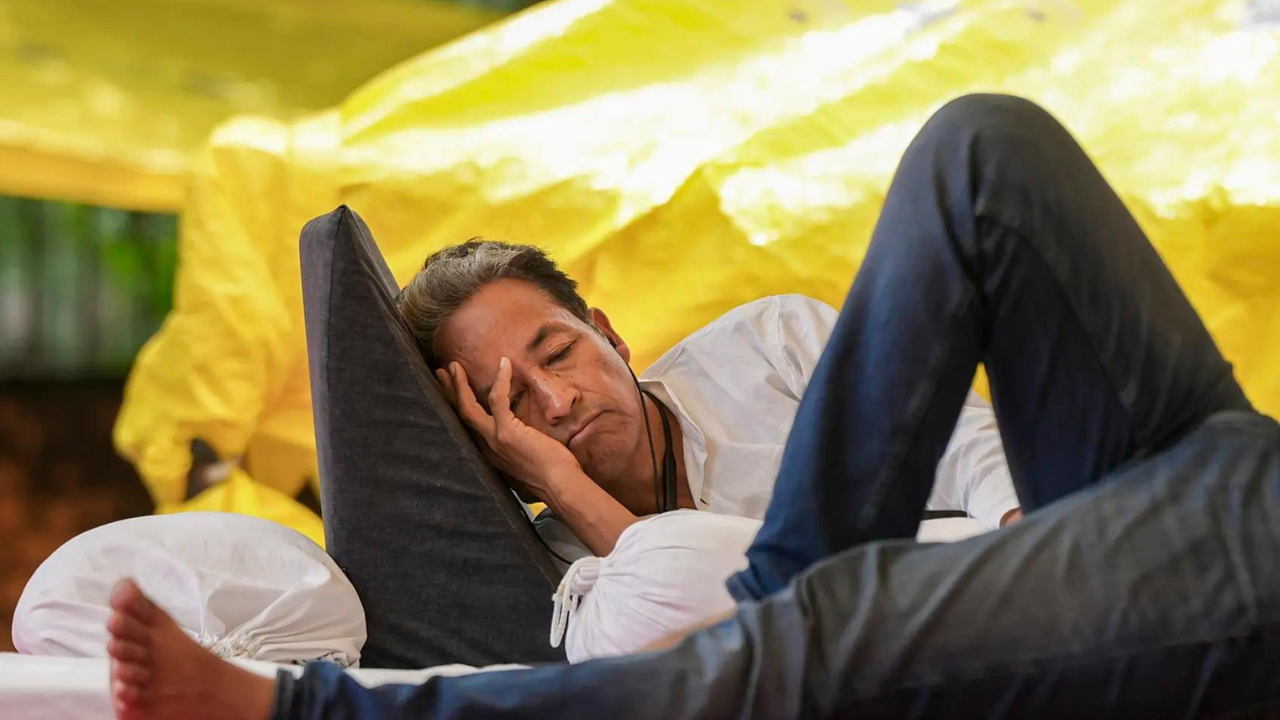
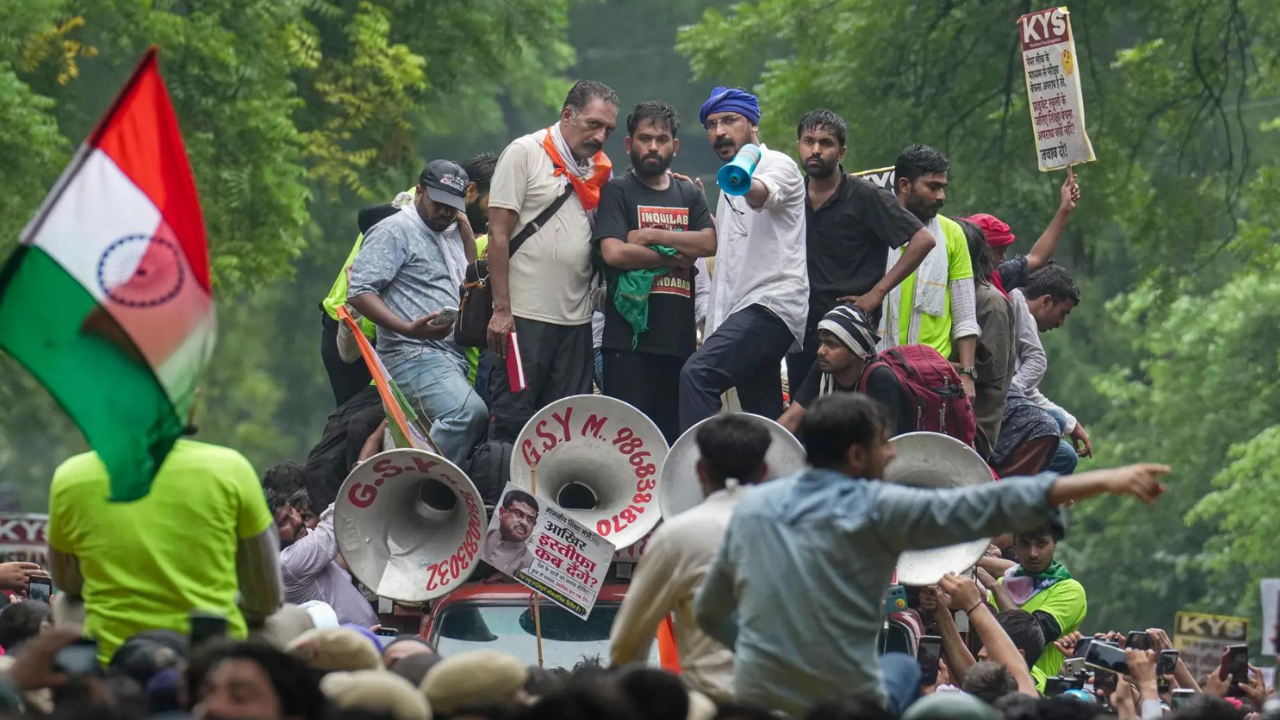
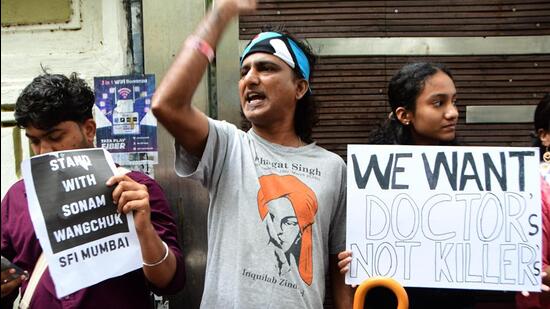
Sonam Wangchuk, a prominent climate activist, has continued his hunger strike in response to the police's handling of peaceful protesters. The activist witnessed the police's actions against protesters who marched to Parliament, demanding the resignation of the Education Minister over examination irregularities. Wangchuk is demanding that youth leaders be allowed to meet with parliamentarians to present their grievances, or that he be allowed to meet with them on their behalf.
The march to Parliament, which drew thousands of participants, was met with tear gas and force by the police. Several protesters were detained during the march, prompting Wangchuk to condemn the police's actions as brutal. The activist has appealed to the government and police to allow students to present their grievances peacefully.
The examination irregularities that sparked the protests have been a major concern for students and parents across the country. The Education Minister's resignation has been demanded by many, who argue that the minister has failed to address the issue effectively. The protests have highlighted the need for greater transparency and accountability in the education system.
Wangchuk's hunger strike has drawn attention to the issue, with many expressing support for the activist's demands. The government has yet to respond to Wangchuk's demands, but the activist has vowed to continue his hunger strike until his demands are met.
The use of tear gas and force by the police has been widely criticized, with many arguing that it is not an effective way to handle peaceful protests. The incident has raised concerns about the government's commitment to protecting the rights of citizens to peaceful assembly and free speech.
The education system in India has been facing several challenges in recent years, including issues related to accessibility, affordability, and quality. The examination irregularities have added to these challenges, highlighting the need for urgent reforms.
In the context of India's democratic system, the right to peaceful protest is a fundamental right that is guaranteed by the Constitution. The government's response to the protests will be closely watched, as it will have implications for the country's democratic fabric.
The significance of Wangchuk's hunger strike and the protests lies in their ability to bring attention to important issues and to hold those in power accountable. As India continues to grapple with the challenges facing its education system, the need for peaceful and effective channels of communication between citizens and the government will become increasingly important.
In conclusion, Sonam Wangchuk's hunger strike and the protests against the Education Minister's handling of examination irregularities have highlighted the need for greater transparency, accountability, and protection of citizens' rights in India. The government's response to these demands will be crucial in determining the course of the country's democratic development.
Frequently asked questions
Why is Sonam Wangchuk on hunger strike?
Sonam Wangchuk is on hunger strike to demand that youth leaders be allowed to meet with parliamentarians to present their grievances over examination irregularities.
What happened during the march to Parliament?
The march to Parliament was met with tear gas and force by the police, resulting in the detention of several protesters.