Air India Extends Turnaround Target to 2036
Air India's new CEO faces challenges, extended timeline to achieve turnaround.
'%3E%3Crect%20width%3D'96'%20height%3D'96'%20fill%3D'%230B6E4F'%2F%3E%3Ccircle%20cx%3D'30'%20cy%3D'24'%20r%3D'44'%20fill%3D'%23fff'%20opacity%3D'.12'%2F%3E%3Ccircle%20cx%3D'60'%20cy%3D'74'%20r%3D'40'%20fill%3D'%23000'%20opacity%3D'.10'%2F%3E%3C%2Fg%3E%3Cg%20fill%3D'none'%20stroke%3D'%23fff'%20stroke-width%3D'3.2'%20stroke-linecap%3D'round'%20stroke-linejoin%3D'round'%3E%3Cpolyline%20points%3D'31%2C59%2041%2C49%2049%2C54%2063%2C37'%2F%3E%3Cpolyline%20points%3D'55%2C37%2063%2C37%2063%2C45'%2F%3E%3C%2Fg%3E%3C%2Fsvg%3E)
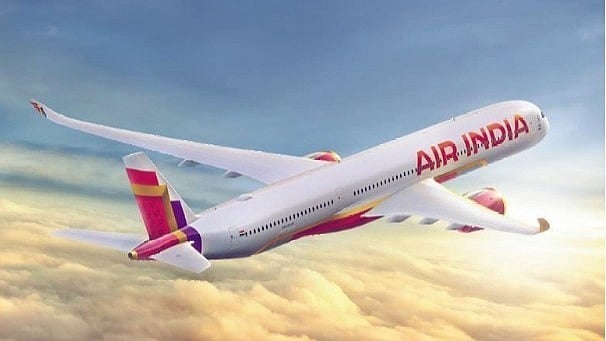
Air India, despite being privatised, is still grappling with its legacy as a public sector undertaking. The airline's recent announcements suggest that its new owners, Tata Sons, are adopting a similar approach to the government.
The appointment of Tewolde Gebremariam as the new CEO is a significant development. Gebremariam, who previously headed Ethiopian Airlines, was reportedly hired after a long search. However, his appointment is still pending security clearance from the government.
Gebremariam's experience in turning around Ethiopian Airlines is notable, but it may not be directly applicable to Air India. Ethiopian Airlines is a state-owned carrier with a monopoly in its domestic market, whereas Air India operates in a highly competitive Indian market. The Indian market is dominated by one player, and the taxation rates are relatively high compared to other countries.
The new CEO's task is to turn around Air India, which has been struggling to achieve its targets. The previous CEO, Campbell Wilson, had set a target to achieve a turnaround by 2027, but it seems that this target will not be met. Instead, the owners have extended the timeline to achieve a turnaround to 5-10 years, with the new target date being as far as 2036.
This extension of the timeline is a tacit admission by the owners that they underestimated the challenges facing Air India. The airline's problems are complex and deeply ingrained, and it will require a significant effort to turn it around. The new CEO will need to develop a comprehensive strategy to address these challenges and put the airline on a path to sustainability.
The Indian aviation market is highly competitive, and Air India will need to differentiate itself to gain market share. The airline will need to focus on improving its product, reliability, and customer service to attract more passengers. Additionally, the airline will need to address its high operating costs and find ways to reduce them.
The appointment of a new CEO and the extension of the timeline to achieve a turnaround are significant developments for Air India. However, it remains to be seen whether these changes will be enough to turn around the airline's fortunes. The challenges facing Air India are significant, and it will require a sustained effort to address them.
In conclusion, Air India's turnaround is a complex and challenging task. The airline's new owners and CEO will need to develop a comprehensive strategy to address the airline's problems and put it on a path to sustainability. The extension of the timeline to achieve a turnaround is a recognition of the challenges facing the airline, and it will be important to monitor the airline's progress in the coming years.
The success of Air India's turnaround will have significant implications for the Indian aviation market. A strong and competitive Air India will be able to provide better services to passengers and help to promote tourism and economic growth in the country. However, if the airline is unable to turn itself around, it may struggle to survive in a highly competitive market.
Overall, the future of Air India is uncertain, and it will be important to watch the airline's progress in the coming years. The appointment of a new CEO and the extension of the timeline to achieve a turnaround are significant developments, but they are only the first steps in a long and challenging journey to turn around the airline.
The Indian government and the airline's owners will need to provide support and guidance to the new CEO as he works to turn around the airline. This will include providing the necessary resources and funding to implement the airline's turnaround strategy. Additionally, the government will need to create a favorable business environment to help the airline to compete with its rivals.
In the end, the success of Air India's turnaround will depend on the ability of the airline's owners and CEO to develop and implement a comprehensive strategy to address the airline's problems. This will require a sustained effort and a commitment to providing high-quality services to passengers. If the airline is able to achieve this, it will be able to turn itself around and become a strong and competitive player in the Indian aviation market.
Frequently asked questions
Who is the new CEO of Air India?
Tewolde Gebremariam, former head of Ethiopian Airlines.
What is the new target date for Air India's turnaround?
The new target date is as far as 2036, with a timeline of 5-10 years.