SC To Hear Plea Against Facial Recognition At Protest Sites
MP AA Rahim challenges police use of biometric surveillance. SC agrees to hear plea.
'%3E%3Crect%20width%3D'96'%20height%3D'96'%20fill%3D'%231A5276'%2F%3E%3Ccircle%20cx%3D'30'%20cy%3D'24'%20r%3D'44'%20fill%3D'%23fff'%20opacity%3D'.12'%2F%3E%3Ccircle%20cx%3D'60'%20cy%3D'74'%20r%3D'40'%20fill%3D'%23000'%20opacity%3D'.10'%2F%3E%3C%2Fg%3E%3Cg%20fill%3D'%23fff'%3E%3Cpath%20d%3D'M31%2041%20L48%2031%20L65%2041%20Z'%2F%3E%3Crect%20x%3D'33'%20y%3D'43'%20width%3D'4'%20height%3D'17'%2F%3E%3Crect%20x%3D'41'%20y%3D'43'%20width%3D'4'%20height%3D'17'%2F%3E%3Crect%20x%3D'51'%20y%3D'43'%20width%3D'4'%20height%3D'17'%2F%3E%3Crect%20x%3D'59'%20y%3D'43'%20width%3D'4'%20height%3D'17'%2F%3E%3Crect%20x%3D'30'%20y%3D'62'%20width%3D'36'%20height%3D'4'%20rx%3D'1'%2F%3E%3C%2Fg%3E%3C%2Fsvg%3E)
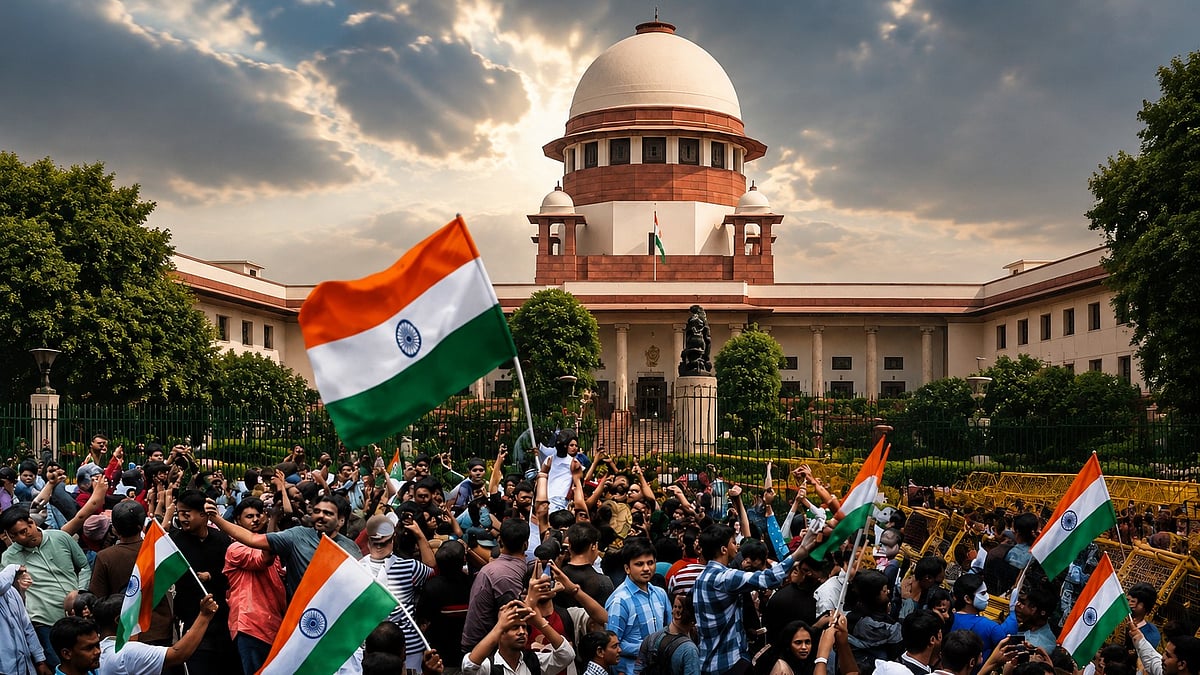
The Supreme Court has agreed to hear a petition filed by Communist Party of India (Marxist) Rajya Sabha MP AA Rahim, challenging the use of facial recognition technology and other biometric surveillance tools by police at protest sites.
A bench comprising Chief Justice of India Surya Kant and Justices Joymalya Bagchi and V Mohana tagged the plea with other pending petitions concerning recent student protests. The case highlights the growing use of surveillance technology at public demonstrations and raises questions over privacy and police powers.
Senior advocate Menaka Guruswamy, appearing for Rahim, told the court that the petition was filed in the context of the Delhi Police allegedly using digital tools to monitor protesters at Jantar Mantar. Guruswamy alleged that the data collected was processed and stored in violation of the Digital Personal Data Protection Act, 2023.
The petition claims that the Delhi Police carried out surveillance without a clear legal framework authorising such measures. It argues that neither the Delhi Police standing orders governing protests nor the Criminal Procedure (Identification) Act, 2022, authorises biometric surveillance of people taking part in a civilian assembly.
According to the plea, police used various technologies to collect and process photographs and footage of protesters, journalists, and others present at the protest. It contends that the indiscriminate biometric identification of people attending a peaceful assembly is not permitted under existing law.
The issue assumes significance because surveillance at a protest raises questions about how far authorities can monitor citizens exercising their right to assemble. The petition relies on the Supreme Court's 2017 judgment in KS Puttaswamy v Union of India, which held that State action infringing privacy must meet the requirements of legality, legitimate aim, and proportionality.
Rahim has argued that the surveillance also raises concerns over the retention, sharing, and processing of biometric information and the possibility of such data being linked with national criminal databases. The plea highlights a broader concern surrounding biometric surveillance and its implications for citizens' rights.
The Supreme Court's decision to hear the plea is significant, as it will have implications for the use of surveillance technology at protest sites across the country. The court's judgment will provide clarity on the limits of police powers and the protection of citizens' rights to privacy and assembly.
In conclusion, the Supreme Court's agreement to hear the plea is a crucial step in addressing the concerns surrounding biometric surveillance at protest sites. The court's judgment will have far-reaching implications for citizens' rights and the use of surveillance technology in India.
The case also raises questions about the role of private entities in providing surveillance services to the police. The petition alleges that two private entities, Aditya Infotech Ltd and Dimension NXG Pvt Ltd, were used to monitor protesters, and that the data collected was processed and stored in violation of the Digital Personal Data Protection Act, 2023.
The use of biometric surveillance technology at protest sites is a growing concern globally. Many countries are grappling with the implications of such technology on citizens' rights and privacy. The Supreme Court's judgment in this case will provide valuable insights into the Indian legal framework's approach to this issue.
As the case progresses, it will be important to monitor the developments and implications for citizens' rights and police powers in India. The Supreme Court's decision will have significant implications for the use of surveillance technology at protest sites and will provide clarity on the limits of police powers and the protection of citizens' rights to privacy and assembly.
In the context of India's growing economy and increasing protests, the use of biometric surveillance technology raises important questions about the balance between national security and citizens' rights. The Supreme Court's judgment will provide valuable guidance on this issue and will have far-reaching implications for the country.
The petition filed by MP AA Rahim is a significant step in addressing the concerns surrounding biometric surveillance at protest sites. The Supreme Court's agreement to hear the plea is a crucial step in providing clarity on the limits of police powers and the protection of citizens' rights to privacy and assembly.
The case will be closely watched by citizens, activists, and legal experts, as it has significant implications for the use of surveillance technology at protest sites and the protection of citizens' rights in India.
The Supreme Court's judgment will be a landmark decision, providing guidance on the use of biometric surveillance technology at protest sites and the balance between national security and citizens' rights.
It will be important to monitor the developments in this case and its implications for citizens' rights and police powers in India.
The use of biometric surveillance technology at protest sites is a complex issue, and the Supreme Court's judgment will provide valuable insights into the Indian legal framework's approach to this issue.
In conclusion, the Supreme Court's agreement to hear the plea is a significant step in addressing the concerns surrounding biometric surveillance at protest sites. The court's judgment will have far-reaching implications for citizens' rights and the use of surveillance technology in India.
The case highlights the need for a clear legal framework governing the use of biometric surveillance technology at protest sites. The petition argues that the current legal framework is inadequate and that the use of such technology raises important questions about privacy and police powers.
The Supreme Court's judgment will provide clarity on the limits of police powers and the protection of citizens' rights to privacy and assembly. The case will have significant implications for the use of surveillance technology at protest sites and will provide guidance on the balance between national security and citizens' rights.
In the context of India's growing economy and increasing protests, the use of biometric surveillance technology raises important questions about the balance between national security and citizens' rights. The Supreme Court's judgment will provide valuable guidance on this issue and will have far-reaching implications for the country.
The petition filed by MP AA Rahim is a significant step in addressing the concerns surrounding biometric surveillance at protest sites. The Supreme Court's agreement to hear the plea is a crucial step in providing clarity on the limits of police powers and the protection of citizens' rights to privacy and assembly.
The case will be closely watched by citizens, activists, and legal experts, as it has significant implications for the use of surveillance technology at protest sites and the protection of citizens' rights in India.
The Supreme Court's judgment will be a landmark decision, providing guidance on the use of biometric surveillance technology at protest sites and the balance between national security and citizens' rights.
It will be important to monitor the developments in this case and its implications for citizens' rights and police powers in India.
The use of biometric surveillance technology at protest sites is a complex issue, and the Supreme Court's judgment will provide valuable insights into the Indian legal framework's approach to this issue.
In conclusion, the Supreme Court's agreement to hear the plea is a significant step in addressing the concerns surrounding biometric surveillance at protest sites. The court's judgment will have far-reaching implications for citizens' rights and the use of surveillance technology in India.
The case highlights the need for a clear legal framework governing the use of biometric surveillance technology at protest sites. The petition argues that the current legal framework is inadequate and that the use of such technology raises important questions about privacy and police powers.
The Supreme Court's judgment will provide clarity on the limits of police powers and the protection of citizens' rights to privacy and assembly. The case will have significant implications for the use of surveillance technology at protest sites and will provide guidance on the balance between national security and citizens' rights.
In the context of India's growing economy and increasing protests, the use of biometric surveillance technology raises important questions about the balance between national security and citizens' rights. The Supreme Court's judgment will provide valuable guidance on this issue and will have far-reaching implications for the country.
The petition filed by MP AA Rahim is a significant step in addressing the concerns surrounding biometric surveillance at protest sites. The Supreme Court's agreement to hear the plea is a crucial step in providing clarity on the limits of police powers and the protection of citizens' rights to privacy and assembly.
The case will be closely watched by citizens, activists, and legal experts, as it has significant implications for the use of surveillance technology at protest sites and the protection of citizens' rights in India.
The Supreme Court's judgment will be a landmark decision, providing guidance on the use of biometric surveillance technology at protest sites and the balance between national security and citizens' rights.
It will be important to monitor the developments in this case and its implications for citizens' rights and police powers in India.
The use of biometric surveillance technology at protest sites is a complex issue, and the Supreme Court's judgment will provide valuable insights into the Indian legal framework's approach to this issue.
In conclusion, the Supreme Court's agreement to hear the plea is a significant step in addressing the concerns surrounding biometric surveillance at protest sites. The court's judgment will have far-reaching implications for citizens' rights and the use of surveillance technology in India.
What it means for Mumbai and India is that the use of biometric surveillance technology at protest sites will be subject to scrutiny and guidance from the Supreme Court. The judgment will provide clarity on the limits of police powers and the protection of citizens' rights to privacy and assembly. This will have significant implications for the use of surveillance technology at protest sites and will provide guidance on the balance between national security and citizens' rights.
In the context of India's growing economy and increasing protests, the use of biometric surveillance technology raises important questions about the balance between national security and citizens' rights. The Supreme Court's judgment will provide valuable guidance on this issue and will have far-reaching implications for the country.
The petition filed by MP AA Rahim is a significant step in addressing the concerns surrounding biometric surveillance at protest sites. The Supreme Court's agreement to hear the plea is a crucial step in providing clarity on the limits of police powers and the protection of citizens' rights to privacy and assembly.
The case will be closely watched by citizens, activists, and legal experts, as it has significant implications for the use of surveillance technology at protest sites and the protection of citizens' rights in India.
The Supreme Court's judgment will be a landmark decision, providing guidance on the use of biometric surveillance technology at protest sites and the balance between national security and citizens' rights.
It will be important to monitor the developments in this case and its implications for citizens' rights and police powers in India.
The use of biometric surveillance technology at protest sites is a complex issue, and the Supreme Court's judgment will provide valuable insights into the Indian legal framework's approach to this issue.
In conclusion, the Supreme Court's agreement to hear the plea is a significant step in addressing the concerns surrounding biometric surveillance at protest sites. The court's judgment will have far-reaching implications for citizens' rights and the use of surveillance technology in India.
Frequently asked questions
What is the petition filed by MP AA Rahim about?
The petition challenges the use of facial recognition technology and other biometric surveillance tools by police at protest sites.
What is the significance of the Supreme Court's agreement to hear the plea?
The Supreme Court's agreement to hear the plea is a crucial step in providing clarity on the limits of police powers and the protection of citizens' rights to privacy and assembly.