India Ethanol Supplies Reach 800 Crore Litres
India's ethanol program hits milestone, grain-based feedstocks dominate production.
'%3E%3Crect%20width%3D'96'%20height%3D'96'%20fill%3D'%230B6E4F'%2F%3E%3Ccircle%20cx%3D'30'%20cy%3D'24'%20r%3D'44'%20fill%3D'%23fff'%20opacity%3D'.12'%2F%3E%3Ccircle%20cx%3D'60'%20cy%3D'74'%20r%3D'40'%20fill%3D'%23000'%20opacity%3D'.10'%2F%3E%3C%2Fg%3E%3Cg%20fill%3D'none'%20stroke%3D'%23fff'%20stroke-width%3D'3.2'%20stroke-linecap%3D'round'%20stroke-linejoin%3D'round'%3E%3Cpolyline%20points%3D'31%2C59%2041%2C49%2049%2C54%2063%2C37'%2F%3E%3Cpolyline%20points%3D'55%2C37%2063%2C37%2063%2C45'%2F%3E%3C%2Fg%3E%3C%2Fsvg%3E)
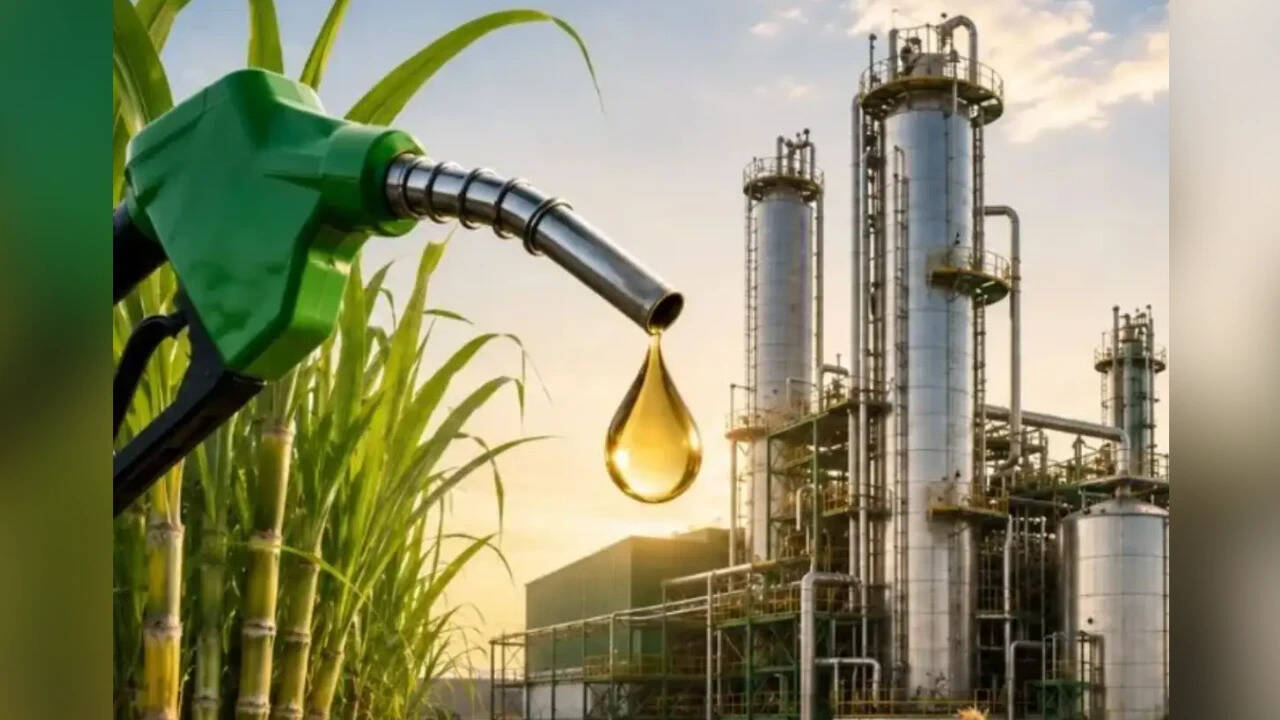
India's ethanol program has achieved a significant milestone, with supplies crossing 800 crore litres in the latest supply year. This growth is largely attributed to grain-based feedstocks, which now account for 76% of the total ethanol production as of July.
The increased use of maize and surplus grains from the Food Corporation of India (FCI) has been instrumental in boosting the grain-based ethanol supply. On the other hand, sugarcane-based ethanol supplies have seen a decline in their share of the monthly mix.
The ethanol industry in India has undergone significant transformations in recent years, driven by the government's push to increase the use of ethanol as a fuel additive. The aim is to reduce the country's dependence on fossil fuels and decrease greenhouse gas emissions.
The growth in ethanol production can be attributed to the government's ethanol blending program, which aims to blend 20% ethanol with petrol by 2025. To achieve this target, the government has been providing financial incentives to ethanol manufacturers and encouraging the use of alternative feedstocks such as maize and other grains.
As the ethanol industry continues to grow, the focus is now shifting to expanding demand to match the increased production capacity. The industry is exploring new avenues to increase ethanol consumption, including the use of ethanol in other industries such as pharmaceuticals and chemicals.
The increase in ethanol production is expected to have a positive impact on the environment, as it will reduce the country's dependence on fossil fuels and decrease greenhouse gas emissions. Additionally, it will also provide a new source of income for farmers, who can sell their surplus grains to ethanol manufacturers.
In the coming years, the government plans to further increase the use of ethanol as a fuel additive, with a target of blending 20% ethanol with petrol by 2025. To achieve this target, the government will need to continue providing financial incentives to ethanol manufacturers and encouraging the use of alternative feedstocks.
The achievement of crossing 800 crore litres of ethanol supplies is a significant milestone for India's ethanol program, and it demonstrates the country's commitment to reducing its dependence on fossil fuels and promoting the use of renewable energy sources.
As India continues to grow its ethanol industry, it is likely to have a positive impact on the environment and the economy. The increased use of ethanol as a fuel additive will reduce greenhouse gas emissions, and the growth of the ethanol industry will provide new job opportunities and increase income for farmers.
In conclusion, the crossing of 800 crore litres of ethanol supplies is a significant achievement for India's ethanol program, and it demonstrates the country's commitment to promoting the use of renewable energy sources. The focus now shifts to expanding demand to match the increased production capacity, and the industry is exploring new avenues to increase ethanol consumption.
Frequently asked questions
What is the current target for ethanol blending in petrol in India?
The current target is to blend 20% ethanol with petrol by 2025.
What has been the main contributor to the growth of grain-based ethanol supply in India?
The increased use of maize and surplus grains from the Food Corporation of India (FCI) has been instrumental in boosting the grain-based ethanol supply.