Mumbai Rail Network Disrupted By Heavy Rains
Heavy monsoon rain causes waterlogging, landslides and OHE failures, disrupting train services.

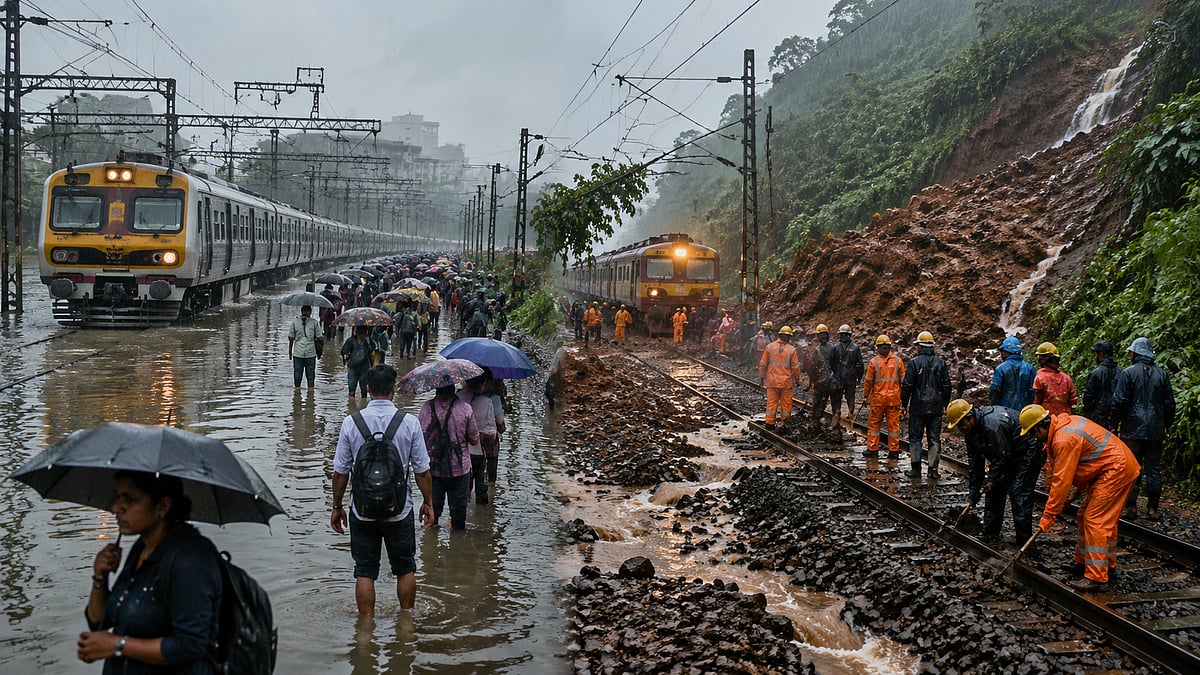
Mumbai's rail network was severely disrupted on Monday due to heavy monsoon rain, affecting both suburban and long-distance train services across the Western and Central Railway. The relentless rain caused waterlogging on the Western Railway tracks between Vasai and Virar, bringing suburban train movement to a halt from around 9.04 am.
Limited services towards Vasai resumed around 11 am after water levels receded, but operations remained disrupted for the rest of the day. By 7 pm, Western Railway had cancelled around 100 suburban services, while nearly 120 trains were delayed. Long-distance operations were hit even harder as flooding between Vasai and Dahanu forced the cancellation of 16 trains, short termination of 15, short origination of 16, rescheduling of 26 and diversion of 13 services.
Commuters faced long waits during the Monday morning rush hour. Shruti More, a commuter, said, 'It took me almost three hours to reach Churchgate from Virar. Today was the start of the week and I had an important office meeting.' On the Central Railway, heavy rainfall triggered multiple incidents across the network. A landslide near Thakurwadi around 2 am affected all three railway lines in the Karjat-Lonavala ghat section, while another landslide between Monkey Hill and Khandala on the middle line at around 3.05 am forced the suspension of train services on the busy Mumbai-Pune route.
Continuous rain also caused a ballast washout between Lowjee and Dolavli on the Karjat-Khopoli section, resulting in the suspension of suburban services for nearly 12 hours. The section was partially restored on Monday evening after engineers declared one track safe, with the first train permitted at 10 kmph before speed was increased to 30 kmph. Train movement between Karjat and Lonavala, however, remained suspended as restoration work continued in the ghat section.
Besides the weather-related damage, railway operations were briefly disrupted after plastic sheets became entangled in the overhead equipment near Vikhroli and Bhandup, while tree-related incidents near Khandala and GTB Nagar also affected train movement. Railway staff cleared the obstructions and restored power supply, but delays continued through the day. Central Railway cancelled 17 long-distance trains, diverted 31, short terminated 18, short originated 15 and rescheduled four services due to the landslides.
Several key Mumbai-Pune trains, including the Indrayani Express, Deccan Queen, Deccan Express, Pragati Express, Intercity Express and Sinhagad Express, were affected by the disruptions. The disruptions caused inconvenience to thousands of commuters and passengers travelling across Maharashtra, with many facing long waits and delays. The railway authorities are working to restore normal services as soon as possible.
The heavy rainfall and resulting disruptions to the rail network have highlighted the need for improved infrastructure and disaster management measures to mitigate the impact of extreme weather events on the city's transportation systems. As the monsoon season continues, commuters can expect more disruptions and delays, and the railway authorities must be prepared to respond quickly and effectively to minimize the impact on passengers.
In the coming days, the railway authorities will focus on restoring normal services and ensuring the safety of passengers. Commuters are advised to check the latest updates and schedules before traveling and to plan their journeys accordingly. The disruptions to the rail network have also affected the city's traffic, with many roads congested due to the diversion of traffic. The city's traffic authorities are working to manage the traffic flow and minimize the impact on commuters.
The heavy rainfall has also caused waterlogging in many areas of the city, with some areas experiencing flooding. The city's civic authorities are working to clear the waterlogging and restore normal services. The disruptions to the rail network and the resulting traffic congestion have caused inconvenience to many commuters, and the city's authorities must work to restore normal services as soon as possible.
As the city struggles to cope with the disruptions caused by the heavy rainfall, commuters are advised to be patient and to plan their journeys carefully. The railway authorities and the city's civic authorities are working to restore normal services, and commuters can expect improvements in the coming days. However, the disruptions have highlighted the need for improved infrastructure and disaster management measures to mitigate the impact of extreme weather events on the city's transportation systems.
The city's residents can expect more disruptions and delays in the coming days, and the authorities must be prepared to respond quickly and effectively to minimize the impact on passengers. The heavy rainfall has caused significant disruptions to the city's transportation systems, and the authorities must work to restore normal services as soon as possible. The city's commuters are advised to check the latest updates and schedules before traveling and to plan their journeys accordingly.
In conclusion, the heavy rainfall has caused significant disruptions to Mumbai's rail network, affecting both suburban and long-distance train services. The railway authorities are working to restore normal services, and commuters can expect improvements in the coming days. However, the disruptions have highlighted the need for improved infrastructure and disaster management measures to mitigate the impact of extreme weather events on the city's transportation systems.