Nair Hospital Gets Disaster Management Ward
Mumbai's Nair Hospital to have a dedicated disaster ward. First in the city.
'%3E%3Crect%20width%3D'96'%20height%3D'96'%20fill%3D'%23B3261E'%2F%3E%3Ccircle%20cx%3D'30'%20cy%3D'24'%20r%3D'44'%20fill%3D'%23fff'%20opacity%3D'.12'%2F%3E%3Ccircle%20cx%3D'60'%20cy%3D'74'%20r%3D'40'%20fill%3D'%23000'%20opacity%3D'.10'%2F%3E%3C%2Fg%3E%3Cg%20fill%3D'%23fff'%3E%3Crect%20x%3D'29'%20y%3D'49'%20width%3D'8'%20height%3D'19'%20rx%3D'1'%2F%3E%3Crect%20x%3D'39'%20y%3D'40'%20width%3D'9'%20height%3D'28'%20rx%3D'1'%2F%3E%3Crect%20x%3D'50'%20y%3D'45'%20width%3D'8'%20height%3D'23'%20rx%3D'1'%2F%3E%3Crect%20x%3D'60'%20y%3D'53'%20width%3D'7'%20height%3D'15'%20rx%3D'1'%2F%3E%3Crect%20x%3D'41'%20y%3D'34'%20width%3D'5'%20height%3D'6'%2F%3E%3C%2Fg%3E%3C%2Fsvg%3E)
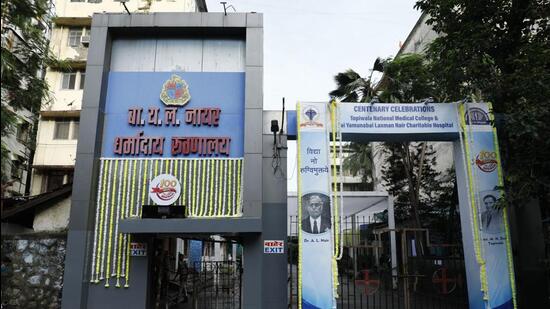
Mumbai's Dr BYL Nair Hospital is set to become the first BMC-run hospital to have a dedicated disaster management ward. This ward will be designed to handle large-scale emergencies and mass casualties under one roof.
The hospital, established over a century ago, will now have a specialized facility to deal with disasters. This move is expected to enhance the city's emergency response capabilities.
The BMC has been working towards improving the city's disaster management infrastructure. The new ward at Nair Hospital is a significant step in this direction. It will provide a centralized facility for handling mass casualties and large-scale emergencies.
Nair Hospital, located at Mumbai Central, has been a major healthcare provider in the city for over a century. The addition of a disaster management ward will further enhance its capabilities. The hospital's proximity to major transportation hubs and its existing infrastructure make it an ideal location for such a facility.
The dedicated disaster management ward will be equipped to handle a wide range of emergencies, from natural disasters to terrorist attacks. It will have specialized equipment and trained staff to deal with mass casualties. The ward will also serve as a command center for coordinating emergency response efforts.
The BMC's decision to set up a dedicated disaster management ward at Nair Hospital is a significant move towards enhancing the city's disaster preparedness. Mumbai is a densely populated city and is prone to various types of disasters, including floods, fires, and terrorist attacks. The new ward will play a critical role in responding to such emergencies.
The establishment of the disaster management ward at Nair Hospital is expected to set a precedent for other hospitals in the city. It will also serve as a model for disaster management facilities in other cities.
In terms of significance, the new ward at Nair Hospital will enhance Mumbai's emergency response capabilities and provide a centralized facility for handling mass casualties. This will contribute to the overall safety and well-being of the city's residents.