Comedians Face Backlash Over Sexist Remarks
Stand-up comedians spark outrage, debate on freedom of expression
'%3E%3Crect%20width%3D'96'%20height%3D'96'%20fill%3D'%23B3261E'%2F%3E%3Ccircle%20cx%3D'30'%20cy%3D'24'%20r%3D'44'%20fill%3D'%23fff'%20opacity%3D'.12'%2F%3E%3Ccircle%20cx%3D'60'%20cy%3D'74'%20r%3D'40'%20fill%3D'%23000'%20opacity%3D'.10'%2F%3E%3C%2Fg%3E%3Cg%20fill%3D'%23fff'%3E%3Crect%20x%3D'29'%20y%3D'49'%20width%3D'8'%20height%3D'19'%20rx%3D'1'%2F%3E%3Crect%20x%3D'39'%20y%3D'40'%20width%3D'9'%20height%3D'28'%20rx%3D'1'%2F%3E%3Crect%20x%3D'50'%20y%3D'45'%20width%3D'8'%20height%3D'23'%20rx%3D'1'%2F%3E%3Crect%20x%3D'60'%20y%3D'53'%20width%3D'7'%20height%3D'15'%20rx%3D'1'%2F%3E%3Crect%20x%3D'41'%20y%3D'34'%20width%3D'5'%20height%3D'6'%2F%3E%3C%2Fg%3E%3C%2Fsvg%3E)
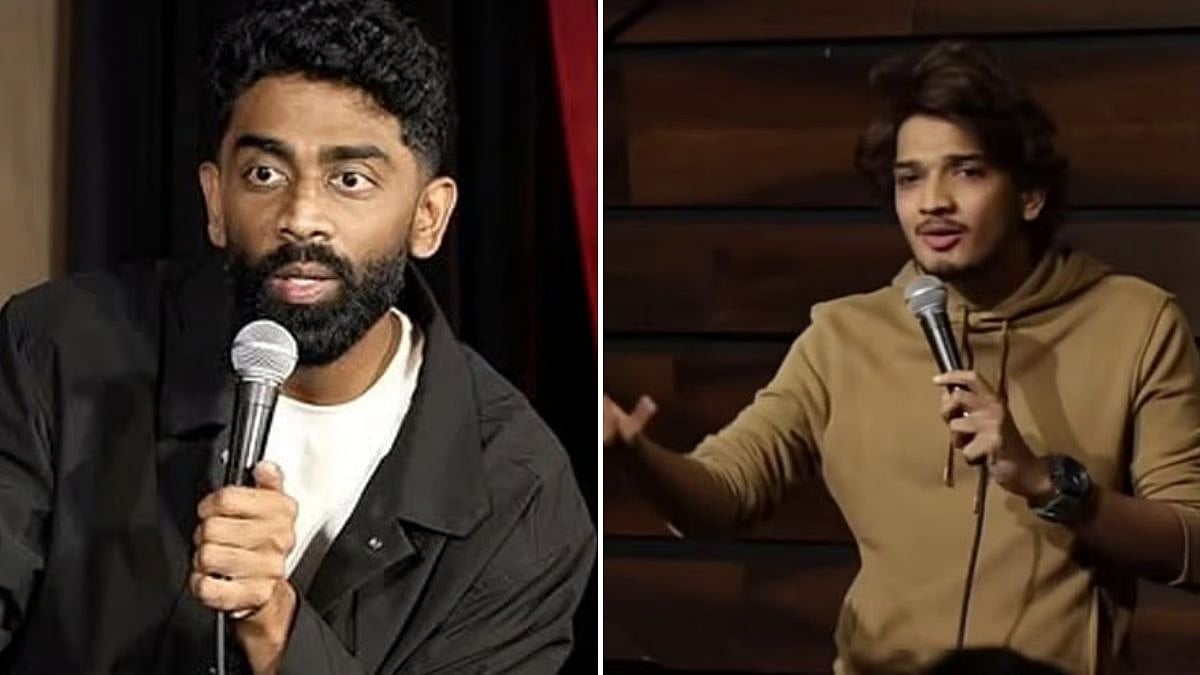
A recent controversy surrounding a young stand-up comedian's remark on rape has sparked a debate on the use of sexist and misogynistic comments in comedy. The comedian, Madhur Virli, made a joke about rape in 2024, which resurfaced and went viral, triggering massive social media backlash.
The incident has raised questions about the limits of freedom of expression and the cultural tolerance of sexism in our society. Many have argued that comedians are crossing the line by using shock value and vulgar provocation to get attention. The use of sexist and misogynistic comments in comedy is not only offensive but also perpetuates a disturbing social phenomenon.
In contrast, observational comedians like Raju Srivastava, Sunil Pal, and Jaspal Bhatti were able to make audiences laugh without resorting to sexist or misogynistic comments. Their comedy was based on everyday observations and was able to poke fun at human eccentricities without offending anyone. Raju Srivastava's comedy, for example, touched upon diverse themes like the daily ordeal of commuters in Mumbai's local trains and the anxieties surrounding marriage in a middle-class family.
Jaspal Bhatti's iconic show Flop Show was also able to bring alive the bureaucratic red tape of government offices and the common man's struggle against rising prices without using crude insinuations or offensive remarks. These shows were able to drive home the point with remarkable effectiveness without leaving a bad taste in the mouth.
The debate on freedom of expression and its limits is not new, but the rise of social media has amplified the issue. Many argue that the constitutional right to freedom of expression is being stretched beyond reasonable limits, blurring the boundary between liberty and restraint. The fact that Virli's comment took nearly two years to attract widespread scrutiny raises questions about the role of social media in perpetuating and amplifying sexist and misogynistic comments.
The incident has also sparked a discussion on the responsibility of comedians to use their platform wisely. While comedians have the right to freedom of expression, they also have a responsibility to ensure that their comments do not perpetuate harm or offense. The use of sexist and misogynistic comments in comedy is not only offensive but also contributes to a culture of tolerance and acceptance of sexism.
In conclusion, the controversy surrounding Virli's comment has sparked a necessary debate on the use of sexist and misogynistic comments in comedy. While freedom of expression is an important right, it is also important to ensure that this right is not used to perpetuate harm or offense. Comedians have a responsibility to use their platform wisely and to ensure that their comments do not contribute to a culture of sexism and misogyny.
The incident has also highlighted the importance of promoting a culture of respect and inclusivity in our society. By promoting comedians who use their platform to perpetuate sexist and misogynistic comments, we are contributing to a culture of tolerance and acceptance of sexism. Instead, we should be promoting comedians who use their platform to promote respect, inclusivity, and social awareness.
Ultimately, the debate on freedom of expression and its limits is complex and multifaceted. However, one thing is clear: comedians have a responsibility to use their platform wisely and to ensure that their comments do not perpetuate harm or offense. By promoting a culture of respect and inclusivity, we can create a society that values freedom of expression while also promoting social awareness and respect for all individuals.
The controversy surrounding Virli's comment has sparked a necessary debate on the use of sexist and misogynistic comments in comedy. It has highlighted the importance of promoting a culture of respect and inclusivity in our society and the responsibility of comedians to use their platform wisely. As we move forward, it is essential that we continue to promote comedians who use their platform to promote respect, inclusivity, and social awareness, rather than those who perpetuate sexist and misogynistic comments.
In the end, comedy should be plain comedy, without any abuse or offense attached to it. It is the responsibility of comedians to ensure that their comments do not perpetuate harm or offense, and it is our responsibility as a society to promote a culture of respect and inclusivity. By doing so, we can create a society that values freedom of expression while also promoting social awareness and respect for all individuals.
The future of comedy depends on our ability to promote a culture of respect and inclusivity. We must continue to promote comedians who use their platform to promote respect, inclusivity, and social awareness, rather than those who perpetuate sexist and misogynistic comments. By doing so, we can create a society that values freedom of expression while also promoting social awareness and respect for all individuals.
In conclusion, the controversy surrounding Virli's comment has sparked a necessary debate on the use of sexist and misogynistic comments in comedy. It has highlighted the importance of promoting a culture of respect and inclusivity in our society and the responsibility of comedians to use their platform wisely. As we move forward, it is essential that we continue to promote comedians who use their platform to promote respect, inclusivity, and social awareness, rather than those who perpetuate sexist and misogynistic comments.
What it means for Mumbai and India is that we need to be more mindful of the content we consume and promote. We need to promote a culture of respect and inclusivity, and we need to hold comedians accountable for their comments. By doing so, we can create a society that values freedom of expression while also promoting social awareness and respect for all individuals.