UK Converts 50 Tonnes Coal Waste Into Reef
UK creates artificial reef from coal waste, attracts lobsters and crabs. Marine life thrives in new habitat.
'%3E%3Crect%20width%3D'96'%20height%3D'96'%20fill%3D'%23B3261E'%2F%3E%3Ccircle%20cx%3D'30'%20cy%3D'24'%20r%3D'44'%20fill%3D'%23fff'%20opacity%3D'.12'%2F%3E%3Ccircle%20cx%3D'60'%20cy%3D'74'%20r%3D'40'%20fill%3D'%23000'%20opacity%3D'.10'%2F%3E%3C%2Fg%3E%3Cg%20fill%3D'%23fff'%3E%3Crect%20x%3D'29'%20y%3D'49'%20width%3D'8'%20height%3D'19'%20rx%3D'1'%2F%3E%3Crect%20x%3D'39'%20y%3D'40'%20width%3D'9'%20height%3D'28'%20rx%3D'1'%2F%3E%3Crect%20x%3D'50'%20y%3D'45'%20width%3D'8'%20height%3D'23'%20rx%3D'1'%2F%3E%3Crect%20x%3D'60'%20y%3D'53'%20width%3D'7'%20height%3D'15'%20rx%3D'1'%2F%3E%3Crect%20x%3D'41'%20y%3D'34'%20width%3D'5'%20height%3D'6'%2F%3E%3C%2Fg%3E%3C%2Fsvg%3E)
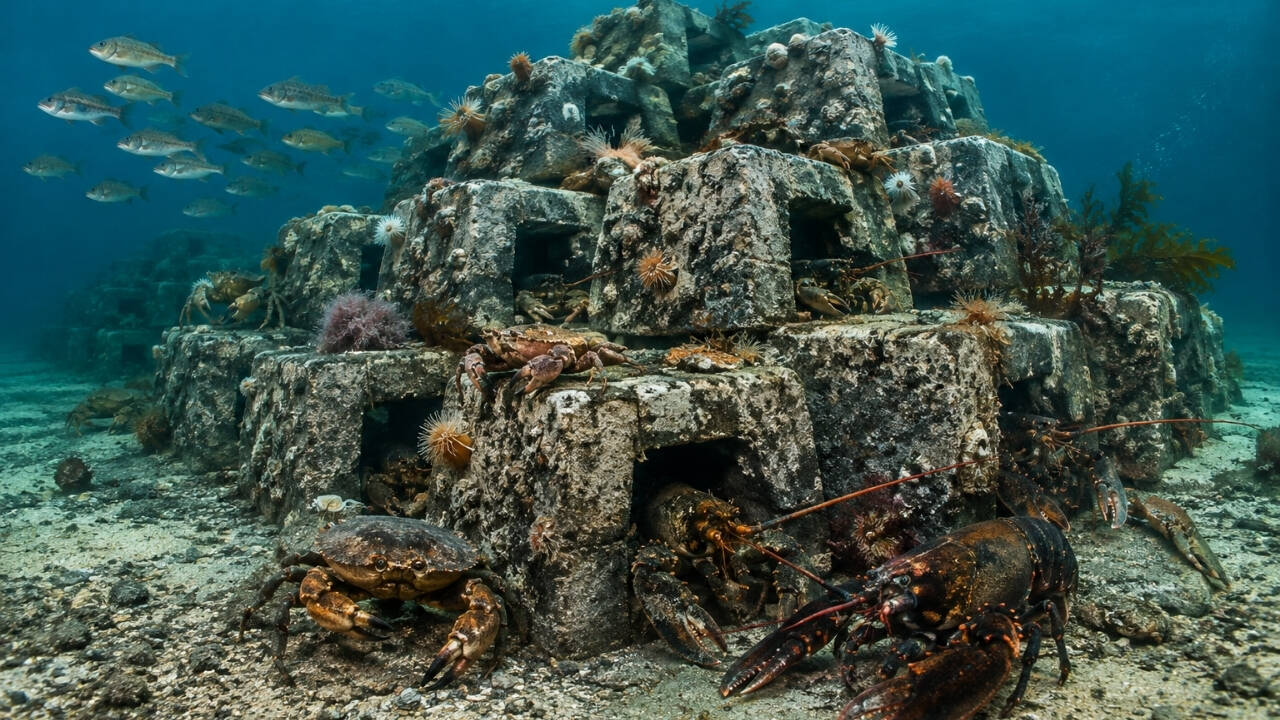
Researchers in the UK have successfully converted 50 tonnes of coal waste into an artificial reef in Poole Bay. The innovative project involved using waste from a coal-fired power station to create a structure that would support marine life.
The results were almost immediate, with marine life beginning to colonize the reef shortly after its deployment. Within three weeks, adult lobsters and edible crabs had already reached the reef, indicating a rapid adaptation to the new environment.
The artificial reef also attracted schools of pouting, a species of fish, and supported the reproduction of several species. This experiment demonstrates the potential for industrial waste to be repurposed as a productive marine habitat, highlighting the possibilities for creative waste management.
The project's success can be attributed to the careful design and placement of the artificial reef, which provided a suitable environment for marine life to thrive. The use of coal waste as a primary material also underscores the potential for reducing waste and promoting sustainability in industrial practices.
The creation of artificial reefs is not a new concept, but the use of industrial waste as a primary material is a significant innovation. Artificial reefs have been used in various parts of the world to support marine biodiversity and promote fisheries. However, the use of coal waste in this project sets a new precedent for the creative repurposing of industrial by-products.
The implications of this project are far-reaching, with potential applications in coastal management and conservation. The ability to create productive marine habitats from industrial waste could provide new opportunities for restoring damaged ecosystems and promoting biodiversity.
In the context of global efforts to reduce waste and promote sustainability, this project serves as a promising example of innovative waste management. The conversion of coal waste into a thriving marine habitat demonstrates the potential for creative solutions to environmental challenges.
The success of this project also highlights the importance of interdisciplinary collaboration and creative thinking in addressing environmental issues. By bringing together researchers, engineers, and conservationists, it is possible to develop innovative solutions that benefit both the environment and local communities.
In conclusion, the creation of an artificial reef from coal waste in the UK serves as a powerful example of the potential for industrial waste to be repurposed as a productive marine habitat. The project's success demonstrates the importance of creative waste management and highlights the possibilities for promoting sustainability in industrial practices.
The project's findings have significant implications for the management of coastal ecosystems and the promotion of marine biodiversity. As the world continues to grapple with the challenges of environmental sustainability, innovative solutions like this one will play an increasingly important role in shaping our response to these challenges.
The ability to create thriving marine habitats from industrial waste is a significant breakthrough, and one that could have far-reaching implications for coastal conservation and management. As researchers and conservationists continue to explore the possibilities of artificial reefs, it is likely that we will see more innovative projects like this one in the future.
The use of coal waste as a primary material in the creation of artificial reefs is a significant innovation, and one that could help to reduce waste and promote sustainability in industrial practices. As the world continues to search for creative solutions to environmental challenges, projects like this one will serve as a powerful example of the potential for innovation and collaboration to drive positive change.
The creation of artificial reefs from industrial waste is a promising area of research, and one that could have significant implications for the management of coastal ecosystems. As researchers continue to explore the possibilities of this technology, it is likely that we will see more innovative projects like this one in the future.
The project's success is a testament to the power of creative thinking and interdisciplinary collaboration in addressing environmental challenges. By bringing together researchers, engineers, and conservationists, it is possible to develop innovative solutions that benefit both the environment and local communities.
In the end, the creation of an artificial reef from coal waste in the UK serves as a powerful example of the potential for industrial waste to be repurposed as a productive marine habitat. The project's success demonstrates the importance of creative waste management and highlights the possibilities for promoting sustainability in industrial practices.
Frequently asked questions
What was used to create the artificial reef in the UK?
The artificial reef was created from 50 tonnes of coal waste from a coal-fired power station.
How long did it take for marine life to colonize the reef?
Marine life began colonizing the structure almost immediately after its deployment, with adult lobsters and edible crabs arriving within three weeks.