Landlords Can't Refuse Unmarried Couples
Unmarried couples face obstacles, Supreme Court acknowledges live-in relationships
'%3E%3Crect%20width%3D'96'%20height%3D'96'%20fill%3D'%23B3261E'%2F%3E%3Ccircle%20cx%3D'30'%20cy%3D'24'%20r%3D'44'%20fill%3D'%23fff'%20opacity%3D'.12'%2F%3E%3Ccircle%20cx%3D'60'%20cy%3D'74'%20r%3D'40'%20fill%3D'%23000'%20opacity%3D'.10'%2F%3E%3C%2Fg%3E%3Cg%20fill%3D'%23fff'%3E%3Crect%20x%3D'29'%20y%3D'49'%20width%3D'8'%20height%3D'19'%20rx%3D'1'%2F%3E%3Crect%20x%3D'39'%20y%3D'40'%20width%3D'9'%20height%3D'28'%20rx%3D'1'%2F%3E%3Crect%20x%3D'50'%20y%3D'45'%20width%3D'8'%20height%3D'23'%20rx%3D'1'%2F%3E%3Crect%20x%3D'60'%20y%3D'53'%20width%3D'7'%20height%3D'15'%20rx%3D'1'%2F%3E%3Crect%20x%3D'41'%20y%3D'34'%20width%3D'5'%20height%3D'6'%2F%3E%3C%2Fg%3E%3C%2Fsvg%3E)
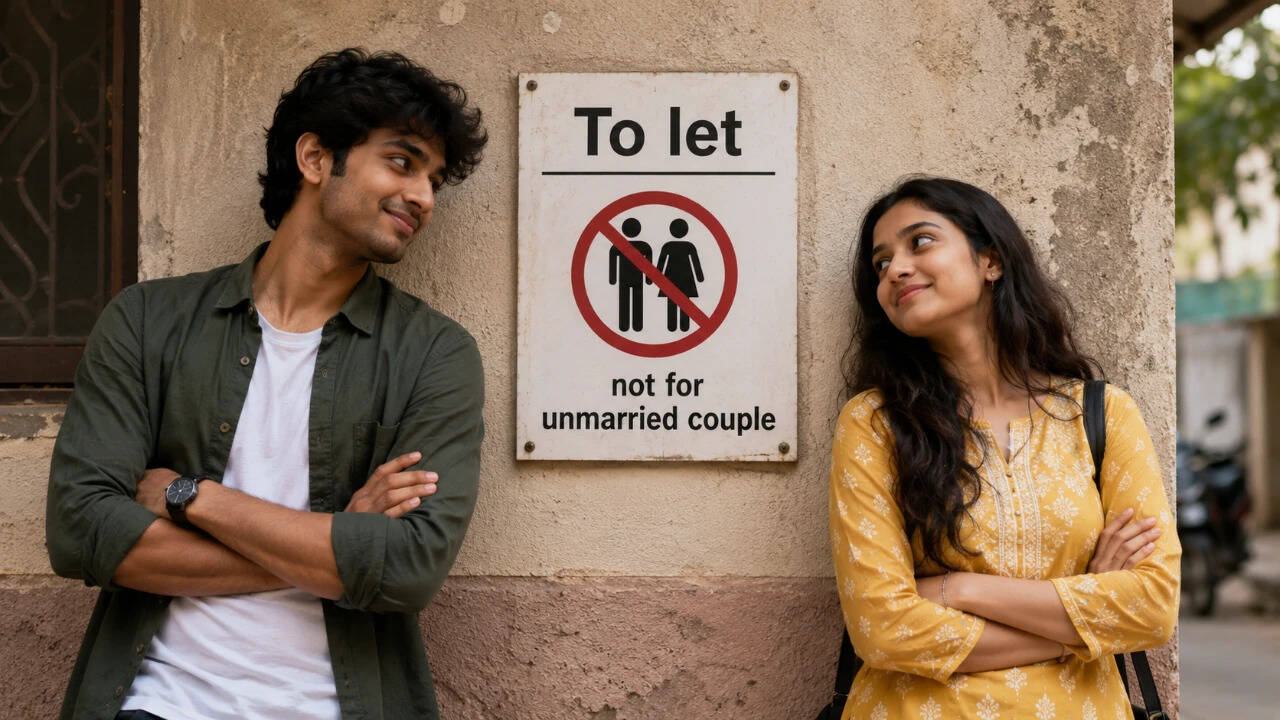
In India, unmarried couples often struggle to find housing due to landlords and housing societies adhering to traditional societal norms. Despite the Supreme Court recognizing live-in relationships as legal for consenting adults, the lack of nationwide anti-discrimination laws enables personal biases to continue.
This issue is particularly prevalent in urban areas, where young couples are more likely to be in live-in relationships. Many landlords and housing societies still view such relationships as unacceptable, leading to difficulties for couples seeking accommodation.
The Supreme Court has consistently upheld the right of consenting adults to engage in live-in relationships, emphasizing the importance of individual freedom and choice. However, the absence of specific laws prohibiting discrimination against unmarried couples in housing allows landlords to refuse them accommodation based on personal prejudices.
To protect themselves, unmarried couples are advised to establish written agreements with their landlords, outlining the terms of their tenancy. Keeping thorough records of payments and other relevant documents is also crucial in case of disputes.
In recent years, there have been efforts to promote greater acceptance of live-in relationships in Indian society. However, more needs to be done to address the discrimination faced by unmarried couples in the housing market. The implementation of anti-discrimination laws would help to ensure that all individuals, regardless of their relationship status, have equal access to housing.
The struggle faced by unmarried couples in finding housing is a reflection of the broader societal attitudes towards live-in relationships. As Indian society continues to evolve, it is essential to recognize the rights of all individuals, including those in live-in relationships, and to work towards creating a more inclusive and accepting environment.
In the context of Mumbai, where the housing market is highly competitive, unmarried couples may face even greater challenges in finding accommodation. The city's housing societies and landlords must be encouraged to adopt more progressive attitudes towards live-in relationships, recognizing the rights of all individuals to housing, regardless of their relationship status.
Ultimately, the issue of discrimination against unmarried couples in housing highlights the need for greater awareness and acceptance of live-in relationships in Indian society. By promoting education and understanding, we can work towards creating a more inclusive environment, where all individuals have equal access to housing and other rights.
The significance of this issue extends beyond the individual couples affected, as it reflects the broader societal attitudes towards personal freedom and choice. As India continues to evolve and grow, it is essential to recognize the importance of individual rights and to work towards creating a more inclusive and accepting society.