Mumbai May Introduce Congestion Tax For Peak-Hour Driving
BMC considers congestion tax, Mumbai traffic, peak-hour driving
'%3E%3Crect%20width%3D'96'%20height%3D'96'%20fill%3D'%23B3261E'%2F%3E%3Ccircle%20cx%3D'30'%20cy%3D'24'%20r%3D'44'%20fill%3D'%23fff'%20opacity%3D'.12'%2F%3E%3Ccircle%20cx%3D'60'%20cy%3D'74'%20r%3D'40'%20fill%3D'%23000'%20opacity%3D'.10'%2F%3E%3C%2Fg%3E%3Cg%20fill%3D'%23fff'%3E%3Crect%20x%3D'29'%20y%3D'49'%20width%3D'8'%20height%3D'19'%20rx%3D'1'%2F%3E%3Crect%20x%3D'39'%20y%3D'40'%20width%3D'9'%20height%3D'28'%20rx%3D'1'%2F%3E%3Crect%20x%3D'50'%20y%3D'45'%20width%3D'8'%20height%3D'23'%20rx%3D'1'%2F%3E%3Crect%20x%3D'60'%20y%3D'53'%20width%3D'7'%20height%3D'15'%20rx%3D'1'%2F%3E%3Crect%20x%3D'41'%20y%3D'34'%20width%3D'5'%20height%3D'6'%2F%3E%3C%2Fg%3E%3C%2Fsvg%3E)
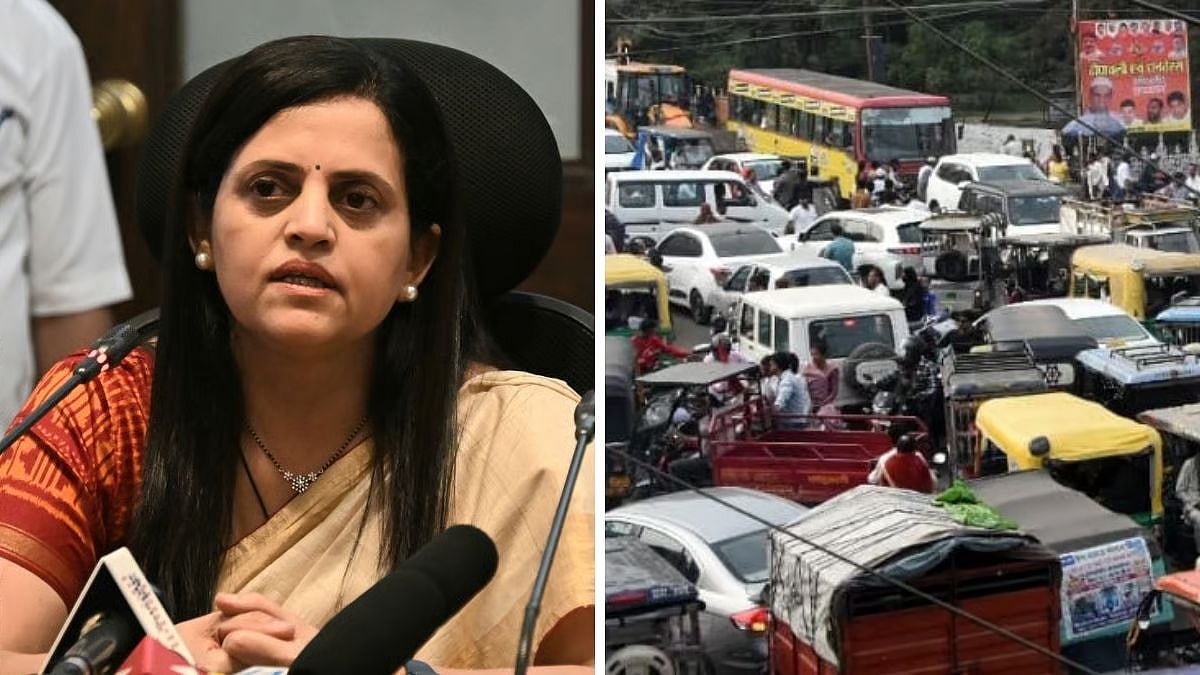
Mumbai is considering introducing a congestion tax for driving during peak hours, according to Brihanmumbai Municipal Corporation (BMC) Commissioner Ashwini Bhide. The tax would aim to reduce traffic congestion in the city's busiest areas.
The proposal is being considered as a solution to Mumbai's traffic problem, but only if a reliable public transport alternative is available. Bhide stated that congestion pricing could be a solution if Mumbai develops a robust public transport network.
Bhide cited the examples of London and Singapore, which have successfully implemented congestion charges due to their well-connected public transport networks. In these cities, commuters can use a common card across different modes of transport, and higher costs for private vehicle use encourage people to opt for public transport.
A similar approach could be considered for Mumbai, but an efficient public transport network would be essential. Bhide emphasized that the city's bus fleet needs to be robust before introducing congestion pricing.
The idea of congestion pricing in Mumbai has been raised previously. BJP corporator Makarand Narwekar had earlier suggested designing and piloting a congestion-pricing system targeting single-occupant private vehicles entering some of South Mumbai's busiest areas during peak hours.
The proposed zones included Fort, Nariman Point, and Colaba. Under such a system, private vehicles entering designated high-traffic zones during specified periods could be required to pay a fee, with the aim of reducing the number of cars on already congested roads.
Mumbai routinely witnesses heavy traffic congestion during peak hours, affecting thousands of daily commuters and increasing travel times across key stretches of the city. The introduction of a congestion tax could help alleviate this problem.
However, the proposal remains an idea for consideration, and no concrete plans have been announced. The BMC would need to assess the feasibility of implementing a congestion tax and ensure that it is fair and effective.
In conclusion, the introduction of a congestion tax in Mumbai could be a step towards reducing traffic congestion in the city. However, it is crucial that a reliable public transport alternative is available before implementing such a system.
The success of congestion pricing in other cities, such as London and Singapore, suggests that it could be an effective solution for Mumbai's traffic problem. With a robust public transport network in place, the city could consider introducing a congestion tax to discourage unnecessary private vehicle trips and encourage greater use of public transport.
This could have a significant impact on the daily lives of Mumbai's commuters, reducing travel times and making the city a more pleasant place to live and work. As the city continues to grow and develop, finding solutions to its traffic problem is essential, and the introduction of a congestion tax could be an important step in this direction.
The BMC's consideration of a congestion tax is a positive development, and it will be interesting to see how this proposal develops in the coming months. With the right approach, Mumbai could become a more sustainable and livable city, with a reduced reliance on private vehicles and a more efficient public transport system.
In the long run, the introduction of a congestion tax could have a positive impact on the environment, reducing air pollution and promoting a healthier lifestyle. It could also generate revenue for the city, which could be used to improve public transport and other infrastructure.
Overall, the proposal to introduce a congestion tax in Mumbai is a welcome development, and it has the potential to make a significant difference to the city's traffic problem. With careful planning and implementation, it could be an effective solution to reducing congestion and promoting a more sustainable transport system.
Frequently asked questions
What is a congestion tax?
A congestion tax, also known as congestion pricing, involves imposing a fee on vehicles entering or travelling through designated high-traffic areas, particularly during peak hours.
Why is the congestion tax being considered in Mumbai?
The congestion tax is being considered as a solution to Mumbai's traffic problem, to reduce traffic congestion in the city's busiest areas and encourage greater use of public transport.