US Imposes New Tariffs On Canada
US expands tariffs on Canada, targets alcohol and dairy. Canada retaliates with own tariffs.
'%3E%3Crect%20width%3D'96'%20height%3D'96'%20fill%3D'%234A235A'%2F%3E%3Ccircle%20cx%3D'30'%20cy%3D'24'%20r%3D'44'%20fill%3D'%23fff'%20opacity%3D'.12'%2F%3E%3Ccircle%20cx%3D'60'%20cy%3D'74'%20r%3D'40'%20fill%3D'%23000'%20opacity%3D'.10'%2F%3E%3C%2Fg%3E%3Cg%20fill%3D'none'%20stroke%3D'%23fff'%20stroke-width%3D'3'%3E%3Ccircle%20cx%3D'48'%20cy%3D'48'%20r%3D'16'%2F%3E%3Cellipse%20cx%3D'48'%20cy%3D'48'%20rx%3D'6.5'%20ry%3D'16'%2F%3E%3Cline%20x1%3D'32'%20y1%3D'42'%20x2%3D'64'%20y2%3D'42'%2F%3E%3Cline%20x1%3D'32'%20y1%3D'54'%20x2%3D'64'%20y2%3D'54'%2F%3E%3C%2Fg%3E%3C%2Fsvg%3E)
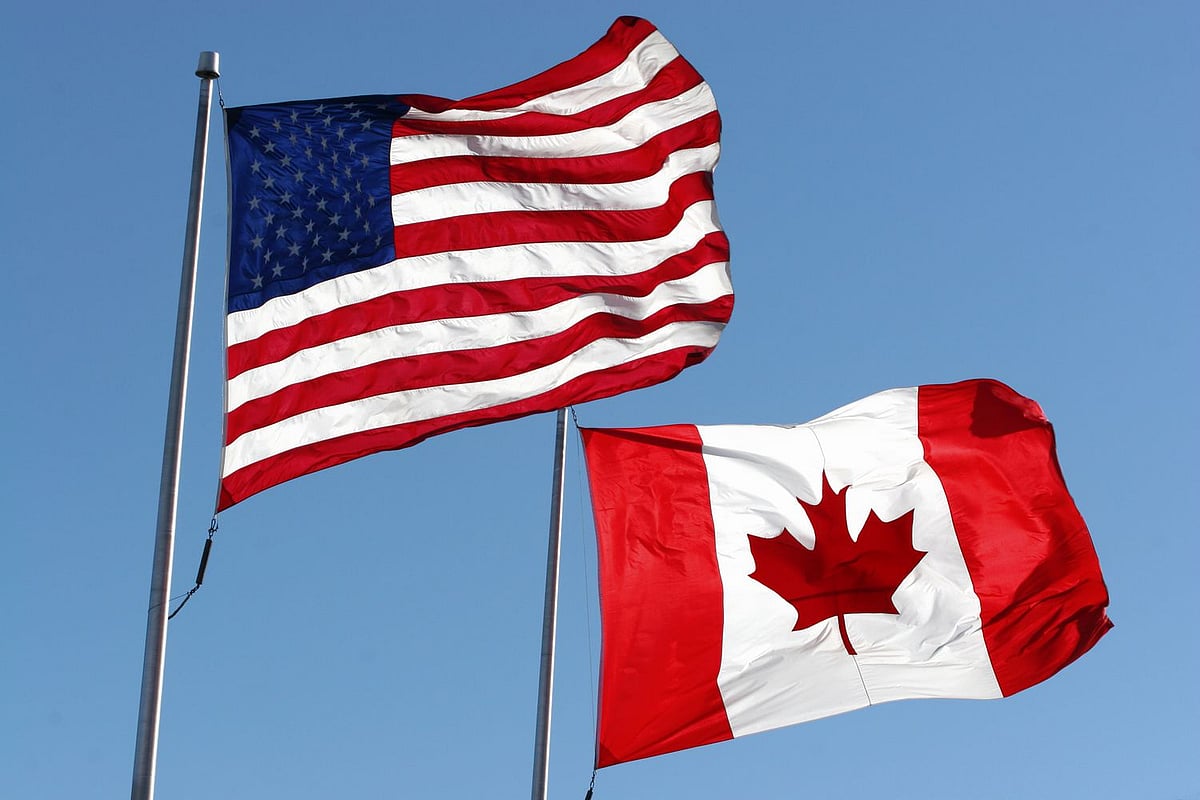
The United States has intensified its trade dispute with Canada by announcing additional tariffs and import restrictions on a range of Canadian goods.
US President Donald Trump announced the measures, alleging that Canada was discriminating against US commerce.
The new restrictions, scheduled to come into effect from September 29, include import bans on alcoholic beverages, dairy products, and motorcycles. From September 15, Washington will extend its existing 50% tariffs to several additional Canadian products, including steel and aluminium goods, furniture, and paper products.
The expanded list of products facing higher tariffs also includes motorboats, golf carts, and bamboo furniture. Canadian steel beams and girders, along with aluminium bars, rods, tubes, and pipes, will also face the higher tariff rate.
The latest action follows the US decision last month to impose 50% tariffs on nearly $20 billion worth of Canadian imports. However, Washington has removed some products, including cement and road salt, from the tariff list after considering business concerns and supply-chain requirements.
The new import bans will cover products such as beer, wine, cider, whisky, vodka, and other spirits. Additional items include molasses, whey products, and non-alcoholic beer. The restrictions have been introduced under Section 338 of the Tariff Act of 1930, which allows the US president to limit imports from countries accused of unfairly restricting American trade.
Canada has responded by introducing retaliatory tariffs of 15% to 50% on around $20 billion worth of US imports. The measures target American products including steel, furniture, clothing, and electronics. Canadian Prime Minister Justin Trudeau was not available for comment, however, Canadian officials stated that reducing the country’s dependence on the US as its largest trading partner “will come at a cost”.
Although officials from both countries remain engaged, formal trade discussions have not resumed after negotiations broke down in late August. The trade dispute between the US and Canada is likely to have significant implications for businesses and consumers on both sides of the border.
The US-Canada trade relationship is one of the largest and most complex in the world, with billions of dollars in goods and services traded between the two countries every year. The imposition of tariffs and import restrictions is likely to disrupt supply chains and increase costs for businesses and consumers.
In conclusion, the trade dispute between the US and Canada is a significant development that is likely to have far-reaching implications for businesses and consumers on both sides of the border. The imposition of tariffs and import restrictions is a major escalation of the trade dispute, and it remains to be seen how the situation will unfold in the coming weeks and months.
The trade dispute is also likely to have significant implications for the global economy, as the US and Canada are two of the world's largest economies. The imposition of tariffs and import restrictions is likely to increase costs and disrupt supply chains, which could have a negative impact on economic growth and job creation.
Overall, the trade dispute between the US and Canada is a complex and multifaceted issue that is likely to have significant implications for businesses and consumers on both sides of the border. It remains to be seen how the situation will unfold in the coming weeks and months, but one thing is certain - the trade dispute is likely to have a major impact on the global economy.
Frequently asked questions
What products are affected by the US tariffs on Canada?
The tariffs affect a range of Canadian goods, including alcoholic beverages, dairy products, and motorcycles.
How has Canada responded to the US tariffs?
Canada has introduced retaliatory tariffs of 15% to 50% on around $20 billion worth of US imports.