Mercedes-Benz India Confirms E20 Fuel Compatibility
Mercedes-Benz India addresses E20 fuel concerns, assures customers of vehicle compatibility. Debate sparked by viral social media clip.
'%3E%3Crect%20width%3D'96'%20height%3D'96'%20fill%3D'%23B3261E'%2F%3E%3Ccircle%20cx%3D'30'%20cy%3D'24'%20r%3D'44'%20fill%3D'%23fff'%20opacity%3D'.12'%2F%3E%3Ccircle%20cx%3D'60'%20cy%3D'74'%20r%3D'40'%20fill%3D'%23000'%20opacity%3D'.10'%2F%3E%3C%2Fg%3E%3Cg%20fill%3D'%23fff'%3E%3Crect%20x%3D'29'%20y%3D'49'%20width%3D'8'%20height%3D'19'%20rx%3D'1'%2F%3E%3Crect%20x%3D'39'%20y%3D'40'%20width%3D'9'%20height%3D'28'%20rx%3D'1'%2F%3E%3Crect%20x%3D'50'%20y%3D'45'%20width%3D'8'%20height%3D'23'%20rx%3D'1'%2F%3E%3Crect%20x%3D'60'%20y%3D'53'%20width%3D'7'%20height%3D'15'%20rx%3D'1'%2F%3E%3Crect%20x%3D'41'%20y%3D'34'%20width%3D'5'%20height%3D'6'%2F%3E%3C%2Fg%3E%3C%2Fsvg%3E)
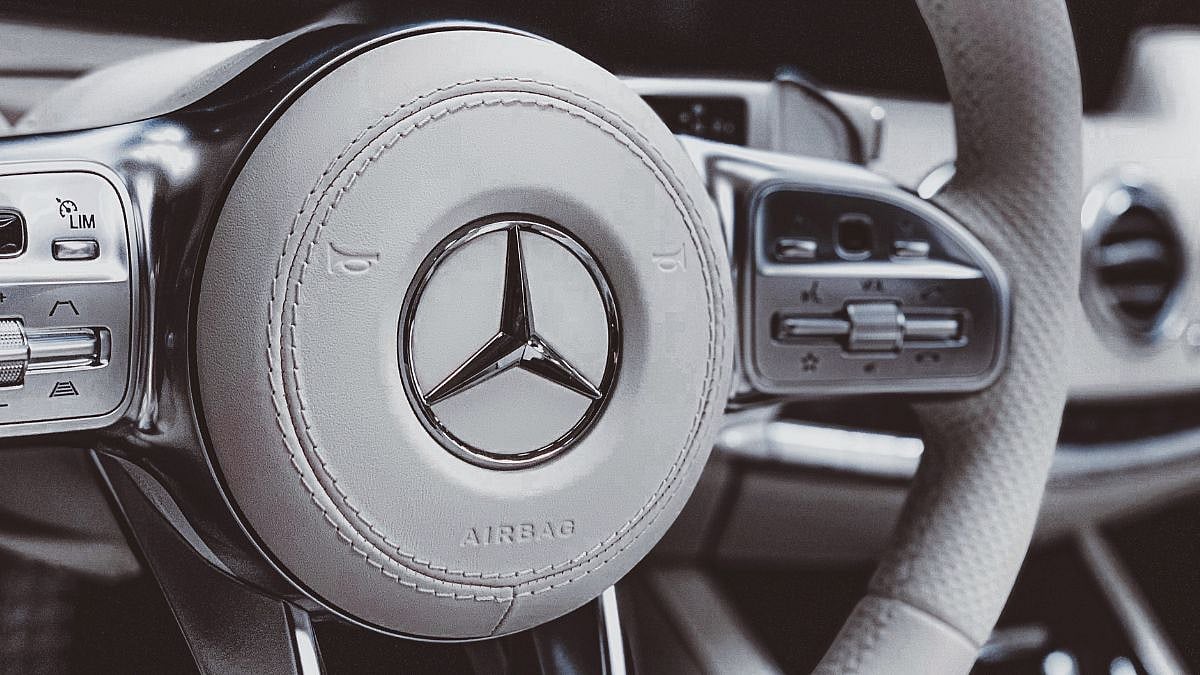
Mercedes-Benz India has issued a customer advisory to reaffirm that all its petrol BS VI vehicles are fully compatible with E20 fuel. This comes after a viral social media clip featuring YouTuber Sourav Joshi and former Delhi Chief Minister Arvind Kejriwal sparked concerns over the impact of ethanol-blended fuel on vehicle performance.
The advisory states that customer safety, vehicle reliability, and performance remain the company's highest priorities. It emphasizes that all Mercedes-Benz petrol BS VI vehicles are compatible with E20 fuel and have been certified by the relevant authorities. The company has assured customers that it remains available to address any technical queries and has reiterated its commitment to sustainable mobility.
The debate began after a video circulated on social media in which Sourav Joshi claimed that the fuel efficiency of his Mercedes-Benz had dropped dramatically after switching to E20 petrol. He alleged that the car's mileage had fallen from around 16-17 km/l to nearly 5 km/l. However, Joshi has since deleted the vlog segment in which he made the mileage claim.
The Government of India has been promoting E20 petrol as part of its strategy to reduce dependence on imported crude oil, cut carbon emissions, and boost domestic ethanol production. Automobile manufacturers have introduced E20-compatible vehicles in line with this policy. Mercedes-Benz India's clarification aims to reassure customers about the compatibility of their vehicles with E20 fuel.
The company's statement is significant, given the growing discussion around E20 fuel and its impact on vehicle performance. The viral social media clip had sparked concerns among vehicle owners, with some expressing doubts about the suitability of E20 fuel for their vehicles. Mercedes-Benz India's advisory seeks to address these concerns and provide clarity on the compatibility of its vehicles with E20 fuel.
In the context of the Government of India's policy to promote E20 petrol, Mercedes-Benz India's statement is a reassuring one for customers. The company's commitment to sustainable mobility and customer safety is evident in its advisory. As the country moves towards reducing its dependence on imported crude oil and cutting carbon emissions, the compatibility of vehicles with E20 fuel is an important consideration.
The debate around E20 fuel is likely to continue, with some vehicle owners expressing concerns about its impact on vehicle performance. However, Mercedes-Benz India's clarification provides a measure of reassurance for customers who own petrol BS VI vehicles. The company's commitment to addressing technical queries and its emphasis on customer safety and vehicle reliability are positive steps in this regard.
In conclusion, Mercedes-Benz India's confirmation of E20 fuel compatibility is a significant development in the context of the Government of India's policy to promote ethanol-blended fuel. The company's advisory provides clarity and reassurance for customers, and its commitment to sustainable mobility and customer safety is evident in its statement. As the country moves towards a more sustainable and environmentally friendly transportation system, the compatibility of vehicles with E20 fuel is an important consideration.
The implications of this development are significant for vehicle owners and the automotive industry as a whole. With the Government of India promoting E20 petrol, automobile manufacturers are likely to introduce more E20-compatible vehicles in the future. This could lead to a reduction in dependence on imported crude oil and a decrease in carbon emissions, which would be a positive step towards a more sustainable transportation system.
Overall, Mercedes-Benz India's confirmation of E20 fuel compatibility is a positive development that provides reassurance for customers and underscores the company's commitment to sustainable mobility and customer safety. As the debate around E20 fuel continues, it is likely that other automobile manufacturers will follow suit and provide similar clarifications on the compatibility of their vehicles with E20 fuel.
The future of transportation in India is likely to be shaped by the promotion of ethanol-blended fuel, and Mercedes-Benz India's statement is an important step in this regard. The company's commitment to customer safety, vehicle reliability, and sustainable mobility is evident in its advisory, and it is likely that other automobile manufacturers will follow suit in the future. As the country moves towards a more sustainable and environmentally friendly transportation system, the compatibility of vehicles with E20 fuel is an important consideration that is likely to shape the future of the automotive industry in India.
In the end, Mercedes-Benz India's confirmation of E20 fuel compatibility is a significant development that provides reassurance for customers and underscores the company's commitment to sustainable mobility and customer safety. The implications of this development are significant for vehicle owners and the automotive industry as a whole, and it is likely that other automobile manufacturers will follow suit in the future. As the debate around E20 fuel continues, it is clear that the promotion of ethanol-blended fuel is an important step towards a more sustainable transportation system in India.
What it means for Mumbai and India is that the automotive industry is moving towards a more sustainable and environmentally friendly future. The promotion of E20 petrol is a significant step in this regard, and Mercedes-Benz India's confirmation of E20 fuel compatibility is an important development that provides reassurance for customers. As the country moves towards reducing its dependence on imported crude oil and cutting carbon emissions, the compatibility of vehicles with E20 fuel is an important consideration that is likely to shape the future of the automotive industry in India.