Elon Musk Predicts Money Will Be Irrelevant By 2036
Elon Musk says AI-driven abundance will make money obsolete. He predicts deflation, not inflation, will be the issue.
'%3E%3Crect%20width%3D'96'%20height%3D'96'%20fill%3D'%230B6E4F'%2F%3E%3Ccircle%20cx%3D'30'%20cy%3D'24'%20r%3D'44'%20fill%3D'%23fff'%20opacity%3D'.12'%2F%3E%3Ccircle%20cx%3D'60'%20cy%3D'74'%20r%3D'40'%20fill%3D'%23000'%20opacity%3D'.10'%2F%3E%3C%2Fg%3E%3Cg%20fill%3D'none'%20stroke%3D'%23fff'%20stroke-width%3D'3.2'%20stroke-linecap%3D'round'%20stroke-linejoin%3D'round'%3E%3Cpolyline%20points%3D'31%2C59%2041%2C49%2049%2C54%2063%2C37'%2F%3E%3Cpolyline%20points%3D'55%2C37%2063%2C37%2063%2C45'%2F%3E%3C%2Fg%3E%3C%2Fsvg%3E)
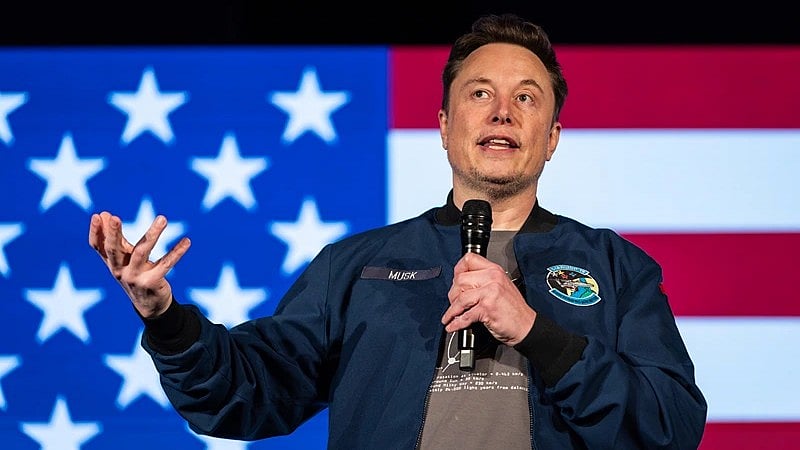
Elon Musk, CEO of Tesla and SpaceX, has made a bold prediction that money may no longer matter by 2036. In a conversation with The Economist, Musk argued that AI and robotics will make goods and services so abundant that traditional economic constraints around scarcity will disappear.
Musk's central argument is that money only has value because goods and services are limited. He believes that if robots and AI can produce more goods and services than humans can consume, the value of money will break down.
The interviewer raised concerns about how societies would manage the transition to such a world without triggering job losses, deepening wealth inequality, and political instability. Musk suggested that governments could provide direct financial support to individuals, rather than relying on traditional welfare structures.
Musk also predicted that deflation, not inflation, will be the defining economic challenge of the AI era. He believes that the output of goods and services will increase dramatically, making money less valuable.
Despite following Musk's economic reasoning, the interviewer remained sceptical about whether the current political climate could support such a transition. Musk acknowledged that even he holds conflicting views on where AI is headed, describing his own outlook as one that shifts constantly.
The concept of an AI-driven economy is not new, but Musk's prediction of a post-scarcity economy raises important questions about the future of work and the role of government in supporting individuals. As AI and robotics continue to advance, it is likely that we will see significant changes in the way we think about money and the economy.
In recent years, there has been a growing concern about the impact of automation on jobs and the economy. While some experts believe that AI and robotics will create new job opportunities, others are more pessimistic, predicting widespread job losses and economic disruption.
Musk's prediction of a post-scarcity economy is based on the idea that AI and robotics will be able to produce goods and services at a much faster rate than humans. This could lead to a significant increase in productivity and a decrease in the cost of goods and services.
However, the transition to such a world will not be without its challenges. Governments will need to consider how to support individuals who are displaced by automation, and how to ensure that the benefits of increased productivity are shared fairly.
In conclusion, Elon Musk's prediction of a post-scarcity economy raises important questions about the future of money and the economy. While there are many challenges to be addressed, it is clear that AI and robotics will have a significant impact on the way we think about work and the economy in the years to come.
Frequently asked questions
What is Elon Musk's prediction for the future of money?
Elon Musk predicts that money will be irrelevant by 2036 due to AI-driven abundance.
How does Musk think governments should support individuals in a post-scarcity economy?
Musk suggests that governments could provide direct financial support to individuals, rather than relying on traditional welfare structures.