Shravan Begins Earlier In North India Than Maharashtra
Shravan starts early in North India, confusing many. Find out why.
'%3E%3Crect%20width%3D'96'%20height%3D'96'%20fill%3D'%23B3261E'%2F%3E%3Ccircle%20cx%3D'30'%20cy%3D'24'%20r%3D'44'%20fill%3D'%23fff'%20opacity%3D'.12'%2F%3E%3Ccircle%20cx%3D'60'%20cy%3D'74'%20r%3D'40'%20fill%3D'%23000'%20opacity%3D'.10'%2F%3E%3C%2Fg%3E%3Cg%20fill%3D'%23fff'%3E%3Crect%20x%3D'29'%20y%3D'49'%20width%3D'8'%20height%3D'19'%20rx%3D'1'%2F%3E%3Crect%20x%3D'39'%20y%3D'40'%20width%3D'9'%20height%3D'28'%20rx%3D'1'%2F%3E%3Crect%20x%3D'50'%20y%3D'45'%20width%3D'8'%20height%3D'23'%20rx%3D'1'%2F%3E%3Crect%20x%3D'60'%20y%3D'53'%20width%3D'7'%20height%3D'15'%20rx%3D'1'%2F%3E%3Crect%20x%3D'41'%20y%3D'34'%20width%3D'5'%20height%3D'6'%2F%3E%3C%2Fg%3E%3C%2Fsvg%3E)
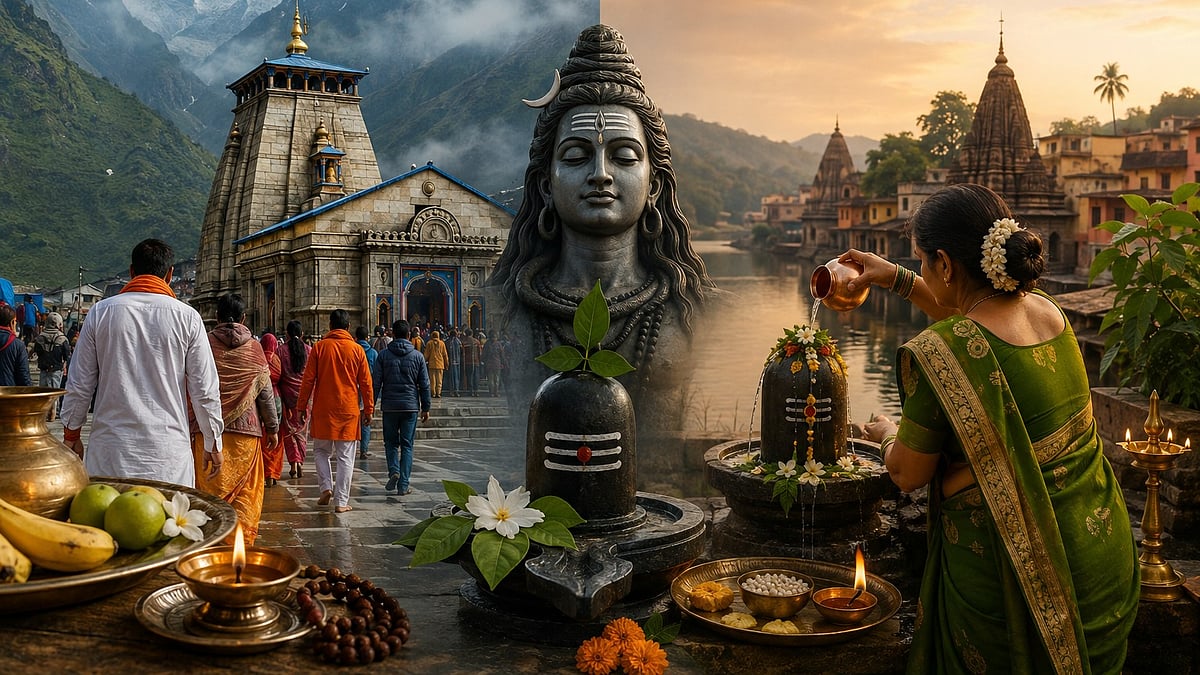
The Hindu month of Shravan, considered the most auspicious, has begun earlier in North India than in Maharashtra. In North India, Shravan started on July 30th and will end on August 28th, while in Maharashtra, it began on August 13th and will end on September 11th.
This difference in dates has caused confusion, especially among the younger generation who are seeing the North celebrate Shravan online. To understand the reason behind this difference, it's essential to look at the Hindu calendar and the traditions followed in different parts of the country.
In North India, many people observe Shravan fasts, which involve abstaining from certain foods and activities. Uttarakhand-based advocate Roopal and Delhi-based student Shivangi Shekhawat are two such individuals who have been observing Shravan fasts for several years. They believe that fasting during Shravan helps them develop discipline and spend more time in self-reflection.
In Maharashtra, the tradition of observing Shravan is also prevalent. Mumbai-based housewife Karuna Waghmare has been observing Shravan for many years and considers it a time for slowing down and spending quiet time with oneself. She calls this period 'a pause' and follows a simple fast routine that includes having fruits, milk, and other allowed foods.
Both in North India and Maharashtra, the fast routine during Shravan involves an early-morning bath and prayers to Lord Shiva. The foods allowed during the fast vary, but most people stick to a sattvic diet that includes fruits, milk, and other pure foods.
According to Dr Aaryaa Ashutosh Joshi, a researcher of Hindu studies, the difference in dates between North India and Maharashtra is due to the traditional Hindu calendar, which is based on the lunar cycle. The calendar has two systems: Amanta, which ends on the new moon day, and Purnimanta, which ends on the full moon day. The start of muhurtas and cycles is based on seasons, and the calendar is set to ensure that rituals are performed at an auspicious time.
The Jyotish Vedanga system, which calculates time based on the solar and lunar year, also plays a role in determining the dates of Shravan. This system takes into account the Adhik Maas, which is an extra month that occurs every few years.
In conclusion, the difference in dates between North India and Maharashtra is due to the traditional Hindu calendar and the systems used to calculate time. While the dates may vary, the essence of Shravan remains the same - a time for spiritual growth, self-reflection, and devotion.
The month of Shravan is significant in Hinduism, and its observance is an essential part of the religion. By understanding the reasons behind the difference in dates, we can appreciate the diversity and richness of Hindu traditions.
As the month of Shravan progresses, people in both North India and Maharashtra will continue to observe the fasts and rituals, each in their own way. The common thread that binds them is their devotion to Lord Shiva and their commitment to spiritual growth.
In the end, Shravan is a time for renewal and rejuvenation, a time to slow down and focus on one's inner self. Whether observed in North India or Maharashtra, the essence of Shravan remains the same - a time for spiritual growth, self-reflection, and devotion.
The significance of Shravan can be seen in the way people observe the fasts and rituals. It's a time for people to come together and celebrate their faith, and the differences in dates only add to the richness and diversity of the tradition.
Overall, Shravan is an essential part of Hinduism, and its observance is a testament to the faith and devotion of the people. As the month progresses, people will continue to observe the fasts and rituals, each in their own way, and the essence of Shravan will remain the same - a time for spiritual growth, self-reflection, and devotion.
Frequently asked questions
Why does Shravan start earlier in North India than Maharashtra?
The difference in dates is due to the traditional Hindu calendar and the systems used to calculate time.
What is the significance of Shravan in Hinduism?
Shravan is considered the most auspicious month in Hinduism and is a time for spiritual growth, self-reflection, and devotion.