UN Unveils New World Map
New map shows Africa larger, Europe smaller. See the changes.
'%3E%3Crect%20width%3D'96'%20height%3D'96'%20fill%3D'%23B3261E'%2F%3E%3Ccircle%20cx%3D'30'%20cy%3D'24'%20r%3D'44'%20fill%3D'%23fff'%20opacity%3D'.12'%2F%3E%3Ccircle%20cx%3D'60'%20cy%3D'74'%20r%3D'40'%20fill%3D'%23000'%20opacity%3D'.10'%2F%3E%3C%2Fg%3E%3Cg%20fill%3D'%23fff'%3E%3Crect%20x%3D'29'%20y%3D'49'%20width%3D'8'%20height%3D'19'%20rx%3D'1'%2F%3E%3Crect%20x%3D'39'%20y%3D'40'%20width%3D'9'%20height%3D'28'%20rx%3D'1'%2F%3E%3Crect%20x%3D'50'%20y%3D'45'%20width%3D'8'%20height%3D'23'%20rx%3D'1'%2F%3E%3Crect%20x%3D'60'%20y%3D'53'%20width%3D'7'%20height%3D'15'%20rx%3D'1'%2F%3E%3Crect%20x%3D'41'%20y%3D'34'%20width%3D'5'%20height%3D'6'%2F%3E%3C%2Fg%3E%3C%2Fsvg%3E)
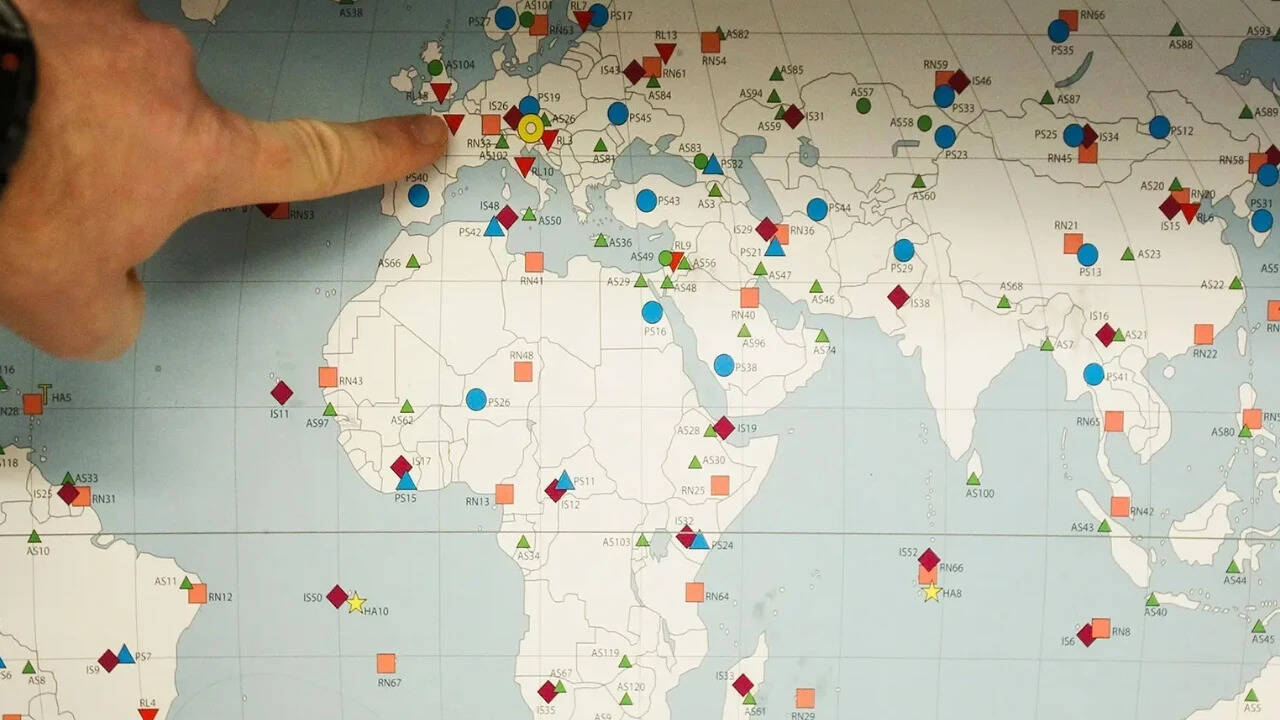
The United Nations has released a new world map that reflects changes in the way countries are represented. The new map shows Africa as a larger continent, while Europe appears smaller. This change is due to the use of a new projection method that more accurately represents the size and shape of countries.
The new map is based on the Gall-Peters projection, which is an equal-area projection that shows countries in their correct proportions. This is different from the traditional Mercator projection, which has been used for centuries and distorts the size of countries near the poles.
The Gall-Peters projection was chosen because it provides a more accurate representation of the world. It shows that Africa is larger than it appears on traditional maps, while Europe is smaller. This change is significant because it challenges the traditional view of the world that has been perpetuated by the Mercator projection.
The new map is part of a larger effort by the UN to promote a more accurate and inclusive understanding of the world. The UN hopes that the new map will help to challenge stereotypes and misconceptions about different countries and regions.
The use of the Gall-Peters projection is not new, but it has gained popularity in recent years as a more accurate alternative to the Mercator projection. The new map is expected to be used in schools and other educational settings to teach students about the world.
The change in the way countries are represented on the map is also significant because it reflects a shift in the way we think about the world. The traditional Mercator projection was developed in the 16th century and reflects a Euro-centric view of the world. The new map, on the other hand, provides a more nuanced and accurate representation of the world.
The UN's decision to adopt the Gall-Peters projection is part of a larger effort to promote a more inclusive and equitable understanding of the world. The organization hopes that the new map will help to promote cross-cultural understanding and challenge stereotypes and misconceptions about different countries and regions.
In conclusion, the new UN-backed world map provides a more accurate and inclusive representation of the world. The use of the Gall-Peters projection challenges traditional stereotypes and misconceptions about different countries and regions, and provides a more nuanced understanding of the world.
The new map is a significant step forward in promoting a more accurate and inclusive understanding of the world. It reflects a shift in the way we think about the world and challenges traditional views of the world. The UN's decision to adopt the Gall-Peters projection is a significant step forward in promoting cross-cultural understanding and challenging stereotypes and misconceptions about different countries and regions.
Frequently asked questions
What projection method is used in the new UN map?
The new UN map uses the Gall-Peters projection, which is an equal-area projection that shows countries in their correct proportions.
Why is the new map significant?
The new map is significant because it challenges traditional stereotypes and misconceptions about different countries and regions, and provides a more nuanced understanding of the world.