India Recovers 'Green Boots' Body from Everest
India to retrieve body after 30 years, 'Green Boots' identified as Tsewang Paljor
'%3E%3Crect%20width%3D'96'%20height%3D'96'%20fill%3D'%23B3261E'%2F%3E%3Ccircle%20cx%3D'30'%20cy%3D'24'%20r%3D'44'%20fill%3D'%23fff'%20opacity%3D'.12'%2F%3E%3Ccircle%20cx%3D'60'%20cy%3D'74'%20r%3D'40'%20fill%3D'%23000'%20opacity%3D'.10'%2F%3E%3C%2Fg%3E%3Cg%20fill%3D'%23fff'%3E%3Crect%20x%3D'29'%20y%3D'49'%20width%3D'8'%20height%3D'19'%20rx%3D'1'%2F%3E%3Crect%20x%3D'39'%20y%3D'40'%20width%3D'9'%20height%3D'28'%20rx%3D'1'%2F%3E%3Crect%20x%3D'50'%20y%3D'45'%20width%3D'8'%20height%3D'23'%20rx%3D'1'%2F%3E%3Crect%20x%3D'60'%20y%3D'53'%20width%3D'7'%20height%3D'15'%20rx%3D'1'%2F%3E%3Crect%20x%3D'41'%20y%3D'34'%20width%3D'5'%20height%3D'6'%2F%3E%3C%2Fg%3E%3C%2Fsvg%3E)
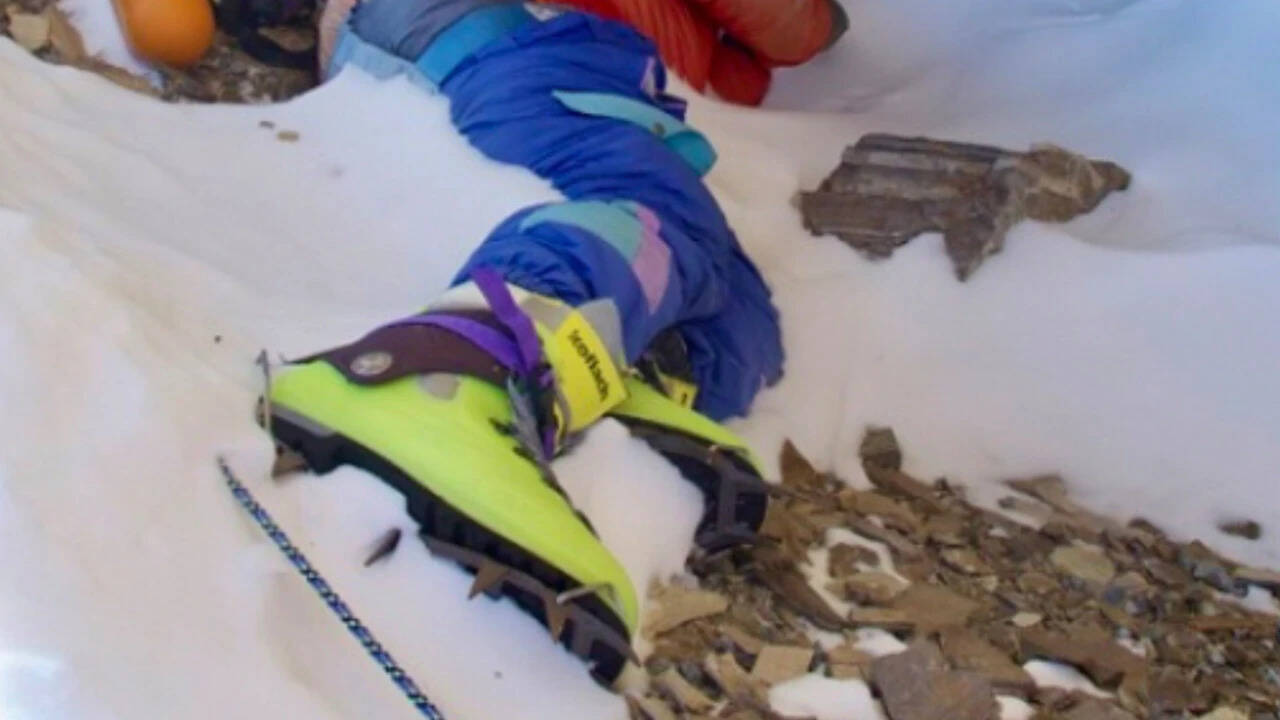
A team of Indian climbers is set to recover the body of Tsewang Paljor, a Indian climber also known as 'Green Boots', from Mount Everest after 30 years.
Tsewang Paljor died in 1996 while attempting to climb the mountain. His body has remained on the mountain since then, and has become a landmark for climbers.
The recovery effort is being led by the Indian government, in collaboration with the Nepal Mountaineering Association. The team will face significant challenges in retrieving the body, due to the extreme weather conditions and steep terrain of the mountain.
The body of Tsewang Paljor has been a topic of discussion among climbers and mountaineering communities for many years. Many have expressed their respect for the climber, while also acknowledging the risks and challenges associated with climbing the highest mountain in the world.
The recovery of the body is expected to be a complex and difficult process. The team will have to navigate through treacherous terrain and extreme weather conditions to reach the body, which is located at an altitude of over 8,500 meters.
The Indian government has decided to recover the body as a mark of respect for the climber and his family. The recovery effort is also seen as an opportunity to highlight the risks and challenges associated with climbing Mount Everest.
The death of Tsewang Paljor is a reminder of the dangers of climbing the highest mountain in the world. Many climbers have lost their lives attempting to reach the summit of Mount Everest, and the recovery of the body serves as a reminder of the risks and challenges associated with this extreme sport.
The recovery of the body is expected to take several days, and the team will have to overcome many challenges to succeed. However, the effort is seen as an important step in showing respect for the climber and his family, and in highlighting the risks and challenges associated with climbing Mount Everest.
In recent years, there has been an increase in the number of climbers attempting to reach the summit of Mount Everest. This has led to concerns about the safety of climbers, and the impact of climbing on the environment.
The recovery of the body of Tsewang Paljor is a significant event, and it highlights the importance of respecting the mountain and the climbers who attempt to conquer it. The Indian government's decision to recover the body is seen as a mark of respect for the climber and his family, and it serves as a reminder of the risks and challenges associated with climbing the highest mountain in the world.
The incident also raises questions about the management of dead bodies on Mount Everest. Many bodies remain on the mountain, and there is a need for a more effective system to manage and recover them.
In conclusion, the recovery of the body of Tsewang Paljor is a significant event that highlights the risks and challenges associated with climbing Mount Everest. The Indian government's decision to recover the body is seen as a mark of respect for the climber and his family, and it serves as a reminder of the importance of respecting the mountain and the climbers who attempt to conquer it.
Frequently asked questions
Who is Green Boots?
Green Boots is the nickname given to Indian climber Tsewang Paljor, who died on Mount Everest in 1996.
Why is the Indian government recovering the body?
The Indian government is recovering the body as a mark of respect for the climber and his family, and to highlight the risks and challenges associated with climbing Mount Everest.