Jantar Mantar Protester Seeks SC Protection Over Rape Threats
Protester approaches SC, cites threats and harassment. Plea to be heard on August 18.
'%3E%3Crect%20width%3D'96'%20height%3D'96'%20fill%3D'%231A5276'%2F%3E%3Ccircle%20cx%3D'30'%20cy%3D'24'%20r%3D'44'%20fill%3D'%23fff'%20opacity%3D'.12'%2F%3E%3Ccircle%20cx%3D'60'%20cy%3D'74'%20r%3D'40'%20fill%3D'%23000'%20opacity%3D'.10'%2F%3E%3C%2Fg%3E%3Cg%20fill%3D'%23fff'%3E%3Cpath%20d%3D'M31%2041%20L48%2031%20L65%2041%20Z'%2F%3E%3Crect%20x%3D'33'%20y%3D'43'%20width%3D'4'%20height%3D'17'%2F%3E%3Crect%20x%3D'41'%20y%3D'43'%20width%3D'4'%20height%3D'17'%2F%3E%3Crect%20x%3D'51'%20y%3D'43'%20width%3D'4'%20height%3D'17'%2F%3E%3Crect%20x%3D'59'%20y%3D'43'%20width%3D'4'%20height%3D'17'%2F%3E%3Crect%20x%3D'30'%20y%3D'62'%20width%3D'36'%20height%3D'4'%20rx%3D'1'%2F%3E%3C%2Fg%3E%3C%2Fsvg%3E)
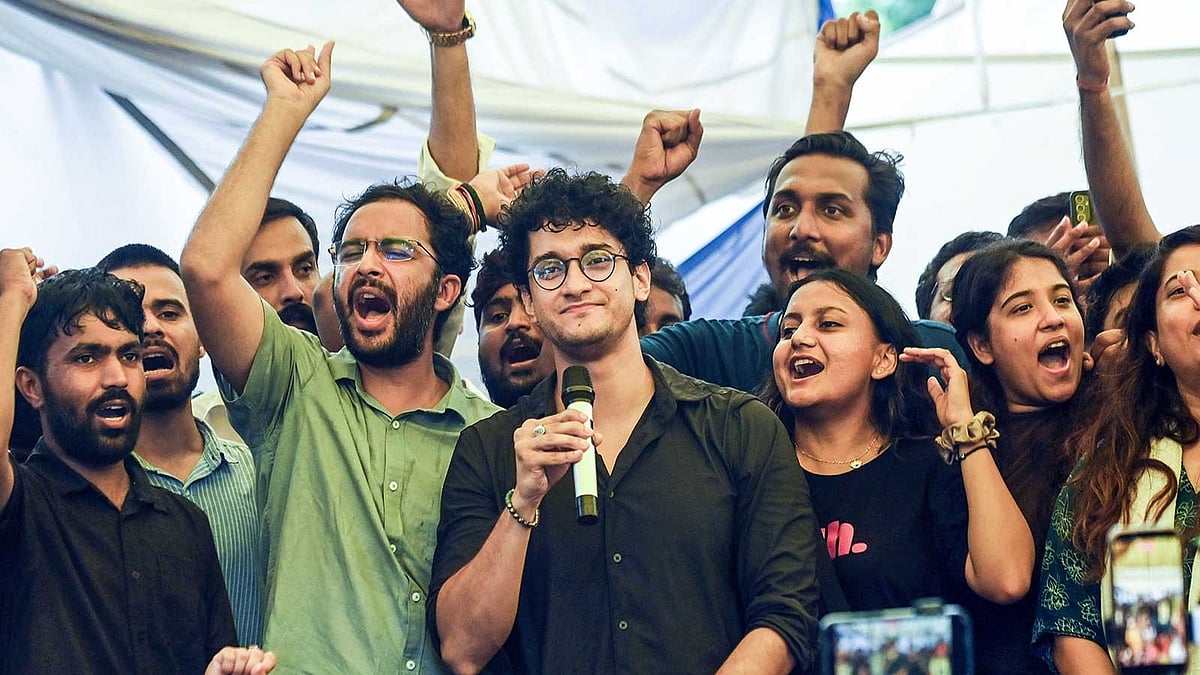
A participant in the student protests at Jantar Mantar in Delhi has approached the Supreme Court seeking protection against alleged threats of rape and abduction. The petitioner has claimed to be a victim of continuing acts of vigilantism and has submitted videos and other material to support the plea.
The plea was mentioned before Chief Justice of India Surya Kant, with the petitioner’s counsel stressing the urgency of the matter. The counsel pointed to alleged threats and harassment that are continuing even after the petition was filed.
During the hearing, the petitioner’s counsel told the Chief Justice that the urgency stemmed from ongoing incidents of alleged vigilantism, rape threats, and threats of abduction. The counsel said videos documenting some of the incidents had already been placed on record, while additional videos had emerged after the petition was filed.
Some of the newly surfaced videos were so disturbing that they could not even be described in open court, according to the counsel. The submission prompted the court to take note of the urgency surrounding the plea.
The Supreme Court has agreed to list the matter on Tuesday, August 18, along with other pending petitions concerning the student protests. The court has already been dealing with multiple matters arising from the protests, including allegations concerning police action, FIRs registered against students, and requests for protection and other relief.
The latest petition brings the alleged personal safety threats faced by protesters, particularly those reporting sexual harassment and intimidation, before the court. Female protesters have reportedly been targeted online, with some receiving rape threats and others having personal information exposed online in acts of doxxing.
The protests were held at Jantar Mantar and other locations in Delhi in July 2026, primarily connected to grievances including alleged irregularities and concerns surrounding the NEET examination and paper leaks. The protests subsequently led to several legal proceedings, with students challenging or seeking relief in matters involving police action and criminal cases.
The latest plea shifts the focus to the safety of protesters amid allegations of intimidation and vigilantism. The petitioner has placed videos and other material before the Supreme Court to support the claim of ongoing harassment and threats.
The Supreme Court's decision to hear the plea on August 18 is significant, as it acknowledges the urgency of the matter and the need to address the safety concerns of protesters. The court's ruling will be closely watched, as it will have implications for the rights of protesters and the responsibility of the authorities to ensure their safety.
The incident highlights the need for greater protection and support for protesters, particularly women, who are often targeted with online harassment and threats of violence. The Supreme Court's intervention is a step towards addressing these concerns and ensuring that protesters can exercise their right to free speech without fear of intimidation or harm.
In the broader context, the protests at Jantar Mantar are part of a larger movement of students and activists who are seeking to bring attention to issues of social justice and equality. The protests have sparked a national conversation about the need for greater accountability and transparency in the education system, and the importance of protecting the rights of marginalized communities.
The Supreme Court's decision to hear the plea on August 18 is a significant development in this ongoing conversation, and will be closely watched by activists, students, and citizens across the country.
The outcome of the hearing will have significant implications for the future of protests and demonstrations in India, and will shape the conversation around the rights and responsibilities of protesters and the authorities.
It is essential to recognize the importance of protecting the rights of protesters and ensuring their safety, as this is a fundamental aspect of a healthy and functioning democracy. The Supreme Court's intervention in this matter is a crucial step towards upholding these rights and promoting a culture of respect and tolerance for diverse perspectives and opinions.
In conclusion, the Jantar Mantar protester's plea to the Supreme Court highlights the urgent need for protection and support for protesters, particularly women, who are often targeted with online harassment and threats of violence. The Supreme Court's decision to hear the plea on August 18 is a significant development in the ongoing conversation around social justice and equality, and will have implications for the future of protests and demonstrations in India.
Frequently asked questions
What is the Jantar Mantar protester's plea about?
The protester is seeking protection against alleged threats of rape and abduction, and has submitted videos and other material to support the plea.
When will the Supreme Court hear the plea?
The Supreme Court will hear the plea on August 18, along with other pending petitions concerning the student protests.