India Launches Vikram-1, First Privately Developed Orbital Vehicle
India's space sector enters new era, Skyroot Aerospace launches Vikram-1, a privately developed orbital launch vehicle.
'%3E%3Crect%20width%3D'96'%20height%3D'96'%20fill%3D'%230B6E4F'%2F%3E%3Ccircle%20cx%3D'30'%20cy%3D'24'%20r%3D'44'%20fill%3D'%23fff'%20opacity%3D'.12'%2F%3E%3Ccircle%20cx%3D'60'%20cy%3D'74'%20r%3D'40'%20fill%3D'%23000'%20opacity%3D'.10'%2F%3E%3C%2Fg%3E%3Cg%20fill%3D'none'%20stroke%3D'%23fff'%20stroke-width%3D'3.2'%20stroke-linecap%3D'round'%20stroke-linejoin%3D'round'%3E%3Cpolyline%20points%3D'31%2C59%2041%2C49%2049%2C54%2063%2C37'%2F%3E%3Cpolyline%20points%3D'55%2C37%2063%2C37%2063%2C45'%2F%3E%3C%2Fg%3E%3C%2Fsvg%3E)
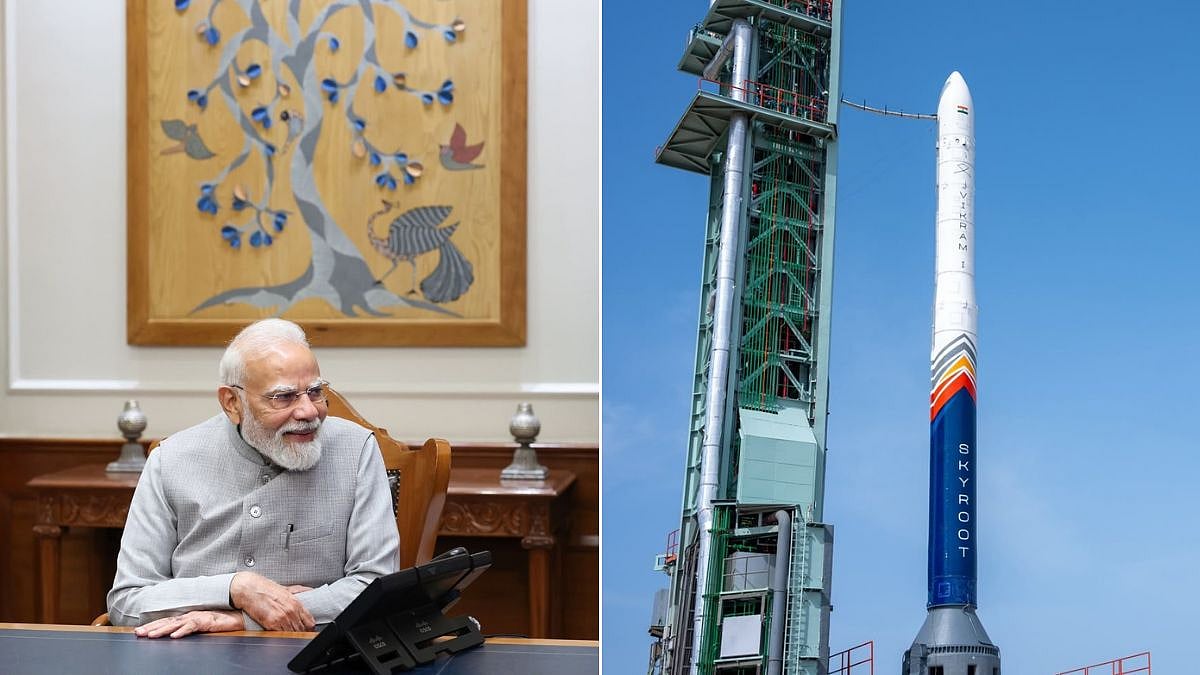
India has achieved a significant milestone in its space program with the launch of Vikram-1, the country's first privately developed orbital-class launch vehicle. The launch took place on Saturday, July 18, 2026, at 12:05 PM from the Satish Dhawan Space Centre in Sriharikota.
The Vikram-1 is built by Hyderabad-based spacetech startup Skyroot Aerospace and is named after the father of India's space program, Dr. Vikram Sarabhai. This launch marks a major milestone in India's growing private space ecosystem and reflects the government's push to encourage commercial participation in space exploration.
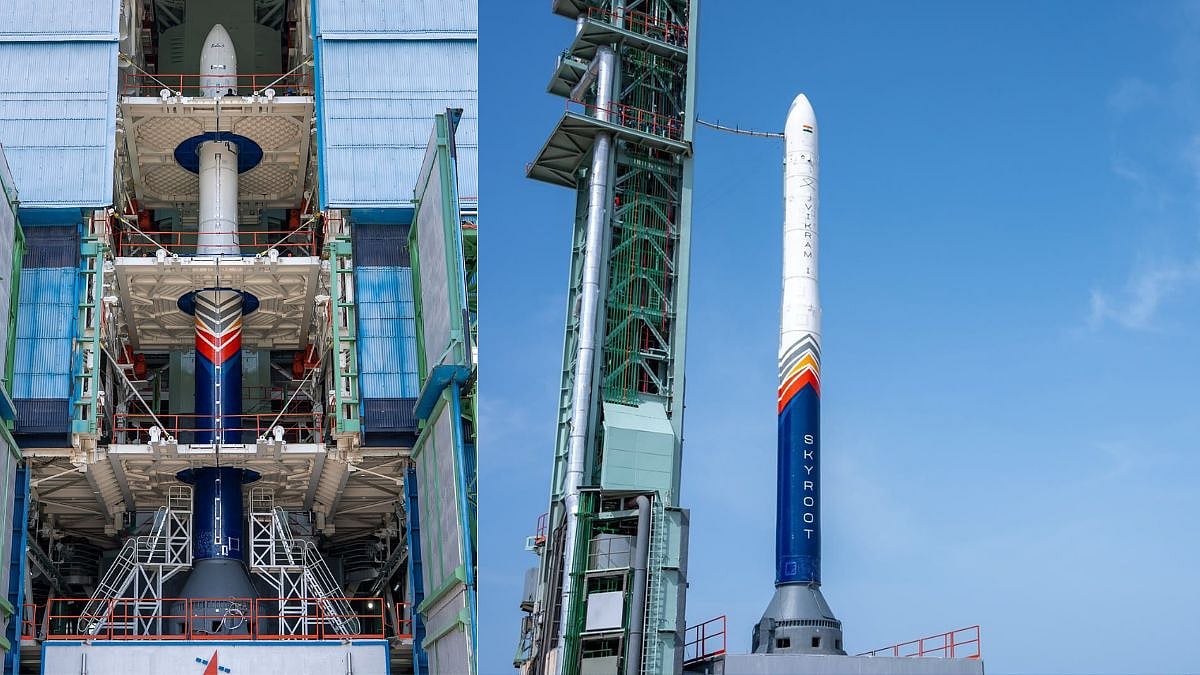
The Vikram-1 is a small satellite launch vehicle designed to carry payloads of up to 350 kilograms into low Earth orbit (LEO). It is a seven-storey-tall, multi-stage orbital launch vehicle with an all-carbon composite structure and is powered by in-house developed propulsion systems. The vehicle weighs approximately 24 tonnes and features a three-stage all-solid propulsion system.
The rocket incorporates advanced carbon-composite structures and 3D-printed components, making it lighter and more efficient. The Vikram-1 will target a 450-km orbit with an inclination of 60 degrees and will carry six technology demonstration payloads from various companies, including Grahaa Space, Cosmoserve, DCubed, and Skyroot's own SCOPE.
This launch is a significant step forward for India's space sector, which is entering a new era of private participation. The success of Vikram-1 will pave the way for more private companies to enter the space industry, leading to cost-effective and reliable launches for small satellites.
The launch of Vikram-1 is also a testament to the government's efforts to promote the private space industry in India. The Indian government has been actively encouraging private companies to participate in space exploration, and the launch of Vikram-1 is a result of these efforts.
The Vikram-1 launch vehicle is powered by three solid-fuel stages and a liquid orbital adjustment system. It has a diameter of 1.7 meters and a length of 20 meters. The rocket is designed to offer cost-effective, reliable, and on-demand launches for small satellites, which is a rapidly expanding segment of the global space industry.
The launch of Vikram-1 has generated significant interest and excitement among space enthusiasts and the general public. Thousands of students cheered as the rocket lifted off from the Satish Dhawan Space Centre, marking a new era in India's space program.
In conclusion, the launch of Vikram-1 is a significant milestone for India's space sector, marking the country's entry into the private space industry. The success of Vikram-1 will have a major impact on the global space industry, and India is poised to become a major player in the private space sector.
The launch of Vikram-1 is also a testament to the capabilities of Indian private companies in the space industry. Skyroot Aerospace, the company behind Vikram-1, has demonstrated its capabilities in building a world-class launch vehicle, and the company is expected to play a major role in India's space program in the future.
Overall, the launch of Vikram-1 is a significant achievement for India's space sector, and it marks the beginning of a new era in the country's space program. With the success of Vikram-1, India is poised to become a major player in the global space industry, and the country's space sector is expected to experience significant growth in the coming years.
The significance of the Vikram-1 launch cannot be overstated. It marks a major milestone in India's space program and demonstrates the country's capabilities in building world-class launch vehicles. The launch of Vikram-1 is also a testament to the government's efforts to promote the private space industry in India, and it is expected to have a major impact on the global space industry.
In the coming years, India's space sector is expected to experience significant growth, with private companies playing a major role in the industry. The launch of Vikram-1 is just the beginning, and it is expected to pave the way for more private companies to enter the space industry. With the success of Vikram-1, India is poised to become a major player in the global space industry, and the country's space sector is expected to experience significant growth in the coming years.
The launch of Vikram-1 is a major achievement for India's space sector, and it marks the beginning of a new era in the country's space program. With the success of Vikram-1, India is poised to become a major player in the global space industry, and the country's space sector is expected to experience significant growth in the coming years.
What it means for India is that the country is now a part of the exclusive club of nations that have a privately developed orbital launch vehicle. This is a significant achievement and demonstrates India's capabilities in building world-class launch vehicles. The launch of Vikram-1 is also a testament to the government's efforts to promote the private space industry in India, and it is expected to have a major impact on the global space industry.
In conclusion, the launch of Vikram-1 is a significant milestone for India's space sector, and it marks the beginning of a new era in the country's space program. With the success of Vikram-1, India is poised to become a major player in the global space industry, and the country's space sector is expected to experience significant growth in the coming years.