Owaisi Criticises IIT Delhi Convocation Protocol
AIMIM chief questions protocol, cites constitutional concerns. Students allegedly told how to bow to PM Modi.
'%3E%3Crect%20width%3D'96'%20height%3D'96'%20fill%3D'%231A5276'%2F%3E%3Ccircle%20cx%3D'30'%20cy%3D'24'%20r%3D'44'%20fill%3D'%23fff'%20opacity%3D'.12'%2F%3E%3Ccircle%20cx%3D'60'%20cy%3D'74'%20r%3D'40'%20fill%3D'%23000'%20opacity%3D'.10'%2F%3E%3C%2Fg%3E%3Cg%20fill%3D'%23fff'%3E%3Cpath%20d%3D'M31%2041%20L48%2031%20L65%2041%20Z'%2F%3E%3Crect%20x%3D'33'%20y%3D'43'%20width%3D'4'%20height%3D'17'%2F%3E%3Crect%20x%3D'41'%20y%3D'43'%20width%3D'4'%20height%3D'17'%2F%3E%3Crect%20x%3D'51'%20y%3D'43'%20width%3D'4'%20height%3D'17'%2F%3E%3Crect%20x%3D'59'%20y%3D'43'%20width%3D'4'%20height%3D'17'%2F%3E%3Crect%20x%3D'30'%20y%3D'62'%20width%3D'36'%20height%3D'4'%20rx%3D'1'%2F%3E%3C%2Fg%3E%3C%2Fsvg%3E)
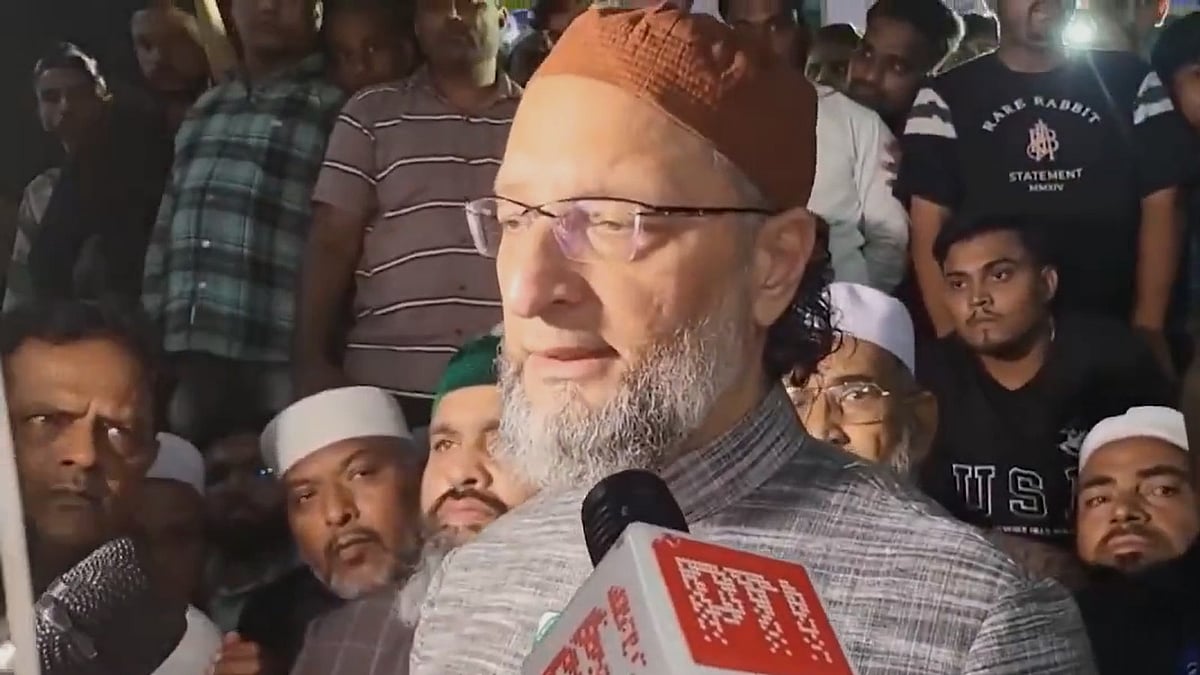
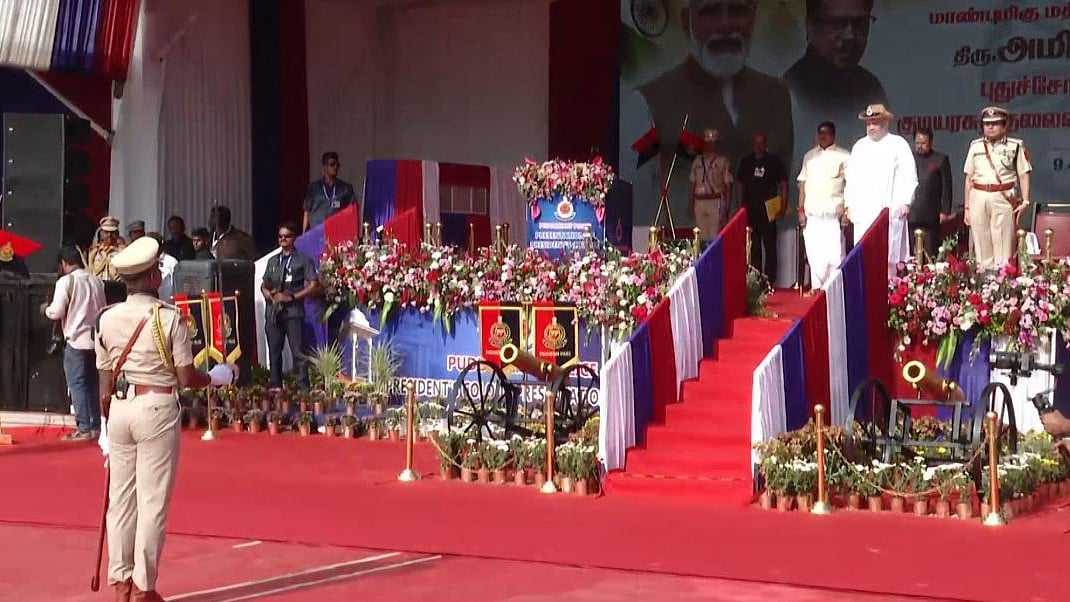
Asaduddin Owaisi, the chief of AIMIM, has spoken out against the protocols reportedly followed during IIT Delhi's 57th convocation. The ceremony, which took place on August 8, 2026, was attended by Prime Minister Narendra Modi, who awarded medals to top-performing students.
Owaisi claimed that students were instructed on how low to bow their heads when meeting the Prime Minister. He also questioned the requirement for attendees to stand while Vedic mantras were being recited during the ceremony. The AIMIM chief argued that the use of Vedic mantras at a state-funded educational institution raises concerns under Article 28 of the Constitution.
Article 28 deals with religious instruction in educational institutions wholly maintained out of state funds. Owaisi invoked Article 51A(h), which calls upon citizens to develop a scientific temper, humanism, and the spirit of inquiry and reform. He stated that the reported protocols at the convocation have thrown scientific temper into a dustbin.
The IIT Delhi convocation saw over 3,000 students graduate, with Prime Minister Modi attending the ceremony. Owaisi's remarks came amid reports about the protocols allegedly communicated to students ahead of the Prime Minister's interaction with them. The AIMIM chief framed the issue as one concerning constitutional values in educational institutions.
Owaisi urged students across the country to understand national interest as including the responsibility to question the government when they believe it has taken a wrong step. He reminded students that national interest means standing against the government when it takes a wrong step.
The controversy surrounding the IIT Delhi convocation protocol has sparked debate about the role of religion in educational institutions. Owaisi's criticism highlights the importance of upholding constitutional values in such institutions.
In conclusion, the issue at hand is a matter of constitutional concern, with Owaisi arguing that the reported protocols at the IIT Delhi convocation have compromised the values of scientific temper and secularism. As the debate unfolds, it remains to be seen how the government and educational institutions will respond to these concerns.
The incident has significant implications for the country, as it raises questions about the balance between religious and scientific values in educational institutions. It also underscores the importance of students being aware of their rights and responsibilities as citizens, and being willing to question authority when necessary.
Ultimately, the controversy surrounding the IIT Delhi convocation protocol serves as a reminder of the need for ongoing dialogue and debate about the values that underpin our educational institutions. By engaging with these issues, we can work towards creating a more inclusive and secular environment that promotes scientific temper and critical thinking.
The Prime Minister's attendance at the convocation and the awarding of medals to top-performing students were seen as a significant moment for the institution. However, the controversy surrounding the protocols has overshadowed the occasion, highlighting the need for greater awareness and sensitivity towards constitutional values.
In the coming days, it will be important to monitor how the situation develops and how the government and educational institutions respond to the concerns raised by Owaisi. The incident has the potential to spark a wider debate about the role of religion in educational institutions and the importance of upholding constitutional values.
As the country moves forward, it is essential that we prioritize the values of scientific temper, secularism, and critical thinking in our educational institutions. By doing so, we can create a more informed and engaged citizenry that is equipped to navigate the complexities of the modern world.
In the end, the controversy surrounding the IIT Delhi convocation protocol serves as a reminder of the importance of ongoing vigilance and debate about the values that underpin our educational institutions. By engaging with these issues, we can work towards creating a more just and equitable society that promotes the values of scientific temper and secularism.
Frequently asked questions
What was the controversy surrounding the IIT Delhi convocation protocol?
The controversy surrounded the alleged instructions given to students on how to bow to PM Modi and the requirement to stand during the recitation of Vedic mantras.
What constitutional concerns did Owaisi raise?
Owaisi raised concerns under Article 28 of the Constitution, which deals with religious instruction in educational institutions wholly maintained out of state funds, and Article 51A(h), which calls upon citizens to develop a scientific temper.