Iran Uses Mosques to Surveil Protesters
Iran allegedly used mosques to monitor and attack protesters. Report reveals shocking details.
'%3E%3Crect%20width%3D'96'%20height%3D'96'%20fill%3D'%234A235A'%2F%3E%3Ccircle%20cx%3D'30'%20cy%3D'24'%20r%3D'44'%20fill%3D'%23fff'%20opacity%3D'.12'%2F%3E%3Ccircle%20cx%3D'60'%20cy%3D'74'%20r%3D'40'%20fill%3D'%23000'%20opacity%3D'.10'%2F%3E%3C%2Fg%3E%3Cg%20fill%3D'none'%20stroke%3D'%23fff'%20stroke-width%3D'3'%3E%3Ccircle%20cx%3D'48'%20cy%3D'48'%20r%3D'16'%2F%3E%3Cellipse%20cx%3D'48'%20cy%3D'48'%20rx%3D'6.5'%20ry%3D'16'%2F%3E%3Cline%20x1%3D'32'%20y1%3D'42'%20x2%3D'64'%20y2%3D'42'%2F%3E%3Cline%20x1%3D'32'%20y1%3D'54'%20x2%3D'64'%20y2%3D'54'%2F%3E%3C%2Fg%3E%3C%2Fsvg%3E)
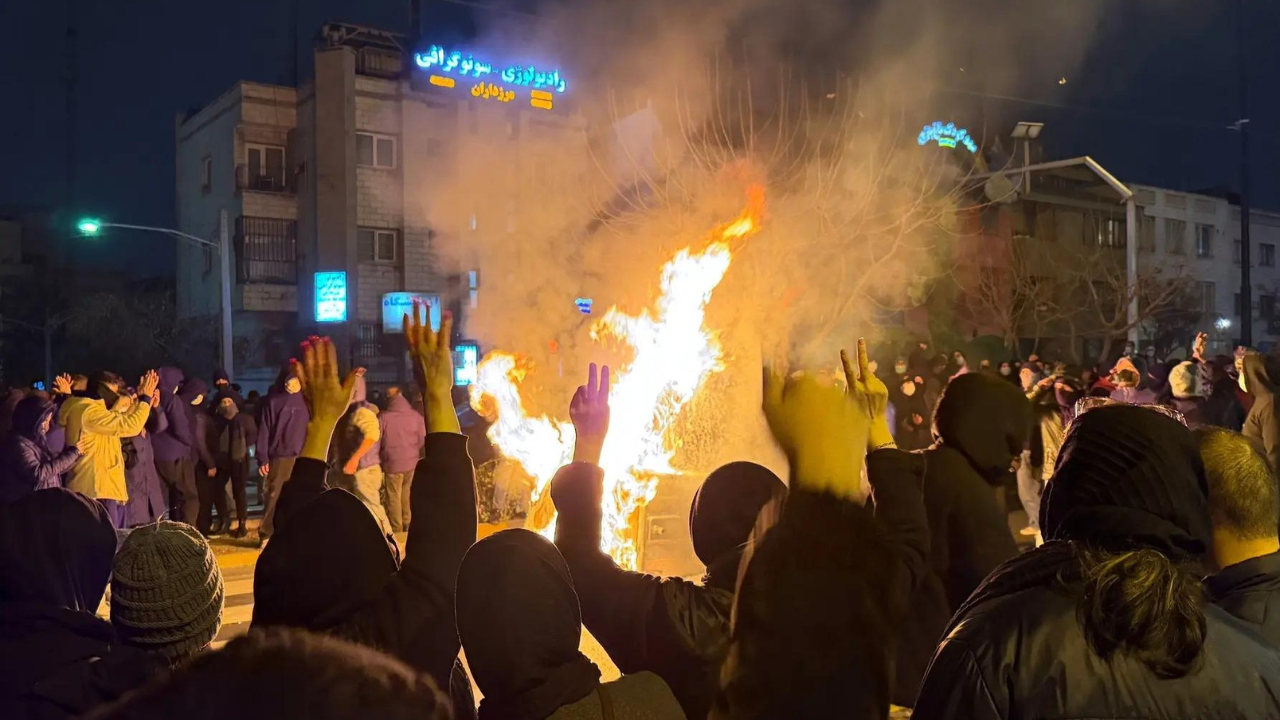
Iran has been accused of using mosques as a means to surveil and shoot at protesters during the January protests. According to a recent report, the Iranian government utilized these religious institutions to monitor and suppress the demonstrations.
The report highlights the role of mosques in the government's efforts to quell the protests. It is alleged that security forces used mosques as bases to launch attacks on protesters. This tactic allowed them to blend in with the surrounding environment and catch protesters off guard.
The use of mosques for surveillance and attacks has been widely condemned. Many have expressed outrage over the government's decision to use religious institutions for such purposes. The report has sparked concerns about the safety and freedom of protesters in Iran.
The January protests in Iran were sparked by a range of issues, including economic grievances and demands for greater freedoms. The protests were met with a heavy-handed response from the government, resulting in numerous arrests and injuries.
The Iranian government has a history of using various tactics to suppress dissent. The use of mosques for surveillance and attacks is a concerning development in this context. It highlights the government's willingness to use any means necessary to maintain control and quell opposition.
The report's findings have significant implications for the ongoing protests in Iran. It underscores the need for protesters to be aware of their surroundings and to take necessary precautions to ensure their safety. The international community has also been urged to take notice of the situation and to condemn the government's actions.
In recent years, Iran has faced numerous protests and demonstrations. The government's response has often been marked by violence and repression. The use of mosques for surveillance and attacks is a disturbing trend that warrants close attention and scrutiny.
The situation in Iran remains volatile, with protests and demonstrations continuing to take place. The government's actions have been widely condemned, and the international community is watching the situation closely. As the situation continues to unfold, it is essential to monitor the government's tactics and to ensure that the rights and freedoms of protesters are protected.
The report's findings are a sobering reminder of the challenges faced by protesters in Iran. It highlights the need for ongoing support and solidarity from the international community. As the situation in Iran continues to evolve, it is essential to remain vigilant and to advocate for the rights and freedoms of all individuals.
In conclusion, the use of mosques for surveillance and attacks is a concerning development in Iran. It highlights the government's willingness to use any means necessary to maintain control and quell opposition. The international community must take notice of the situation and condemn the government's actions. The rights and freedoms of protesters must be protected, and the government must be held accountable for its actions.
Frequently asked questions
What did the Iranian government use mosques for during the January protests?
The Iranian government used mosques to surveil and shoot at protesters.
Why is the use of mosques for surveillance and attacks significant?
The use of mosques for surveillance and attacks is significant because it highlights the government's willingness to use any means necessary to maintain control and quell opposition.