India Seeks Better Tariff Rates Than Vietnam, Bangladesh For US Trade Deal
India wants US tariff concessions, better rates than Vietnam and Bangladesh. Trade deal delayed
'%3E%3Crect%20width%3D'96'%20height%3D'96'%20fill%3D'%234A235A'%2F%3E%3Ccircle%20cx%3D'30'%20cy%3D'24'%20r%3D'44'%20fill%3D'%23fff'%20opacity%3D'.12'%2F%3E%3Ccircle%20cx%3D'60'%20cy%3D'74'%20r%3D'40'%20fill%3D'%23000'%20opacity%3D'.10'%2F%3E%3C%2Fg%3E%3Cg%20fill%3D'none'%20stroke%3D'%23fff'%20stroke-width%3D'3'%3E%3Ccircle%20cx%3D'48'%20cy%3D'48'%20r%3D'16'%2F%3E%3Cellipse%20cx%3D'48'%20cy%3D'48'%20rx%3D'6.5'%20ry%3D'16'%2F%3E%3Cline%20x1%3D'32'%20y1%3D'42'%20x2%3D'64'%20y2%3D'42'%2F%3E%3Cline%20x1%3D'32'%20y1%3D'54'%20x2%3D'64'%20y2%3D'54'%2F%3E%3C%2Fg%3E%3C%2Fsvg%3E)
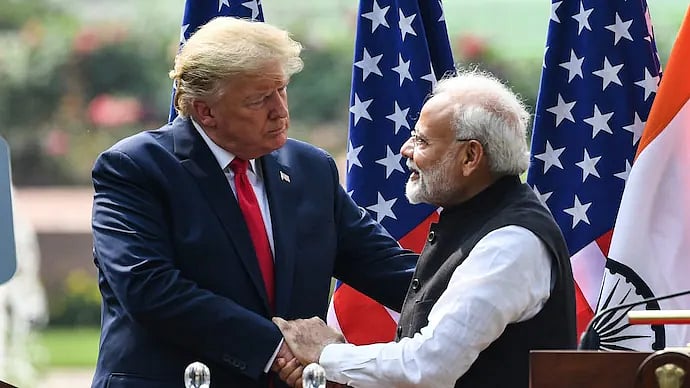
Commerce and Industry Minister Piyush Goyal has stated that India will not finalize the India-US Bilateral Trade Agreement (BTA) until the US provides tariff concessions that give Indian exports a more favorable footing than those of competing countries.
Goyal's remarks highlight one of the major hurdles that has prolonged trade negotiations between New Delhi and Washington. The minister emphasized that India wants tariff concessions comparable to those extended by the US to competing exporters such as Vietnam and Bangladesh.
According to Goyal, Indian products should receive rates that are either more favorable or reduced to zero. He said that India will compare the rates that Vietnam and Bangladesh pay in other countries and ensure that Indian rates are better.
The minister also spoke about India's existing free trade agreements (FTAs) and those that are expected to become operational, saying the government had set an ambitious target for the year. He maintained that India had obtained favorable terms in each of the nine FTAs concluded so far, including agreements with the UK, New Zealand, and the European Union.
Goyal's comments come as India continues to navigate its established trade relationships with Iran and Russia while seeking to sustain economic ties with the United States. India and the US had announced the finalization of the framework for the first phase of the proposed trade deal in February.
However, subsequent shifts in the US tariff regime under President Donald Trump have contributed to further delays in negotiations. From July 24, Washington introduced an additional 10 per cent tariff on imports from several countries, including India.
The move followed a US Supreme Court ruling that struck down the administration's unprecedented reciprocal tariffs as unconstitutional. The introduction of the additional tariff has added to the uncertainty surrounding the trade deal.
India is seeking a trade deal that will provide better market access for its products in the US. The country wants to increase its exports to the US and reduce its trade deficit.
The US is one of India's largest trading partners, and a trade deal between the two countries is expected to boost bilateral trade. However, the negotiations have been delayed due to various issues, including the US demand for greater market access for its products in India.
In conclusion, the India-US trade deal is still in the negotiation phase, and the outcome is uncertain. India is seeking better tariff rates than Vietnam and Bangladesh, and the US is demanding greater market access for its products in India. The trade deal is expected to have a significant impact on the economies of both countries.
The trade deal, if finalized, will provide a boost to the Indian economy and increase the country's exports to the US. It will also provide better market access for Indian products in the US and reduce the trade deficit between the two countries.
However, the negotiations are complex, and the outcome is uncertain. The trade deal will depend on the ability of the two countries to resolve their differences and reach a mutually beneficial agreement.
The Indian government is hopeful that the trade deal will be finalized soon, and the country will be able to increase its exports to the US. The government is also working to improve the country's trade relationships with other countries, including Iran and Russia.
In the end, the India-US trade deal will have a significant impact on the Indian economy and the country's trade relationships with other countries. The outcome of the negotiations is uncertain, but the Indian government is hopeful that a mutually beneficial agreement will be reached soon.
Frequently asked questions
What is the current status of the India-US trade deal?
The trade deal is still in the negotiation phase, and the outcome is uncertain.
What is India seeking in the trade deal?
India is seeking better tariff rates than Vietnam and Bangladesh, and greater market access for its products in the US.