900-Year-Old Sculpture Identified as Gayatri
A 12th-century sculpture in Dhar is reidentified as Gayatri, not Saraswati. Science solves 900-year mix-up.
'%3E%3Crect%20width%3D'96'%20height%3D'96'%20fill%3D'%23B3261E'%2F%3E%3Ccircle%20cx%3D'30'%20cy%3D'24'%20r%3D'44'%20fill%3D'%23fff'%20opacity%3D'.12'%2F%3E%3Ccircle%20cx%3D'60'%20cy%3D'74'%20r%3D'40'%20fill%3D'%23000'%20opacity%3D'.10'%2F%3E%3C%2Fg%3E%3Cg%20fill%3D'%23fff'%3E%3Crect%20x%3D'29'%20y%3D'49'%20width%3D'8'%20height%3D'19'%20rx%3D'1'%2F%3E%3Crect%20x%3D'39'%20y%3D'40'%20width%3D'9'%20height%3D'28'%20rx%3D'1'%2F%3E%3Crect%20x%3D'50'%20y%3D'45'%20width%3D'8'%20height%3D'23'%20rx%3D'1'%2F%3E%3Crect%20x%3D'60'%20y%3D'53'%20width%3D'7'%20height%3D'15'%20rx%3D'1'%2F%3E%3Crect%20x%3D'41'%20y%3D'34'%20width%3D'5'%20height%3D'6'%2F%3E%3C%2Fg%3E%3C%2Fsvg%3E)
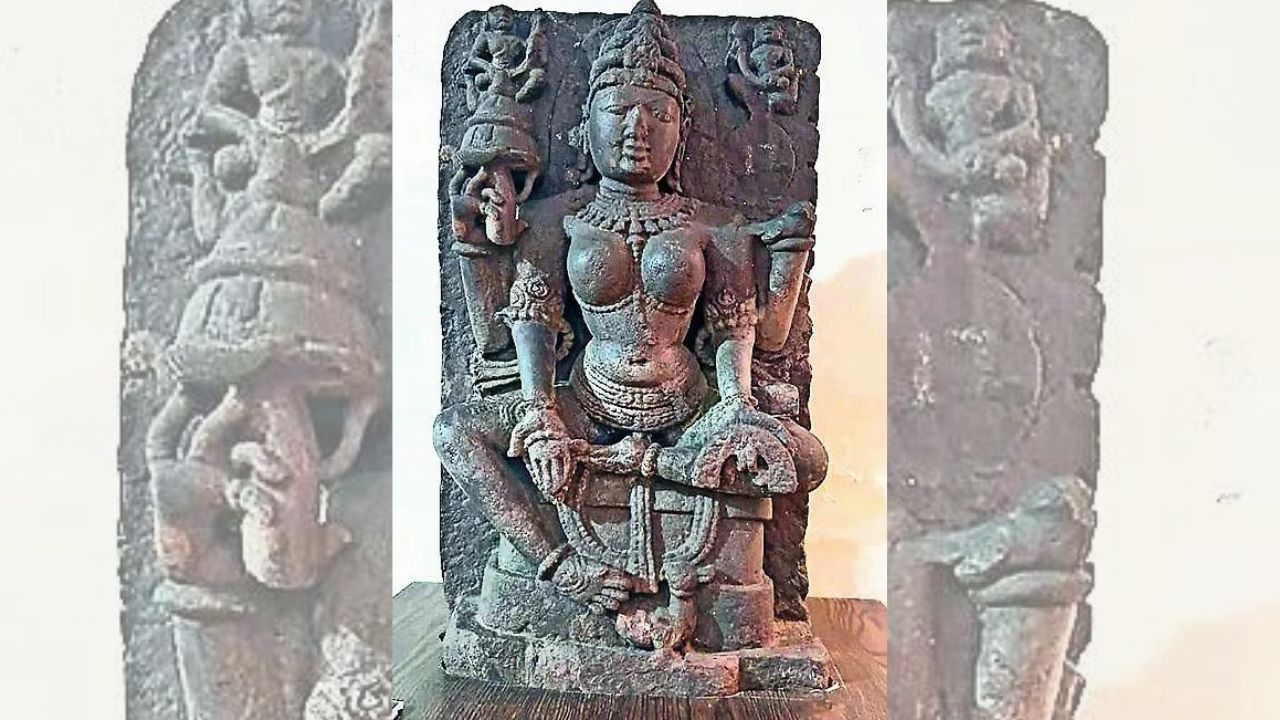
A significant discovery has been made in the city of Dhar, where a 12th-century sculpture previously thought to be of Saraswati has been correctly identified as Gayatri. This revelation came about through the use of digital documentation and 3D mapping techniques, which revealed iconographic clues that had been missed for centuries.
The sculpture, which embodies Vedic wisdom, was found to lack a veena, a common attribute associated with Saraswati. This absence proved to be a crucial factor in the re-identification of the sculpture as Gayatri. The discovery is a significant one, as it sheds new light on the region's rich cultural heritage.
The city of Dhar, located in the state of Madhya Pradesh, is known for its rich history and cultural significance. The region is home to numerous ancient temples and sculptures, many of which date back to the 12th century. The rediscovery of the Gayatri sculpture is a testament to the importance of preserving and protecting India's cultural heritage.
The use of digital documentation and 3D mapping techniques in the re-identification of the sculpture is a significant development in the field of archaeology and cultural preservation. These technologies allow for a more detailed and accurate analysis of ancient artifacts, which can help to uncover new information and insights.
The rediscovered sculpture is now being recognized as an important part of Madhya Pradesh's digital heritage mission. This initiative aims to preserve and promote the state's rich cultural heritage through the use of digital technologies. The sculpture's re-identification as Gayatri is a significant milestone in this mission, and it highlights the importance of continued research and preservation efforts.
The discovery of the Gayatri sculpture has also sparked interest among scholars and researchers, who are eager to learn more about the significance and importance of this rare image. The sculpture is believed to embody Vedic wisdom, and its re-identification has shed new light on the region's cultural and historical significance.
In conclusion, the re-identification of the 12th-century sculpture as Gayatri is a significant discovery that highlights the importance of preserving and protecting India's cultural heritage. The use of digital technologies in the discovery is a testament to the power of innovation and research in uncovering new information and insights. The sculpture's recognition as part of Madhya Pradesh's digital heritage mission is a significant milestone, and it underscores the importance of continued efforts to preserve and promote India's rich cultural heritage.
The discovery of the Gayatri sculpture is a reminder of the significance of India's cultural heritage and the importance of preserving it for future generations. It also highlights the importance of continued research and innovation in the field of archaeology and cultural preservation. As India continues to grow and develop, it is essential that we prioritize the preservation and promotion of our cultural heritage, and the rediscovery of the Gayatri sculpture is a significant step in this direction.
The re-identification of the sculpture has also sparked a renewed interest in the region's history and cultural significance, and it is expected to attract more tourists and scholars to the area. The discovery is a significant one, and it is expected to have a lasting impact on our understanding of India's cultural heritage.
The state of Madhya Pradesh is known for its rich cultural heritage, and the rediscovery of the Gayatri sculpture is a significant addition to this heritage. The sculpture's recognition as part of the state's digital heritage mission is a testament to the importance of preserving and promoting India's cultural heritage, and it highlights the significance of continued research and innovation in this field.
In the end, the discovery of the Gayatri sculpture is a significant one, and it underscores the importance of preserving and protecting India's cultural heritage. The use of digital technologies in the discovery is a testament to the power of innovation and research, and it highlights the significance of continued efforts to preserve and promote India's rich cultural heritage.