Rabindranath Tagore's Legacy Honored on Death Anniversary
Remembering the legendary poet, novelist, and philosopher. Explore his life and works.
'%3E%3Crect%20width%3D'96'%20height%3D'96'%20fill%3D'%23B3261E'%2F%3E%3Ccircle%20cx%3D'30'%20cy%3D'24'%20r%3D'44'%20fill%3D'%23fff'%20opacity%3D'.12'%2F%3E%3Ccircle%20cx%3D'60'%20cy%3D'74'%20r%3D'40'%20fill%3D'%23000'%20opacity%3D'.10'%2F%3E%3C%2Fg%3E%3Cg%20fill%3D'%23fff'%3E%3Crect%20x%3D'29'%20y%3D'49'%20width%3D'8'%20height%3D'19'%20rx%3D'1'%2F%3E%3Crect%20x%3D'39'%20y%3D'40'%20width%3D'9'%20height%3D'28'%20rx%3D'1'%2F%3E%3Crect%20x%3D'50'%20y%3D'45'%20width%3D'8'%20height%3D'23'%20rx%3D'1'%2F%3E%3Crect%20x%3D'60'%20y%3D'53'%20width%3D'7'%20height%3D'15'%20rx%3D'1'%2F%3E%3Crect%20x%3D'41'%20y%3D'34'%20width%3D'5'%20height%3D'6'%2F%3E%3C%2Fg%3E%3C%2Fsvg%3E)
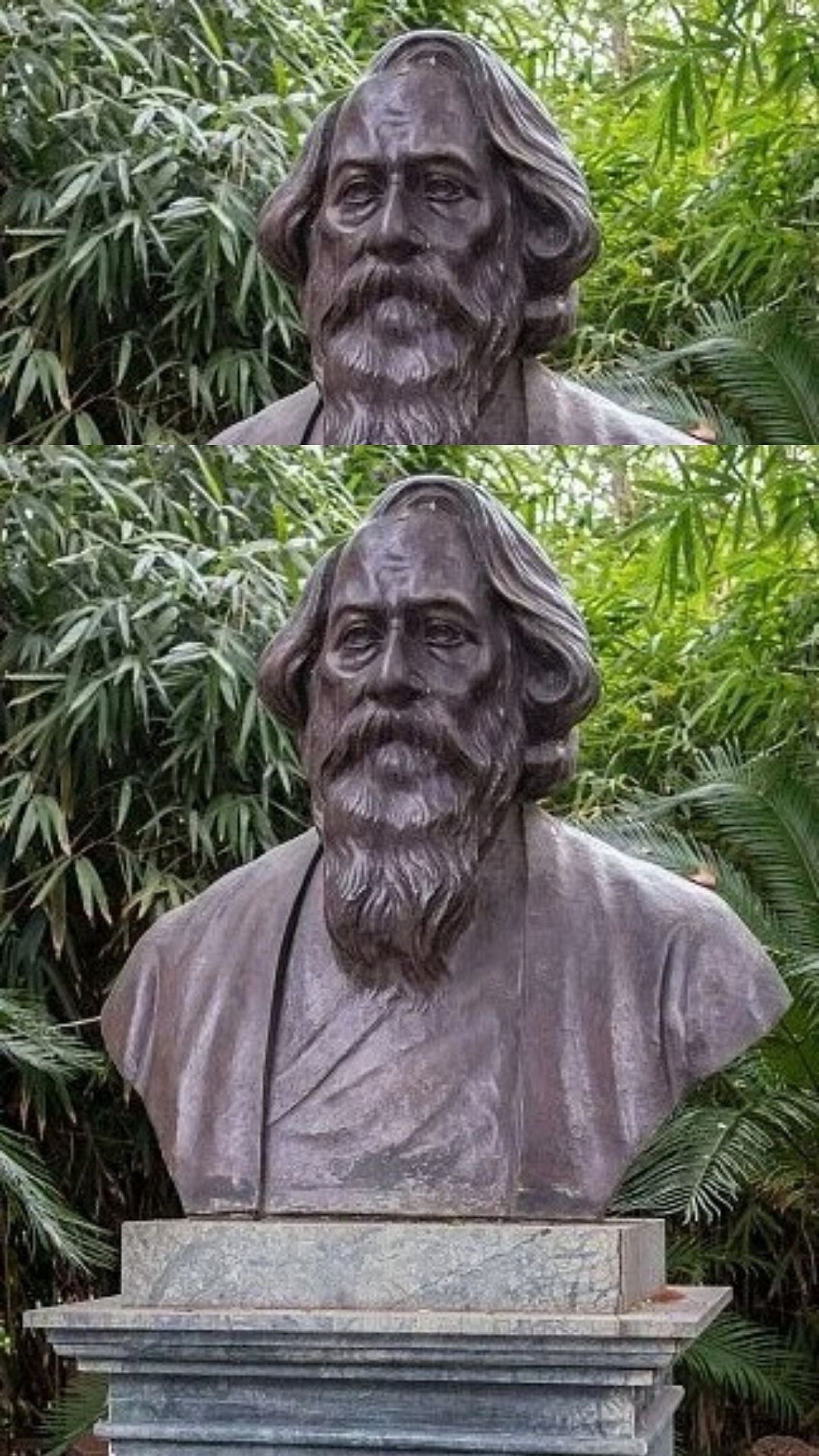
Rabindranath Tagore, a renowned Nobel Laureate poet, novelist, philosopher, and artist, passed away on August 7, 1941. On his death anniversary, it is fitting to reflect on his remarkable life and contributions to Indian literature.
Born on May 7, 1861, in Kolkata, Tagore was part of the influential Tagore family, known for their significant contributions to literature, art, and social reform. He is credited with modernizing Bengali literature and is regarded as one of India's greatest literary figures. Some of his notable works include Gora, Ghare-Baire (The Home and the World), and Kabuliwala, which remain classics to this day.
Tagore's impact on Indian culture extends beyond his literary works. He penned India's national anthem, Jana Gana Mana, and Bangladesh's national anthem, Amar Sonar Bangla. His vision for education led to the establishment of Santiniketan, a unique school that aimed to bridge the gap between India and the world.
Tagore's influence also extended to other countries. Sri Lanka's national anthem is believed to have been inspired by his literary and musical style, and its composer studied at his university. This highlights the profound impact Tagore had on the cultural landscape of the region.
In 1919, Tagore renounced the knighthood awarded by the British Crown in protest against the Jallianwala Bagh massacre. This act of defiance demonstrated his commitment to social justice and his opposition to British colonial rule.
Throughout his life, Tagore received numerous accolades for his work. He was awarded the Nobel Prize in Literature in 1913, a testament to his literary genius. His legacy continues to inspire generations of writers, artists, and thinkers.
As we remember Rabindranath Tagore on his death anniversary, we honor his contributions to Indian literature and culture. His works remain a powerful reminder of the importance of social reform, education, and cultural exchange.
The significance of Tagore's life and works extends beyond India. His vision for a more just and equitable society continues to inspire people around the world. As we reflect on his legacy, we are reminded of the enduring power of literature and art to shape our understanding of the world and our place in it.
In conclusion, Rabindranath Tagore's death anniversary is a fitting occasion to remember his remarkable life and contributions to Indian literature and culture. His legacy continues to inspire and influence people around the world, and his works remain a testament to the power of literature and art to shape our understanding of the world.
Frequently asked questions
When was Rabindranath Tagore born
Rabindranath Tagore was born on May 7, 1861, in Kolkata.
What was the name of the school established by Rabindranath Tagore
The school established by Rabindranath Tagore was called Santiniketan.