Mid-Century Modern Inspires Contemporary Furniture
Mid-Century Modern design influences contemporary furniture, Indian brands blend global form with local materials.
'%3E%3Crect%20width%3D'96'%20height%3D'96'%20fill%3D'%23B3261E'%2F%3E%3Ccircle%20cx%3D'30'%20cy%3D'24'%20r%3D'44'%20fill%3D'%23fff'%20opacity%3D'.12'%2F%3E%3Ccircle%20cx%3D'60'%20cy%3D'74'%20r%3D'40'%20fill%3D'%23000'%20opacity%3D'.10'%2F%3E%3C%2Fg%3E%3Cg%20fill%3D'%23fff'%3E%3Crect%20x%3D'29'%20y%3D'49'%20width%3D'8'%20height%3D'19'%20rx%3D'1'%2F%3E%3Crect%20x%3D'39'%20y%3D'40'%20width%3D'9'%20height%3D'28'%20rx%3D'1'%2F%3E%3Crect%20x%3D'50'%20y%3D'45'%20width%3D'8'%20height%3D'23'%20rx%3D'1'%2F%3E%3Crect%20x%3D'60'%20y%3D'53'%20width%3D'7'%20height%3D'15'%20rx%3D'1'%2F%3E%3Crect%20x%3D'41'%20y%3D'34'%20width%3D'5'%20height%3D'6'%2F%3E%3C%2Fg%3E%3C%2Fsvg%3E)
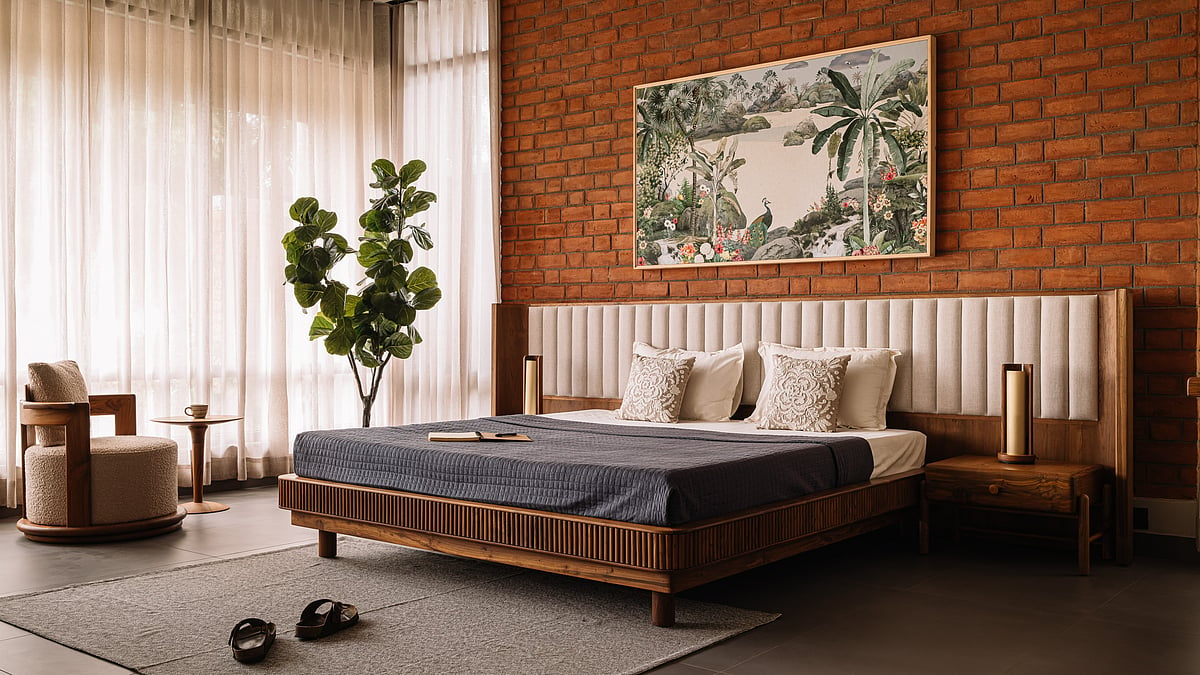
Mid-Century Modern design, which originated in the post-World War II era, has become a blueprint for contemporary furniture. Characterized by clean lines, organic shapes, and functionality, this design movement has been reinterpreted by a new generation of Indian brands.
The simplicity of Mid-Century Modern design has led to the use of non-traditional materials, such as plywood, fibreglass, acrylic, and aluminium, in modern homes. These materials, when paired with organic wood, fabrics, and leather, offer a unique perspective on design. The Eames Lounge Chair, designed by Charles and Ray Eames in 1956, is a iconic representation of Mid-Century Modern design.
The Eames Lounge Chair, made of die-cast aluminium, rosewood, Scottish leather, and down filling, has been updated by furniture manufacturer Herman Miller to include bamboo-based leather upholstery, reducing the chair's carbon footprint by up to 35%. Another Mid-Century Modern master, Gio Ponti, designed the Dezza armchair in 1965, which has been reissued by Italian furniture maker Poltrona Frau in a limited edition of 60 numbered and certified pieces.
In India, the Mid-Century Modern vision was introduced in the 1950s by Charles-Édouard Jeanneret, also known as Le Corbusier, who designed the city of Chandigarh and functional furniture pieces, including the Chandigarh Chair. Indian furniture brands have been inspired by these designs and have reinterpreted them using local materials and craftsmanship.
Gaurav Jain, Founder and Creative Director of Jodhpur-based Orange Tree, has collaborated with UK-based Swoon to introduce a collection of 30 furniture pieces that reimagine Mid-Century Modern classics. The collection includes pieces such as the Rushden Wooden Sideboard, which blends global form with local materiality and craft.
The influence of Mid-Century Modern design on contemporary furniture is evident in the use of clean lines, organic shapes, and functionality. Indian brands are now blending global form with local materials and craftsmanship, creating a unique and sustainable approach to furniture design.
The reissue of classic Mid-Century Modern designs, such as the Eames Lounge Chair and the Dezza armchair, demonstrates the enduring influence of this design movement. As the design world continues to evolve, it is likely that Mid-Century Modern design will remain a significant inspiration for contemporary furniture.
In conclusion, Mid-Century Modern design has had a profound influence on contemporary furniture, and its simplicity, functionality, and use of non-traditional materials continue to inspire designers and brands around the world. The blending of global form with local materials and craftsmanship has created a unique and sustainable approach to furniture design, which is likely to endure for generations to come.
The significance of Mid-Century Modern design lies in its ability to balance form and function, creating furniture that is both aesthetically pleasing and functional. As the world becomes increasingly conscious of sustainability and the environment, the use of local materials and craftsmanship in furniture design is likely to become even more important.
Overall, Mid-Century Modern design has left an indelible mark on the world of furniture design, and its influence can be seen in the work of designers and brands around the world. As the design world continues to evolve, it is likely that Mid-Century Modern design will remain a significant inspiration for contemporary furniture, and its legacy will continue to shape the future of furniture design.
Frequently asked questions
What is Mid-Century Modern design?
Mid-Century Modern design is a design movement that originated in the post-World War II era, characterized by clean lines, organic shapes, and functionality.
How has Mid-Century Modern design influenced contemporary furniture?
Mid-Century Modern design has influenced contemporary furniture by introducing non-traditional materials, such as plywood and fibreglass, and emphasizing functionality and sustainability.