5.9-Magnitude Quake Hits Tokyo Region
A 5.9-magnitude earthquake struck eastern Japan, injuring multiple people and disrupting train services.
'%3E%3Crect%20width%3D'96'%20height%3D'96'%20fill%3D'%234A235A'%2F%3E%3Ccircle%20cx%3D'30'%20cy%3D'24'%20r%3D'44'%20fill%3D'%23fff'%20opacity%3D'.12'%2F%3E%3Ccircle%20cx%3D'60'%20cy%3D'74'%20r%3D'40'%20fill%3D'%23000'%20opacity%3D'.10'%2F%3E%3C%2Fg%3E%3Cg%20fill%3D'none'%20stroke%3D'%23fff'%20stroke-width%3D'3'%3E%3Ccircle%20cx%3D'48'%20cy%3D'48'%20r%3D'16'%2F%3E%3Cellipse%20cx%3D'48'%20cy%3D'48'%20rx%3D'6.5'%20ry%3D'16'%2F%3E%3Cline%20x1%3D'32'%20y1%3D'42'%20x2%3D'64'%20y2%3D'42'%2F%3E%3Cline%20x1%3D'32'%20y1%3D'54'%20x2%3D'64'%20y2%3D'54'%2F%3E%3C%2Fg%3E%3C%2Fsvg%3E)
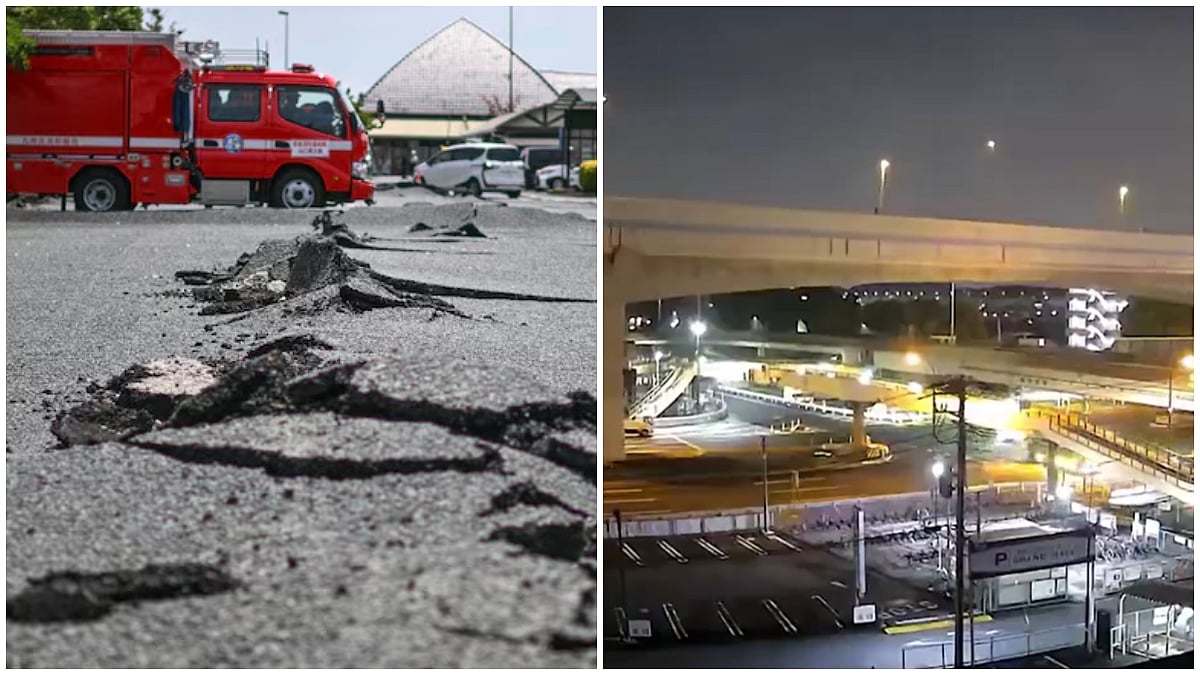
A preliminary 5.9-magnitude earthquake struck eastern Japan early Sunday, resulting in multiple injuries across prefectures surrounding Tokyo and causing widespread transit disruptions. The temblor struck at 2:00 am, with its epicentre located in the southern section of Ibaraki Prefecture at a depth of 68 kilometres.
The Japan Meteorological Agency confirmed that the seismic event did not trigger a tsunami threat. The quake registered a lower 5 on Japan's 7-point seismic intensity scale across portions of Ibaraki as well as central Tokyo. This intensity is categorised as shaking pronounced enough to cause alarm, compelling individuals to seek stability while unanchored items risk falling from shelves.
The earthquake triggered delays for early morning train operations, while several services were compelled to proceed at reduced speeds, according to JR East and regional transit operators. The Keisei Line, which links central Tokyo's Ueno to Narita Airport in Chiba Prefecture, reported that normal operations resumed after 9:40 am. However, selected express routes operated by Tobu Railway remained suspended.
The seismic activity resulted in several injuries across neighbouring regions, according to local fire departments. Casualties included a young man and a woman in her 70s in Saitama Prefecture, north of Tokyo, alongside three injured individuals in Kawasaki, situated just south of the capital. In Tokyo's Koto Ward, a ruptured water main prompted metropolitan officials to examine whether the structural damage was directly connected to the temblor.
Similar intensity readings of lower 5 were documented in parts of Chiba and Saitama prefectures. Within central Tokyo, Adachi Ward logged a lower 5 intensity, while remaining districts experienced lighter shaking. Authorities have reported no operational irregularities at the Tokai No. 2 nuclear facility in Ibaraki Prefecture, nor at the Fukushima Daiichi or Fukushima Daini nuclear power stations in northeastern Japan.
Japanese Prime Minister Sanae Takaichi stated that she instructed government officials to determine the scope of damage caused by the earthquake and ensure timely public information dispatches. The weather agency has cautioned the public to remain vigilant, and authorities are closely monitoring the situation.
The earthquake has caused significant disruptions to daily life in the Tokyo region, with many residents experiencing alarm and seeking stability during the shaking. The Japanese government's prompt response and instructions to determine the scope of damage will help to mitigate the effects of the earthquake and ensure public safety.
In conclusion, the 5.9-magnitude earthquake that struck eastern Japan has resulted in multiple injuries and disruptions to train services, highlighting the importance of earthquake preparedness and response in the region. The Japanese government's efforts to assess the damage and provide timely information to the public will be crucial in the coming days and weeks.
The earthquake has also raised concerns about the potential risks associated with nuclear power stations in the region. However, authorities have reported no operational irregularities at these facilities, which is a positive sign. The situation will continue to be closely monitored, and the public will be kept informed of any developments.
Overall, the earthquake has had a significant impact on the Tokyo region, and the response of the Japanese government and authorities will be critical in mitigating its effects and ensuring public safety.
The earthquake is a reminder of the importance of disaster preparedness and response in Japan, which is prone to seismic activity. The country's experience and expertise in dealing with earthquakes will be invaluable in the coming days and weeks as the situation continues to unfold.
In the meantime, the public is advised to remain vigilant and follow the instructions of authorities. The Japanese government's efforts to provide timely and accurate information will help to reduce the risks associated with the earthquake and ensure that the public is prepared for any future seismic activity.
The situation will continue to be closely monitored, and the public will be kept informed of any developments. The earthquake has highlighted the importance of earthquake preparedness and response in Japan, and the country's experience and expertise in dealing with seismic activity will be crucial in the coming days and weeks.
Frequently asked questions
What was the magnitude of the earthquake that struck Tokyo?
The earthquake had a preliminary magnitude of 5.9.
Were there any reports of tsunami threats?
No, the Japan Meteorological Agency confirmed that the seismic event did not trigger a tsunami threat.