Astronaut Takes Fish to Space in 1994
Fish laid eggs in space, babies hatched
'%3E%3Crect%20width%3D'96'%20height%3D'96'%20fill%3D'%23B3261E'%2F%3E%3Ccircle%20cx%3D'30'%20cy%3D'24'%20r%3D'44'%20fill%3D'%23fff'%20opacity%3D'.12'%2F%3E%3Ccircle%20cx%3D'60'%20cy%3D'74'%20r%3D'40'%20fill%3D'%23000'%20opacity%3D'.10'%2F%3E%3C%2Fg%3E%3Cg%20fill%3D'%23fff'%3E%3Crect%20x%3D'29'%20y%3D'49'%20width%3D'8'%20height%3D'19'%20rx%3D'1'%2F%3E%3Crect%20x%3D'39'%20y%3D'40'%20width%3D'9'%20height%3D'28'%20rx%3D'1'%2F%3E%3Crect%20x%3D'50'%20y%3D'45'%20width%3D'8'%20height%3D'23'%20rx%3D'1'%2F%3E%3Crect%20x%3D'60'%20y%3D'53'%20width%3D'7'%20height%3D'15'%20rx%3D'1'%2F%3E%3Crect%20x%3D'41'%20y%3D'34'%20width%3D'5'%20height%3D'6'%2F%3E%3C%2Fg%3E%3C%2Fsvg%3E)
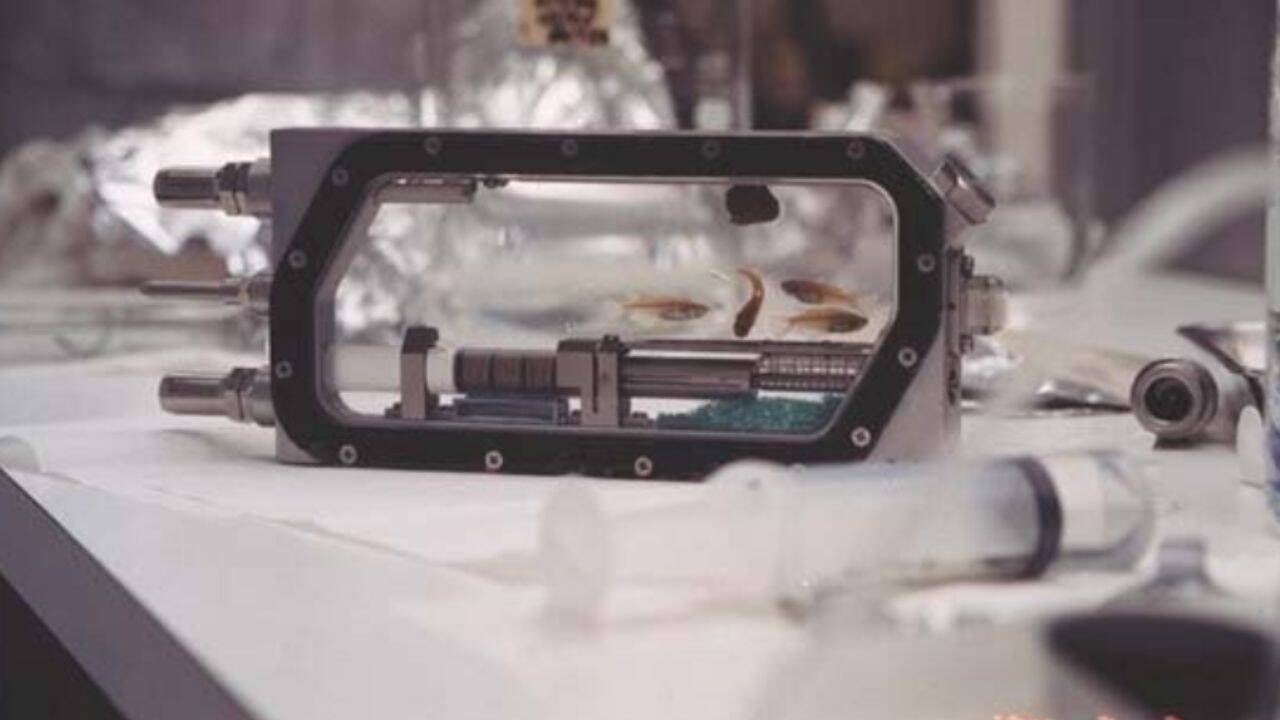
In July 1994, astronaut Chiaki Mukai embarked on a mission aboard the Columbia spacecraft, accompanied by an unusual crew: four medaka fish. The purpose of this experiment was to study reproduction in microgravity.
The fish were taken to space as part of a scientific study to understand how microgravity affects the reproductive process. During the mission, the fish laid eggs, and out of 43 identified eggs, eight hatched in space.
After the spacecraft returned to Earth, the adult fish gradually recovered from their time in space. Meanwhile, the young fish, dubbed 'space medaka,' continued to grow normally. This experiment provided valuable insights into the effects of microgravity on living organisms.
The medaka fish were chosen for this experiment due to their unique characteristics, which make them ideal for scientific research. They are able to thrive in a variety of environments and are relatively small, making them easy to care for in space.
Astronaut Chiaki Mukai played a crucial role in the success of this experiment. As a scientist and astronaut, she was responsible for monitoring the fish during the mission and ensuring their safety.
The results of this experiment have contributed significantly to our understanding of how microgravity affects living organisms. The fact that the fish were able to lay eggs and hatch in space is a remarkable discovery, and the continued growth of the young fish after returning to Earth is a testament to the resilience of life.
This experiment has paved the way for further research into the effects of microgravity on living organisms. As space travel becomes more common, it is essential to understand how microgravity affects the human body and other living organisms.
In conclusion, the 1994 space mission aboard the Columbia spacecraft was a groundbreaking experiment that has provided valuable insights into the effects of microgravity on living organisms. The success of this experiment is a testament to the dedication and hard work of astronaut Chiaki Mukai and the entire team involved.
The experiment has also sparked interest in the scientific community, with many researchers eager to build upon the findings of this study. As we continue to explore space and push the boundaries of human knowledge, experiments like this one will play a crucial role in helping us understand the complexities of space travel.
The 'space medaka' experiment has also raised questions about the potential for life to exist in space. While the experiment was not designed to search for extraterrestrial life, it has provided valuable insights into the possibility of life existing in microgravity environments.
As we look to the future of space exploration, experiments like the 'space medaka' will be essential in helping us understand the challenges and opportunities of space travel. By studying the effects of microgravity on living organisms, we can better prepare ourselves for the challenges of long-term space missions and potentially unlock the secrets of the universe.
The 'space medaka' experiment is a remarkable example of the power of scientific research and the importance of exploring the unknown. As we continue to push the boundaries of human knowledge, we may uncover even more remarkable discoveries that challenge our understanding of the universe and our place within it.
In the end, the 'space medaka' experiment is a testament to human curiosity and the drive to explore the unknown. It has provided valuable insights into the effects of microgravity on living organisms and has paved the way for further research into the mysteries of space.
Frequently asked questions
What was the purpose of the fish in space experiment
The purpose of the experiment was to study reproduction in microgravity
How many fish eggs hatched in space
Eight out of 43 identified eggs hatched in space