India's Spin Attack Loses Edge
India's spin bowling struggles, pace takes center stage. What's behind the decline?
'%3E%3Crect%20width%3D'96'%20height%3D'96'%20fill%3D'%231B5E20'%2F%3E%3Ccircle%20cx%3D'30'%20cy%3D'24'%20r%3D'44'%20fill%3D'%23fff'%20opacity%3D'.12'%2F%3E%3Ccircle%20cx%3D'60'%20cy%3D'74'%20r%3D'40'%20fill%3D'%23000'%20opacity%3D'.10'%2F%3E%3C%2Fg%3E%3Cg%3E%3Ccircle%20cx%3D'48'%20cy%3D'48'%20r%3D'15'%20fill%3D'%23fff'%2F%3E%3Cpath%20d%3D'M43%2034%20Q50%2048%2043%2062'%20fill%3D'none'%20stroke%3D'%238a94a6'%20stroke-width%3D'2.4'%2F%3E%3Cpath%20d%3D'M47%2033%20Q54%2048%2047%2063'%20fill%3D'none'%20stroke%3D'%238a94a6'%20stroke-width%3D'1.8'%20stroke-dasharray%3D'1.5%203'%2F%3E%3C%2Fg%3E%3C%2Fsvg%3E)
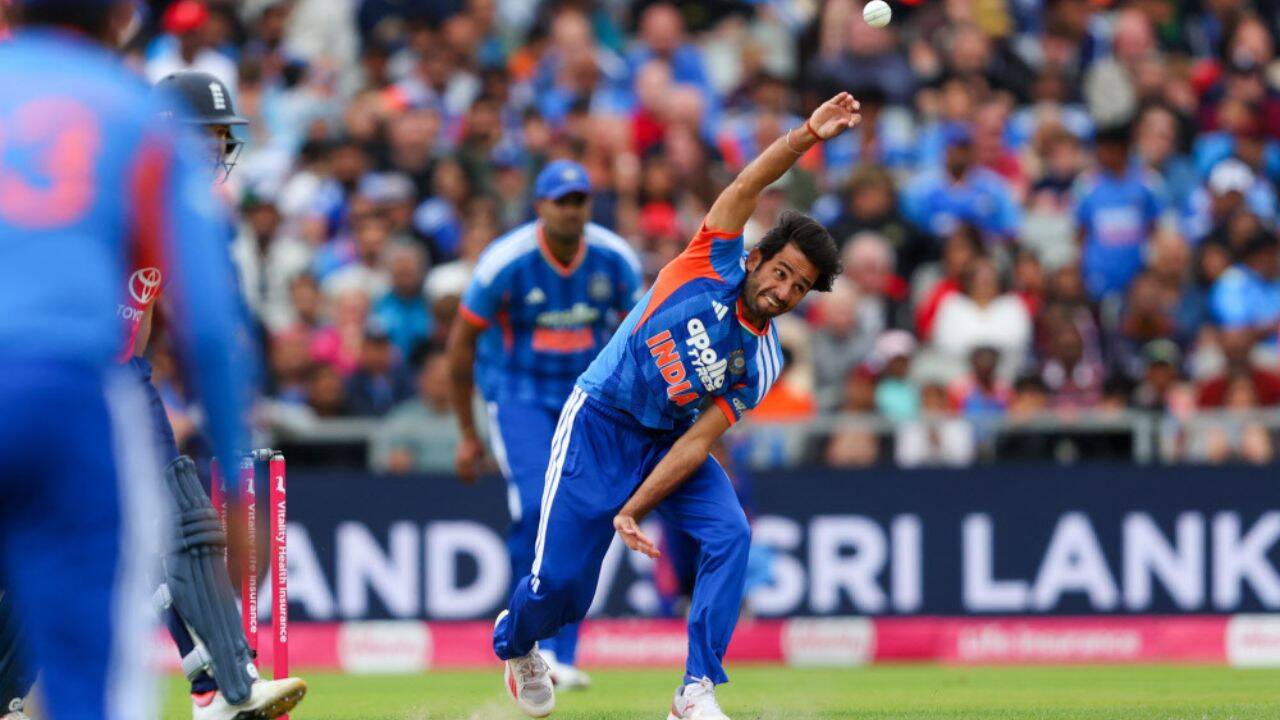
India's spin bowling, once a formidable force in international cricket, is losing its potency. The team's recent performances against Ireland and England have highlighted the struggles of the spin department, with repeated failures to take wickets in the middle overs.
The Indian team management has been forced to rely increasingly on pace bowlers rather than spinners, a departure from the country's traditional strength in the sport. This shift in strategy is a response to the lack of effectiveness of the spin attack, which has been a concern for some time.
The problem is not just limited to the current team, but also extends to the talent pipeline. The lack of emerging spin talent is a worrying sign for Indian cricket, as the country has historically produced some of the greatest spin bowlers in the game.
In recent T20I series, the Indian spinners have struggled to make an impact, leading to a re-think of the team's strategy. The reliance on pace bowlers has been a successful tactic in some matches, but it is not a long-term solution to the problem.
The decline of India's spin attack is a complex issue, with several factors contributing to the problem. The changing nature of the game, with the increasing importance of T20 cricket, has led to a shift in emphasis towards pace bowling. Additionally, the lack of quality spin bowling coaches and the inadequate development of young spinners have also played a role.
India has a rich history of producing world-class spin bowlers, from the likes of Anil Kumble and Harbhajan Singh to Ravichandran Ashwin and Ravindra Jadeja. However, the current crop of spinners has failed to live up to the standards set by their predecessors.
The Indian cricket team's think tank is aware of the problem and is working to address the issue. The team's coaching staff is looking to identify and develop young spin talent, with the aim of rebuilding the spin attack.
The decline of India's spin attack is a significant concern for the team, as it has been a key factor in their success in the past. The team's ability to take wickets in the middle overs has been a major strength, but the current struggles of the spin department have made it difficult to achieve this.
In conclusion, India's spin attack is facing a crisis, with the team struggling to take wickets in the middle overs and a thinning talent pipeline. The reliance on pace bowlers is a temporary solution, but the team needs to address the underlying issues to restore the spin attack to its former glory.
The significance of this issue extends beyond the current team, as it has implications for the future of Indian cricket. The development of young spinners and the identification of new talent are crucial to the long-term success of the team. The Indian cricket team's management and coaching staff must work together to address the decline of the spin attack and ensure that the team remains competitive in the years to come.
What this means for India is that the team needs to re-evaluate its strategy and focus on developing its spin bowling resources. The country's rich cricketing history and tradition of producing world-class spin bowlers make it imperative that the team addresses this issue and restores the spin attack to its former potency.