Delhi Govt Spares Protesters from Adverse Action
Delhi govt directs police not to take action against protesters, except those with criminal background.
'%3E%3Crect%20width%3D'96'%20height%3D'96'%20fill%3D'%231A5276'%2F%3E%3Ccircle%20cx%3D'30'%20cy%3D'24'%20r%3D'44'%20fill%3D'%23fff'%20opacity%3D'.12'%2F%3E%3Ccircle%20cx%3D'60'%20cy%3D'74'%20r%3D'40'%20fill%3D'%23000'%20opacity%3D'.10'%2F%3E%3C%2Fg%3E%3Cg%20fill%3D'%23fff'%3E%3Cpath%20d%3D'M31%2041%20L48%2031%20L65%2041%20Z'%2F%3E%3Crect%20x%3D'33'%20y%3D'43'%20width%3D'4'%20height%3D'17'%2F%3E%3Crect%20x%3D'41'%20y%3D'43'%20width%3D'4'%20height%3D'17'%2F%3E%3Crect%20x%3D'51'%20y%3D'43'%20width%3D'4'%20height%3D'17'%2F%3E%3Crect%20x%3D'59'%20y%3D'43'%20width%3D'4'%20height%3D'17'%2F%3E%3Crect%20x%3D'30'%20y%3D'62'%20width%3D'36'%20height%3D'4'%20rx%3D'1'%2F%3E%3C%2Fg%3E%3C%2Fsvg%3E)
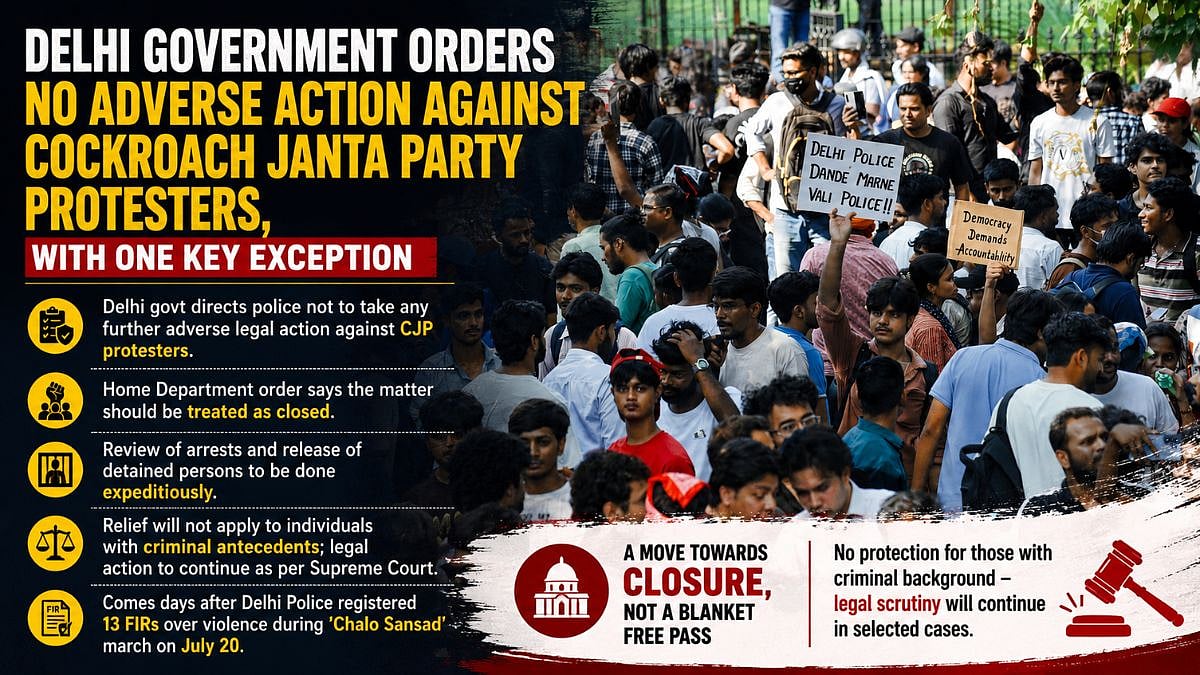
The Delhi government has ordered the Delhi Police not to take any further adverse legal action against individuals who participated in the Cockroach Janta Party-led protest in the national capital. This decision was made with the exception of those with a criminal background, who will continue to face legal action.
According to an order issued by the Delhi government's Home Department, the administration does not intend to pursue any further proceedings against those involved in the protests. The matter should be treated as closed, signalling a move to draw a line under the protest-related cases for eligible participants.
The order also addresses those who have already been arrested or detained in connection with the protests. It states that the process of reviewing such arrests and facilitating the release of arrested persons will be carried out expeditiously. The Home Department further directed that no police authority within the National Capital Territory (NCT) of Delhi should initiate any adverse legal action against individuals who participated in the protests.
This decision reflects the government's intent to ease legal proceedings arising out of the demonstrations while bringing a sense of closure to the issue. However, the government has made it clear that the protection will not extend to people with criminal antecedents. The order states that such individuals will continue to face action, in line with a recent order of the Supreme Court.
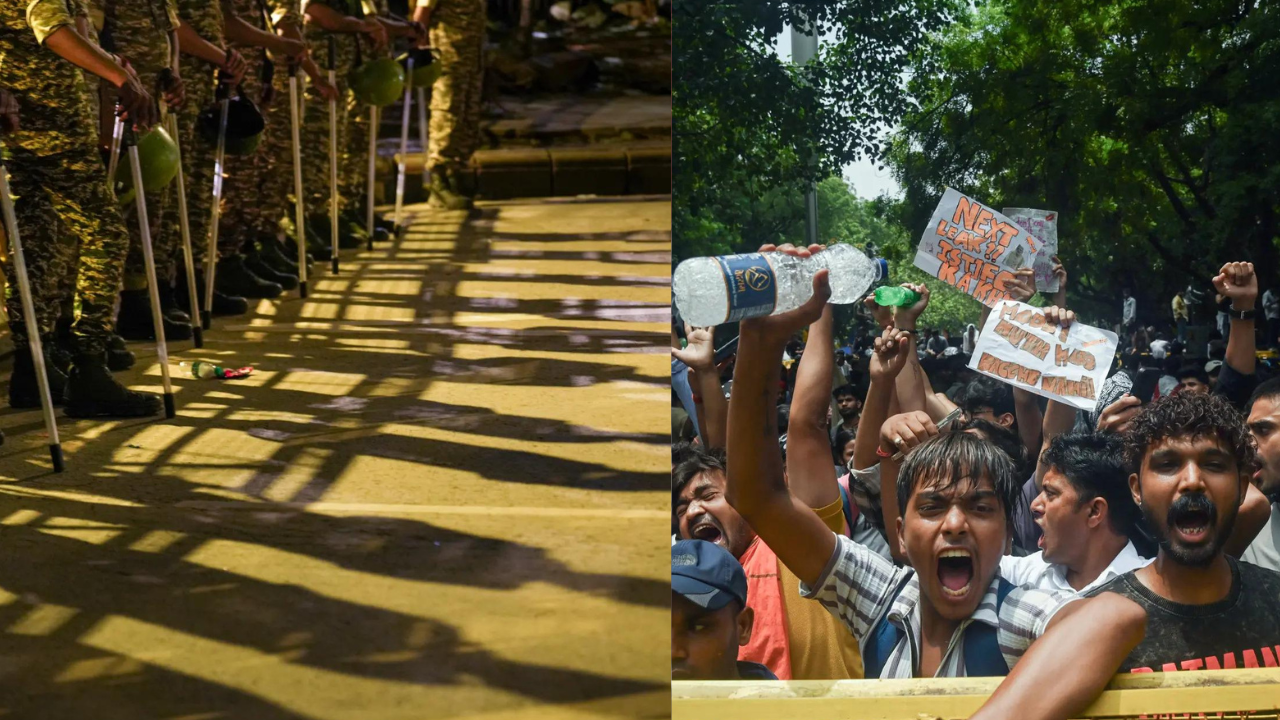
The development comes days after the Delhi Police registered 13 FIRs in connection with violence during the Cockroach Janta Party's 'Chalo Sansad' march held on July 20. While the government's order offers significant relief to most protesters, the exclusion of those with criminal backgrounds indicates that legal scrutiny will continue in selected cases.
The Cockroach Janta Party-led protest was a significant event in the national capital, with many participants demanding various changes. The Delhi government's decision to spare protesters from adverse action is a notable development, as it aims to bring closure to the issue.
In the context of the recent protests, the Delhi government's move is seen as an attempt to ease tensions and prevent further unrest. The decision is also expected to have implications for future protests and demonstrations in the national capital.
The Delhi Police had earlier registered cases against protesters, leading to widespread criticism and demands for the withdrawal of the cases. The government's order is likely to be seen as a response to these demands, although the exclusion of those with criminal backgrounds is a significant exception.
In conclusion, the Delhi government's decision to spare protesters from adverse action is a significant development, with implications for the city's protest landscape. While the decision offers relief to most protesters, the exclusion of those with criminal backgrounds ensures that legal scrutiny will continue in selected cases.
The move is expected to have a positive impact on the city's social and political climate, as it aims to bring closure to the issue and prevent further unrest. However, the decision is also likely to be subject to scrutiny and debate, given the complexities of the issue and the various stakeholders involved.
Overall, the Delhi government's decision is a notable development, reflecting the administration's intent to ease tensions and prevent further unrest in the national capital.
Frequently asked questions
What is the Delhi government's stance on protesters?
The Delhi government has directed the police not to take adverse action against protesters, except those with a criminal background.
How many FIRs were registered in connection with the protests?
The Delhi Police registered 13 FIRs in connection with violence during the Cockroach Janta Party's 'Chalo Sansad' march.