Tuna Evolution Unlinked to Dinosaur Extinction
New study challenges old theory, tuna's speed evolved over 50M years. Researchers find no direct link to asteroid strike.
'%3E%3Crect%20width%3D'96'%20height%3D'96'%20fill%3D'%23B3261E'%2F%3E%3Ccircle%20cx%3D'30'%20cy%3D'24'%20r%3D'44'%20fill%3D'%23fff'%20opacity%3D'.12'%2F%3E%3Ccircle%20cx%3D'60'%20cy%3D'74'%20r%3D'40'%20fill%3D'%23000'%20opacity%3D'.10'%2F%3E%3C%2Fg%3E%3Cg%20fill%3D'%23fff'%3E%3Crect%20x%3D'29'%20y%3D'49'%20width%3D'8'%20height%3D'19'%20rx%3D'1'%2F%3E%3Crect%20x%3D'39'%20y%3D'40'%20width%3D'9'%20height%3D'28'%20rx%3D'1'%2F%3E%3Crect%20x%3D'50'%20y%3D'45'%20width%3D'8'%20height%3D'23'%20rx%3D'1'%2F%3E%3Crect%20x%3D'60'%20y%3D'53'%20width%3D'7'%20height%3D'15'%20rx%3D'1'%2F%3E%3Crect%20x%3D'41'%20y%3D'34'%20width%3D'5'%20height%3D'6'%2F%3E%3C%2Fg%3E%3C%2Fsvg%3E)
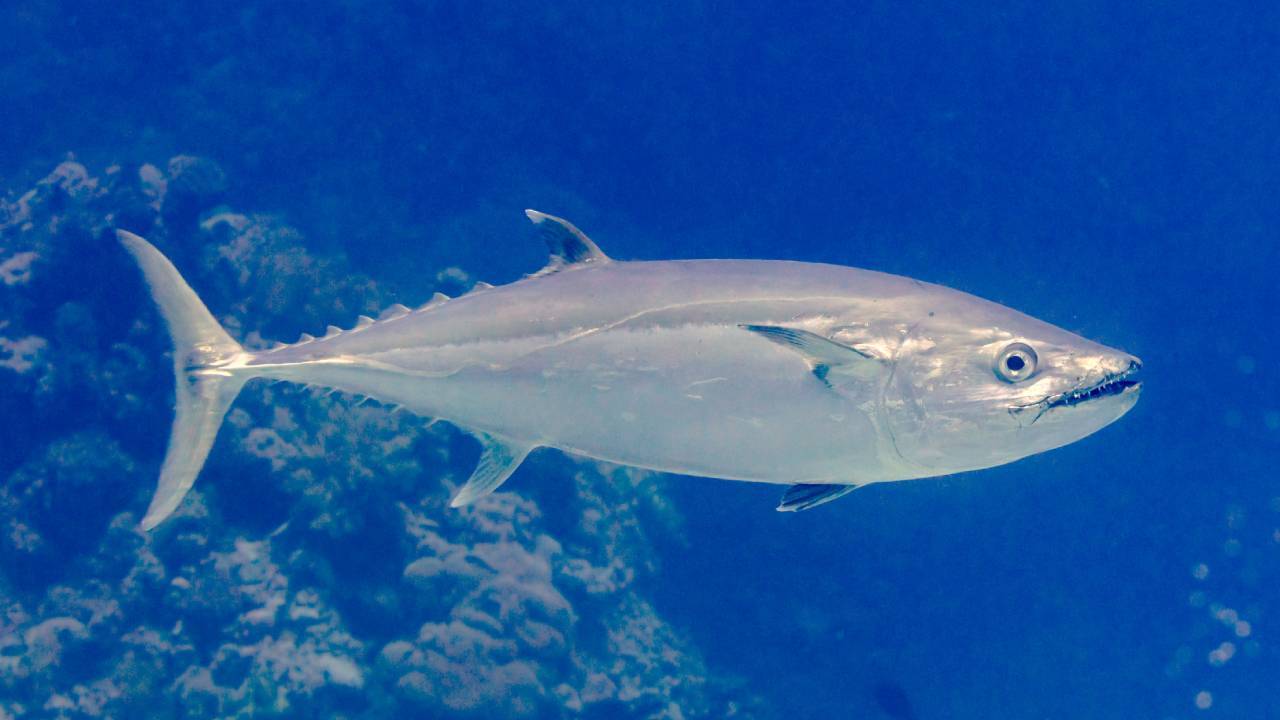
A recent study by Yale University has shed new light on the evolution of tuna, challenging a long-standing scientific theory. The research suggests that the evolution of modern tuna's speed and warm-bloodedness did not occur as a direct result of the asteroid strike that led to the extinction of non-avian dinosaurs 66 million years ago.
The asteroid strike, which occurred 66 million years ago, has been widely believed to have triggered the evolution of large, fast-swimming, warm-blooded predators such as tuna. However, the new study found that this was not the case. Instead, the evolution of tuna's speed and warm-bloodedness occurred over a period of 50 million years.
The researchers behind the study aimed to investigate the link between the asteroid strike and the evolution of modern tuna. They analyzed various factors, including the fossil record and the evolution of tuna's physiology. The study's findings indicate that the evolution of tuna's speed and warm-bloodedness was a gradual process that occurred over millions of years.
The theory that the asteroid strike led to the evolution of modern tuna was based on the idea that the extinction of non-avian dinosaurs created an ecological niche for large, fast-swimming predators to evolve. However, the new study suggests that this was not the primary driver of tuna's evolution.
Tuna are known for their unique physiology, which allows them to swim at high speeds and maintain a warm body temperature in cold water. This is made possible by their highly efficient cardiovascular system and their ability to generate heat internally. The evolution of these traits has been a subject of interest for scientists, who have sought to understand how and when they developed.
The study's findings have significant implications for our understanding of the evolution of life on Earth. They suggest that the evolution of complex traits can occur over long periods of time, and that it is not always driven by single events such as asteroid strikes. Instead, the evolution of life is often the result of a complex interplay of factors, including ecology, physiology, and genetics.
In the context of the history of life on Earth, the evolution of tuna is an important example of how species can adapt and evolve over time. The study's findings highlight the importance of considering the long-term perspective when studying the evolution of life, and the need to move beyond simplistic explanations for complex phenomena.
The significance of this study extends beyond the field of biology, as it highlights the importance of considering the complexity of evolutionary processes. It also underscores the need for continued research into the evolution of life on Earth, and the importance of challenging established theories and assumptions.
In conclusion, the new study by Yale University has challenged a long-standing scientific theory, providing new insights into the evolution of modern tuna. The findings suggest that the evolution of tuna's speed and warm-bloodedness occurred over a period of 50 million years, and was not directly triggered by the asteroid strike that led to the extinction of non-avian dinosaurs. This study highlights the complexity of evolutionary processes and the need for continued research into the evolution of life on Earth.
The study's implications are far-reaching, and will likely have a significant impact on our understanding of the evolution of life. As scientists continue to study the evolution of tuna and other species, they will be forced to consider the complexity of evolutionary processes, and the need to move beyond simplistic explanations for complex phenomena. This will ultimately lead to a deeper understanding of the evolution of life on Earth, and the complex factors that have shaped the diversity of species that we see today.
The evolution of tuna is a fascinating example of how species can adapt and evolve over time, and the study's findings provide new insights into this process. As we continue to learn more about the evolution of life on Earth, we will be able to better appreciate the complexity and diversity of species that exist today.
The study's findings are a significant contribution to our understanding of the evolution of life, and will likely be of interest to scientists and non-scientists alike. The evolution of tuna is a complex and fascinating topic, and the study's findings provide new insights into this process. As we continue to learn more about the evolution of life on Earth, we will be able to better appreciate the complexity and diversity of species that exist today.
In terms of significance, the study's findings are a major breakthrough in our understanding of the evolution of life. They highlight the importance of considering the long-term perspective when studying the evolution of life, and the need to move beyond simplistic explanations for complex phenomena. The study's findings will likely have a significant impact on our understanding of the evolution of life, and will be of interest to scientists and non-scientists alike.
For Mumbai residents, the study's findings may seem distant, but they highlight the importance of considering the complexity of evolutionary processes. The evolution of tuna is a fascinating example of how species can adapt and evolve over time, and the study's findings provide new insights into this process. As we continue to learn more about the evolution of life on Earth, we will be able to better appreciate the complexity and diversity of species that exist today.
In conclusion, the study's findings are a significant contribution to our understanding of the evolution of life, and highlight the importance of considering the complexity of evolutionary processes. The evolution of tuna is a fascinating example of how species can adapt and evolve over time, and the study's findings provide new insights into this process. As we continue to learn more about the evolution of life on Earth, we will be able to better appreciate the complexity and diversity of species that exist today.
The study's implications are far-reaching, and will likely have a significant impact on our understanding of the evolution of life. The evolution of tuna is a complex and fascinating topic, and the study's findings provide new insights into this process. As we continue to learn more about the evolution of life on Earth, we will be able to better appreciate the complexity and diversity of species that exist today.
The significance of this study extends beyond the field of biology, as it highlights the importance of considering the complexity of evolutionary processes. It also underscores the need for continued research into the evolution of life on Earth, and the importance of challenging established theories and assumptions.
In the end, the study's findings are a reminder that the evolution of life is a complex and fascinating process, and that there is still much to be learned about the diversity of species that exist today. The evolution of tuna is a fascinating example of how species can adapt and evolve over time, and the study's findings provide new insights into this process. As we continue to learn more about the evolution of life on Earth, we will be able to better appreciate the complexity and diversity of species that exist today.
What this means for Mumbai residents is that the study's findings highlight the importance of considering the complexity of evolutionary processes. The evolution of tuna is a fascinating example of how species can adapt and evolve over time, and the study's findings provide new insights into this process. As we continue to learn more about the evolution of life on Earth, we will be able to better appreciate the complexity and diversity of species that exist today.
The study's findings are a significant contribution to our understanding of the evolution of life, and will likely have a significant impact on our understanding of the evolution of life. The evolution of tuna is a complex and fascinating topic, and the study's findings provide new insights into this process. As we continue to learn more about the evolution of life on Earth, we will be able to better appreciate the complexity and diversity of species that exist today.
The significance of this study extends beyond the field of biology, as it highlights the importance of considering the complexity of evolutionary processes. It also underscores the need for continued research into the evolution of life on Earth, and the importance of challenging established theories and assumptions.
In conclusion, the study's findings are a significant contribution to our understanding of the evolution of life, and highlight the importance of considering the complexity of evolutionary processes. The evolution of tuna is a fascinating example of how species can adapt and evolve over time, and the study's findings provide new insights into this process. As we continue to learn more about the evolution of life on Earth, we will be able to better appreciate the complexity and diversity of species that exist today.