Mosquitoes Prefer Human Blood Due to Habitat Loss
Mosquitoes shift to human blood, scientists blame habitat loss. Protected forests affected.
'%3E%3Crect%20width%3D'96'%20height%3D'96'%20fill%3D'%23B3261E'%2F%3E%3Ccircle%20cx%3D'30'%20cy%3D'24'%20r%3D'44'%20fill%3D'%23fff'%20opacity%3D'.12'%2F%3E%3Ccircle%20cx%3D'60'%20cy%3D'74'%20r%3D'40'%20fill%3D'%23000'%20opacity%3D'.10'%2F%3E%3C%2Fg%3E%3Cg%20fill%3D'%23fff'%3E%3Crect%20x%3D'29'%20y%3D'49'%20width%3D'8'%20height%3D'19'%20rx%3D'1'%2F%3E%3Crect%20x%3D'39'%20y%3D'40'%20width%3D'9'%20height%3D'28'%20rx%3D'1'%2F%3E%3Crect%20x%3D'50'%20y%3D'45'%20width%3D'8'%20height%3D'23'%20rx%3D'1'%2F%3E%3Crect%20x%3D'60'%20y%3D'53'%20width%3D'7'%20height%3D'15'%20rx%3D'1'%2F%3E%3Crect%20x%3D'41'%20y%3D'34'%20width%3D'5'%20height%3D'6'%2F%3E%3C%2Fg%3E%3C%2Fsvg%3E)
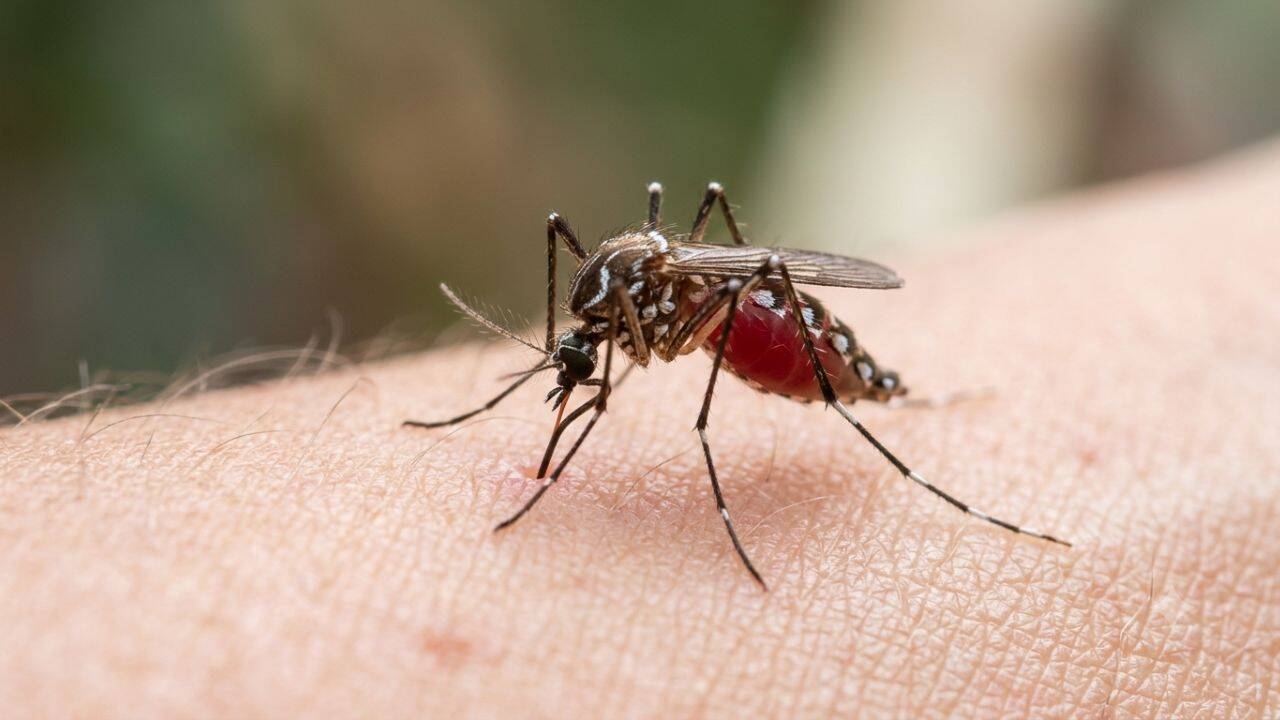
Scientists have made a disturbing discovery in Brazil's Atlantic Forest, where mosquitoes are increasingly feeding on human blood. This shift in behavior suggests that habitat loss is pushing mosquitoes towards human hosts, with potentially severe consequences for public health.
The researchers observed this trend in protected forest areas, using DNA analysis to reveal the surprising feeding pattern. The findings indicate that disappearing wildlife populations may be forcing mosquitoes to seek new blood sources, with humans becoming the preferred target.
Habitat loss and deforestation are major drivers of this change, as mosquitoes are forced to adapt to their changing environment. The Atlantic Forest, a vast and diverse ecosystem, is home to a wide range of wildlife, but human activities such as logging and agriculture are leading to widespread deforestation.
As a result, the natural balance of the ecosystem is being disrupted, with mosquitoes turning to human blood as a substitute for their usual hosts. This has significant implications for the spread of mosquito-borne diseases, which could increase in frequency and severity as mosquitoes continue to adapt to their changing environment.
The study highlights the importance of protecting forests and preserving biodiversity, not just for the health of the ecosystem, but also for human health. By conserving natural habitats and reducing deforestation, we may be able to reduce the risk of mosquito-borne diseases in the future.
The researchers' findings have significant implications for public health policy, particularly in regions where mosquito-borne diseases are prevalent. As the global population continues to grow and expand into natural habitats, the risk of disease transmission will only increase, making it essential to take proactive measures to protect forests and prevent the spread of mosquito-borne diseases.
In conclusion, the discovery that mosquitoes are increasingly feeding on human blood due to habitat loss is a wake-up call for the importance of conservation and environmental protection. By taking action to preserve natural habitats and reduce deforestation, we can help mitigate the risks associated with mosquito-borne diseases and promote a healthier, more sustainable environment for all.
The study's findings also underscore the need for continued research into the complex relationships between humans, mosquitoes, and the environment. By better understanding these dynamics, we can develop more effective strategies for preventing the spread of mosquito-borne diseases and promoting public health.
Ultimately, the protection of forests and the preservation of biodiversity are critical for maintaining the health of both humans and the environment. As we move forward, it is essential that we prioritize conservation and sustainability, recognizing the intricate connections between human health, environmental health, and the natural world.
Frequently asked questions
Why are mosquitoes feeding on human blood more often?
Mosquitoes are feeding on human blood more often due to habitat loss and the disappearance of their natural hosts.
How can we reduce the risk of mosquito-borne diseases?
Protecting forests and preserving biodiversity can help reduce the risk of mosquito-borne diseases by preventing mosquitoes from turning to human blood as a substitute for their usual hosts.