NASA Launches $4 Billion Roman Telescope
NASA's new telescope to map 2 billion galaxies, explore dark energy and exoplanets.
'%3E%3Crect%20width%3D'96'%20height%3D'96'%20fill%3D'%23B3261E'%2F%3E%3Ccircle%20cx%3D'30'%20cy%3D'24'%20r%3D'44'%20fill%3D'%23fff'%20opacity%3D'.12'%2F%3E%3Ccircle%20cx%3D'60'%20cy%3D'74'%20r%3D'40'%20fill%3D'%23000'%20opacity%3D'.10'%2F%3E%3C%2Fg%3E%3Cg%20fill%3D'%23fff'%3E%3Crect%20x%3D'29'%20y%3D'49'%20width%3D'8'%20height%3D'19'%20rx%3D'1'%2F%3E%3Crect%20x%3D'39'%20y%3D'40'%20width%3D'9'%20height%3D'28'%20rx%3D'1'%2F%3E%3Crect%20x%3D'50'%20y%3D'45'%20width%3D'8'%20height%3D'23'%20rx%3D'1'%2F%3E%3Crect%20x%3D'60'%20y%3D'53'%20width%3D'7'%20height%3D'15'%20rx%3D'1'%2F%3E%3Crect%20x%3D'41'%20y%3D'34'%20width%3D'5'%20height%3D'6'%2F%3E%3C%2Fg%3E%3C%2Fsvg%3E)
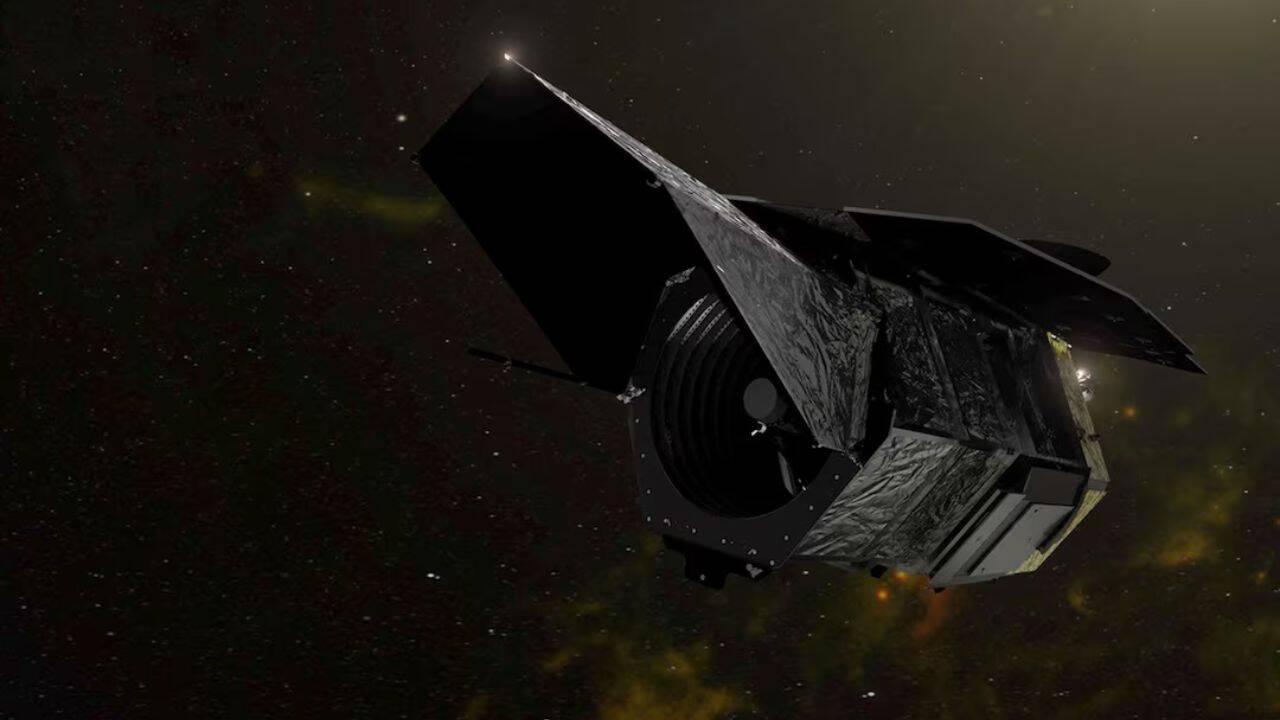
This Sunday, NASA is set to launch the Nancy Grace Roman Space Telescope, a $4 billion observatory that promises to revolutionize our understanding of the universe. The Roman telescope will focus on exploring dark energy and dark matter, two mysterious phenomena that make up a large portion of the universe.
It will also conduct wide-field surveys to map billions of galaxies and cosmic structures, working in tandem with the Hubble and James Webb telescopes. This collaborative effort will provide unprecedented insights into the universe, enabling scientists to study the formation and evolution of galaxies in greater detail.
The Roman telescope is equipped with state-of-the-art technology, allowing it to capture high-resolution images of the universe. Its advanced sensors and cameras will enable scientists to study the properties of dark energy and dark matter, which are thought to play a crucial role in the expansion and evolution of the universe.
One of the primary objectives of the Roman telescope is to conduct a comprehensive survey of the universe, mapping over 2 billion galaxies and cosmic structures. This survey will provide scientists with a wealth of data, enabling them to study the distribution and properties of galaxies in different parts of the universe.
In addition to its work on dark energy and dark matter, the Roman telescope will also explore exoplanets beyond our solar system. By studying these distant worlds, scientists hope to gain a better understanding of the conditions necessary for life to exist elsewhere in the universe.
The launch of the Roman telescope marks an exciting new chapter in astronomical research, promising to uncover secrets of the universe that have long been hidden. As scientists begin to analyze the data collected by the telescope, they expect to make new discoveries that will challenge our current understanding of the universe and its many mysteries.
The Roman telescope is named after NASA's first chief astronomer, Nancy Grace Roman, who played a pivotal role in the development of the Hubble Space Telescope. Her legacy continues to inspire new generations of scientists and astronomers, who are working tirelessly to push the boundaries of human knowledge and understanding.
As the Roman telescope embarks on its mission to explore the universe, scientists and astronomers around the world are eagerly awaiting the new discoveries that it will make. With its advanced technology and comprehensive surveys, the Roman telescope is poised to make a significant impact on our understanding of the universe, revealing secrets that have long been hidden and challenging our current understanding of the cosmos.
The launch of the Roman telescope is a testament to human ingenuity and the boundless curiosity that drives us to explore and understand the universe. As we continue to push the boundaries of knowledge and understanding, we may uncover new secrets and mysteries that will inspire future generations of scientists and astronomers to continue exploring the vast expanse of the universe.
In the coming years, the Roman telescope will provide scientists with a wealth of data, enabling them to study the universe in greater detail than ever before. As we await the new discoveries that it will make, we are reminded of the awe-inspiring complexity and beauty of the universe, and the importance of continuing to explore and understand its many mysteries.
The Roman telescope's mission to map 2 billion galaxies and uncover the secrets of the universe is a significant undertaking, one that promises to revolutionize our understanding of the cosmos. As scientists and astronomers around the world await the new discoveries that it will make, we are reminded of the importance of continued exploration and research, and the boundless possibilities that await us as we continue to push the boundaries of human knowledge and understanding.
The universe is full of mysteries waiting to be uncovered, and the Roman telescope is poised to play a significant role in this endeavor. With its advanced technology and comprehensive surveys, it will provide scientists with the data they need to study the universe in greater detail than ever before, enabling them to make new discoveries that will challenge our current understanding of the cosmos.
In conclusion, the launch of the Roman telescope marks an exciting new chapter in astronomical research, promising to uncover secrets of the universe that have long been hidden. As scientists begin to analyze the data collected by the telescope, they expect to make new discoveries that will challenge our current understanding of the universe and its many mysteries, inspiring future generations of scientists and astronomers to continue exploring the vast expanse of the universe.
The significance of the Roman telescope's mission cannot be overstated, as it promises to provide unprecedented insights into the universe, enabling scientists to study the formation and evolution of galaxies in greater detail. The data collected by the telescope will be used to study the properties of dark energy and dark matter, which are thought to play a crucial role in the expansion and evolution of the universe.
As the Roman telescope embarks on its mission to explore the universe, it is clear that its discoveries will have a profound impact on our understanding of the cosmos. The telescope's advanced technology and comprehensive surveys will provide scientists with the data they need to study the universe in greater detail than ever before, enabling them to make new discoveries that will challenge our current understanding of the universe and its many mysteries.
The Roman telescope's mission to map 2 billion galaxies and uncover the secrets of the universe is a significant undertaking, one that promises to revolutionize our understanding of the cosmos. As scientists and astronomers around the world await the new discoveries that it will make, we are reminded of the importance of continued exploration and research, and the boundless possibilities that await us as we continue to push the boundaries of human knowledge and understanding.
The universe is full of mysteries waiting to be uncovered, and the Roman telescope is poised to play a significant role in this endeavor. With its advanced technology and comprehensive surveys, it will provide scientists with the data they need to study the universe in greater detail than ever before, enabling them to make new discoveries that will challenge our current understanding of the cosmos.
In the end, the Roman telescope's mission to explore the universe is a testament to human ingenuity and the boundless curiosity that drives us to explore and understand the universe. As we continue to push the boundaries of knowledge and understanding, we may uncover new secrets and mysteries that will inspire future generations of scientists and astronomers to continue exploring the vast expanse of the universe.
Frequently asked questions
What is the primary objective of the Roman telescope?
The primary objective of the Roman telescope is to conduct a comprehensive survey of the universe, mapping over 2 billion galaxies and cosmic structures.
What will the Roman telescope be used to study?
The Roman telescope will be used to study dark energy and dark matter, as well as exoplanets beyond our solar system.