Supreme Court to Interpret Anti-Defection Law
Supreme Court to examine anti-defection law, Kapil Sibal argues merger provisions alter electoral verdicts.
'%3E%3Crect%20width%3D'96'%20height%3D'96'%20fill%3D'%231A5276'%2F%3E%3Ccircle%20cx%3D'30'%20cy%3D'24'%20r%3D'44'%20fill%3D'%23fff'%20opacity%3D'.12'%2F%3E%3Ccircle%20cx%3D'60'%20cy%3D'74'%20r%3D'40'%20fill%3D'%23000'%20opacity%3D'.10'%2F%3E%3C%2Fg%3E%3Cg%20fill%3D'%23fff'%3E%3Cpath%20d%3D'M31%2041%20L48%2031%20L65%2041%20Z'%2F%3E%3Crect%20x%3D'33'%20y%3D'43'%20width%3D'4'%20height%3D'17'%2F%3E%3Crect%20x%3D'41'%20y%3D'43'%20width%3D'4'%20height%3D'17'%2F%3E%3Crect%20x%3D'51'%20y%3D'43'%20width%3D'4'%20height%3D'17'%2F%3E%3Crect%20x%3D'59'%20y%3D'43'%20width%3D'4'%20height%3D'17'%2F%3E%3Crect%20x%3D'30'%20y%3D'62'%20width%3D'36'%20height%3D'4'%20rx%3D'1'%2F%3E%3C%2Fg%3E%3C%2Fsvg%3E)
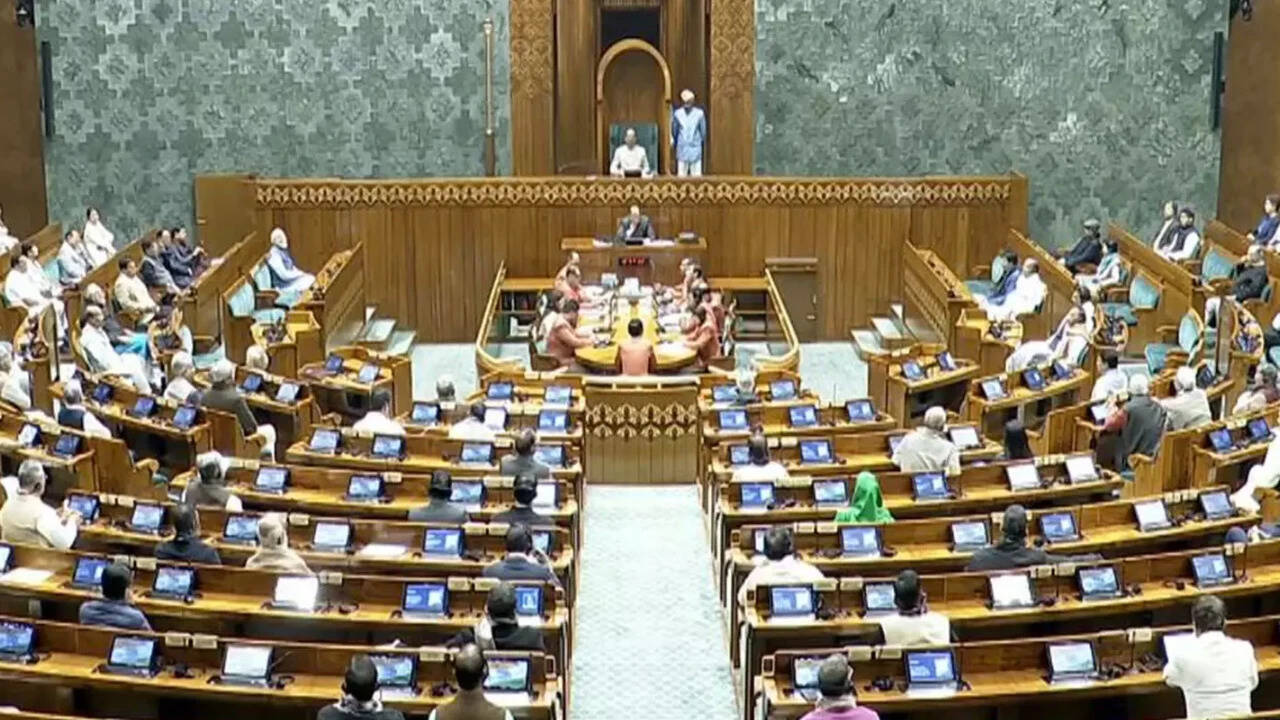
The Supreme Court of India is set to hear a plea regarding the interpretation of the anti-defection law, specifically concerning political party mergers. This development comes after Kapil Sibal, a senior lawyer, argued that the current provisions allow electoral verdicts to be altered through mergers, potentially undermining the democratic process.
The court has acknowledged that there are significant issues with the current working of the Tenth Schedule, which deals with the anti-defection law. In response, the court has issued a notice to the Centre, seeking its response on the matter. This move indicates that the court is taking a serious look at the implications of the anti-defection law and its potential impact on the country's political landscape.
The anti-defection law was enacted to prevent elected representatives from switching parties, thereby ensuring stability in the government. However, the law has been criticized for being ambiguous and open to interpretation. The current case before the Supreme Court has the potential to clarify the law and provide a clear interpretation of its provisions.
The Tenth Schedule of the Constitution, which deals with the anti-defection law, was introduced in 1985. Since then, it has been amended several times, but its interpretation has remained a subject of debate. The law states that a member of a legislative body can be disqualified if they voluntarily give up their membership or vote against their party's whip.
Kapil Sibal's argument that merger provisions can alter electoral verdicts raises important questions about the democratic process. If the court rules in favor of Sibal's argument, it could have significant implications for the country's political parties and their ability to form alliances and mergers.
The Supreme Court's decision on this matter is expected to have major repercussions for the country's political landscape. It could potentially lead to a re-evaluation of the anti-defection law and its provisions, and could also impact the way political parties operate in the country.
The case is significant not only because of its potential impact on the political landscape but also because it highlights the importance of a clear and unambiguous interpretation of the law. The Supreme Court's decision will be closely watched by political parties, lawyers, and citizens alike, as it has the potential to shape the course of Indian politics.
In conclusion, the Supreme Court's decision to hear the plea regarding the interpretation of the anti-defection law is a significant development in Indian politics. The court's interpretation of the law could have far-reaching implications for the country's political landscape, and its decision will be eagerly awaited by all stakeholders.
Frequently asked questions
What is the anti-defection law in India?
The anti-defection law is a provision in the Indian Constitution that prevents elected representatives from switching parties, thereby ensuring stability in the government.
Why is the Supreme Court hearing a plea on the anti-defection law?
The Supreme Court is hearing a plea regarding the interpretation of the anti-defection law, specifically concerning political party mergers, as there are significant issues with the current working of the Tenth Schedule.