US College Turns Football Field into Organic Farm
A US college converts its football field into a farm, addressing local food scarcity and financial struggles. Students participate in a social entrepreneurship program, providing fresh produce to local businesses.
'%3E%3Crect%20width%3D'96'%20height%3D'96'%20fill%3D'%231B5E20'%2F%3E%3Ccircle%20cx%3D'30'%20cy%3D'24'%20r%3D'44'%20fill%3D'%23fff'%20opacity%3D'.12'%2F%3E%3Ccircle%20cx%3D'60'%20cy%3D'74'%20r%3D'40'%20fill%3D'%23000'%20opacity%3D'.10'%2F%3E%3C%2Fg%3E%3Cg%3E%3Ccircle%20cx%3D'48'%20cy%3D'48'%20r%3D'15'%20fill%3D'%23fff'%2F%3E%3Cpath%20d%3D'M43%2034%20Q50%2048%2043%2062'%20fill%3D'none'%20stroke%3D'%238a94a6'%20stroke-width%3D'2.4'%2F%3E%3Cpath%20d%3D'M47%2033%20Q54%2048%2047%2063'%20fill%3D'none'%20stroke%3D'%238a94a6'%20stroke-width%3D'1.8'%20stroke-dasharray%3D'1.5%203'%2F%3E%3C%2Fg%3E%3C%2Fsvg%3E)
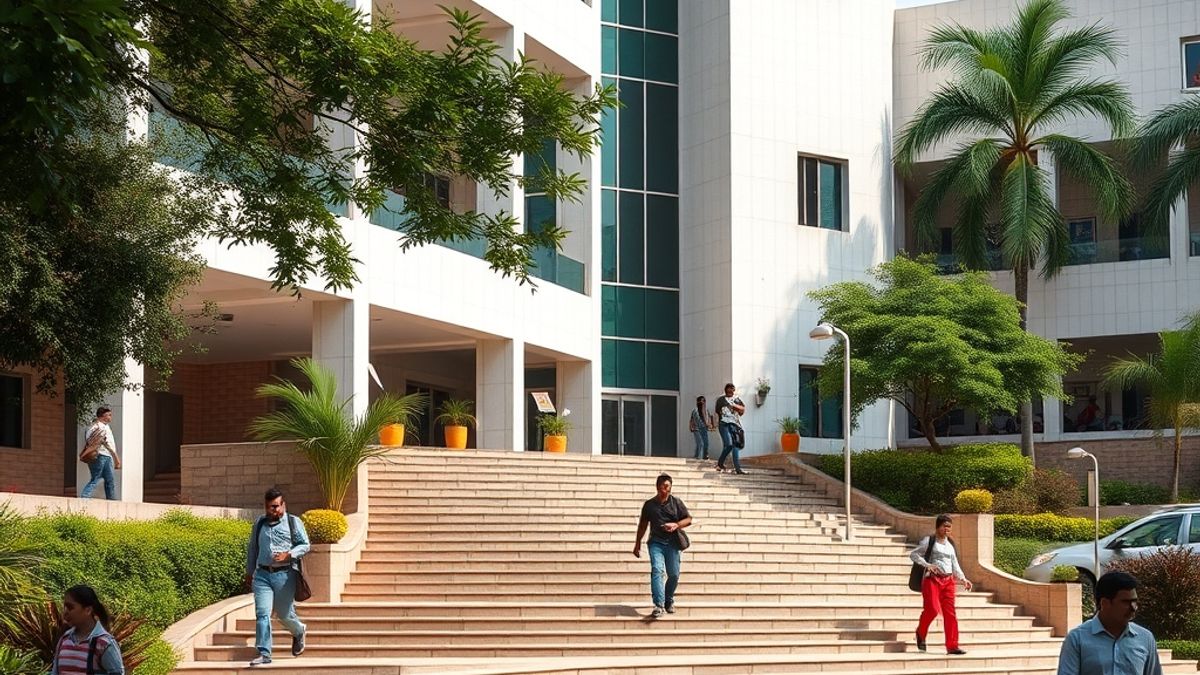
Paul Quinn College in the United States has made a remarkable transformation by converting its football field into a thriving organic farm. This innovative project was undertaken in response to the local food scarcity and to improve the college's financial situation.
The college's decision to repurpose its football field has not only helped to address the issue of food scarcity in the area but has also provided students with a unique opportunity to participate in a social entrepreneurship program. Through this program, students are able to gain hands-on experience in farming and entrepreneurship, while also providing fresh produce to local businesses.
The social entrepreneurship program at Paul Quinn College is designed to equip students with the skills and knowledge necessary to succeed in the business world. By participating in the program, students are able to learn about sustainable farming practices, business management, and community engagement. The program has been successful in providing students with a comprehensive education that extends beyond the classroom.
The conversion of the football field into a farm has also played a crucial role in restoring the college's accreditation. The college's accreditation was previously at risk due to financial struggles, but the success of the farm has helped to improve the college's financial situation. The farm has also helped to foster valuable community partnerships, with local businesses purchasing produce from the farm and supporting the college's efforts.
The project has showcased the power of sustainable practices and the impact that they can have on local communities. By converting the football field into a farm, Paul Quinn College has demonstrated its commitment to sustainability and community engagement. The project has also highlighted the importance of addressing food scarcity and promoting healthy eating habits.
The success of the farm has been attributed to the hard work and dedication of the students, faculty, and staff at Paul Quinn College. The college's president has praised the project, stating that it has helped to transform the college and provide students with a unique educational experience.
In addition to providing fresh produce to local businesses, the farm has also helped to promote sustainability and environmental awareness in the community. The college has implemented sustainable farming practices, such as using compost and reducing water waste, to minimize the farm's environmental impact.
The project has also received support from local organizations and businesses, which have recognized the importance of addressing food scarcity and promoting sustainability. The college has partnered with local organizations to provide education and training on sustainable farming practices, with the goal of creating a more sustainable food system in the community.
Overall, the conversion of the football field into a farm at Paul Quinn College has been a groundbreaking project that has helped to address local food scarcity, promote sustainability, and provide students with a unique educational experience. The project has demonstrated the power of innovation and community engagement, and has set an example for other colleges and universities to follow.
The success of the project has significant implications for the future of sustainable farming and community development. As the demand for sustainable and locally sourced produce continues to grow, projects like the one at Paul Quinn College will play an increasingly important role in promoting food security and environmental sustainability.
The project's impact on the local community has been profound, with many residents benefiting from the fresh produce and educational programs offered by the college. The college's commitment to sustainability and community engagement has helped to establish it as a leader in the field of social entrepreneurship and sustainable farming.
In conclusion, the conversion of the football field into a farm at Paul Quinn College has been a resounding success, providing a unique educational experience for students, promoting sustainability and environmental awareness, and addressing local food scarcity. The project has set an example for other colleges and universities to follow, and has demonstrated the power of innovation and community engagement in creating a more sustainable food system.
Frequently asked questions
What prompted Paul Quinn College to convert its football field into a farm?
The college converted its football field into a farm in response to local food scarcity and to improve its financial situation.
How has the farm impacted the college and the local community?
The farm has helped to restore the college's accreditation, foster community partnerships, and provide fresh produce to local businesses, while also promoting sustainability and environmental awareness.