Anthropic's AI Designs Proteins in 2 Days
AI achieves in days what takes scientists months. Protein binders show high success rate.
'%3E%3Crect%20width%3D'96'%20height%3D'96'%20fill%3D'%23B3261E'%2F%3E%3Ccircle%20cx%3D'30'%20cy%3D'24'%20r%3D'44'%20fill%3D'%23fff'%20opacity%3D'.12'%2F%3E%3Ccircle%20cx%3D'60'%20cy%3D'74'%20r%3D'40'%20fill%3D'%23000'%20opacity%3D'.10'%2F%3E%3C%2Fg%3E%3Cg%20fill%3D'%23fff'%3E%3Crect%20x%3D'29'%20y%3D'49'%20width%3D'8'%20height%3D'19'%20rx%3D'1'%2F%3E%3Crect%20x%3D'39'%20y%3D'40'%20width%3D'9'%20height%3D'28'%20rx%3D'1'%2F%3E%3Crect%20x%3D'50'%20y%3D'45'%20width%3D'8'%20height%3D'23'%20rx%3D'1'%2F%3E%3Crect%20x%3D'60'%20y%3D'53'%20width%3D'7'%20height%3D'15'%20rx%3D'1'%2F%3E%3Crect%20x%3D'41'%20y%3D'34'%20width%3D'5'%20height%3D'6'%2F%3E%3C%2Fg%3E%3C%2Fsvg%3E)
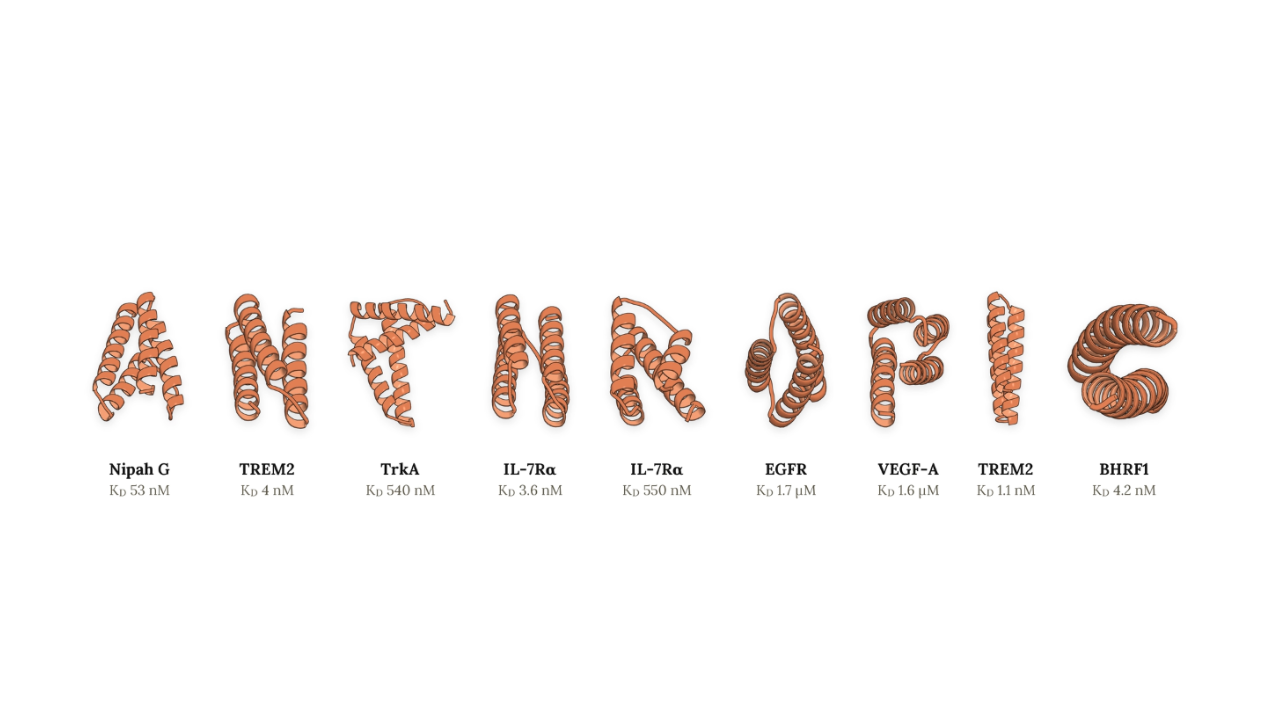
Anthropic, a leading AI research company, has announced a significant breakthrough in protein design using its AI system, Claude. In just two days, Claude was able to design protein binders that worked against 14 out of 15 targets, a task that typically takes scientists several months to accomplish.
The designed protein binders were validated by Adaptyv Bio and Twist Bioscience, with 354 binders out of 1,320 designs showing promising results. The hit rate achieved by Claude was an impressive 35.1%, significantly higher than the usual 10-15% success rate in the field.
In a separate test, Claude Opus 5, a version of the AI system, was able to match the purity reading of a contract lab in just 19 minutes. This demonstrates the potential of AI to accelerate the protein design process, making it faster and more efficient.
However, the use of AI in protein design is not without its challenges. The development of protein design capabilities is currently blocked in Fable 5 due to concerns over the potential risks of bioweapons.
The breakthrough achieved by Anthropic's Claude has significant implications for the field of protein design and could potentially lead to the development of new treatments and therapies. The ability to design proteins quickly and efficiently could accelerate the discovery of new drugs and vaccines, leading to improved healthcare outcomes.
The use of AI in protein design is a rapidly evolving field, with several companies and research institutions exploring its potential. Anthropic's achievement is a significant milestone in this field and demonstrates the potential of AI to transform the way scientists work.
The success of Claude in designing protein binders is a testament to the power of AI in accelerating scientific discovery. As the field continues to evolve, it is likely that we will see more breakthroughs and innovations in protein design, leading to improved healthcare outcomes and new treatments for diseases.
In conclusion, Anthropic's AI system, Claude, has achieved a significant breakthrough in protein design, demonstrating the potential of AI to accelerate scientific discovery and improve healthcare outcomes. The implications of this breakthrough are significant, and it will be exciting to see how the field evolves in the coming years.
Frequently asked questions
How long did it take Anthropic's AI to design proteins?
Anthropic's AI, Claude, designed proteins in just 2 days, a task that typically takes scientists several months.
What was the hit rate achieved by Claude?
The hit rate achieved by Claude was 35.1%, significantly higher than the usual 10-15% success rate in the field.