Nirmala Sitharaman Urges Investors To Manufacture In India
Finance Minister invites global investors to set up in India, highlighting economic expansion and skilled workforce.
'%3E%3Crect%20width%3D'96'%20height%3D'96'%20fill%3D'%231A5276'%2F%3E%3Ccircle%20cx%3D'30'%20cy%3D'24'%20r%3D'44'%20fill%3D'%23fff'%20opacity%3D'.12'%2F%3E%3Ccircle%20cx%3D'60'%20cy%3D'74'%20r%3D'40'%20fill%3D'%23000'%20opacity%3D'.10'%2F%3E%3C%2Fg%3E%3Cg%20fill%3D'%23fff'%3E%3Cpath%20d%3D'M31%2041%20L48%2031%20L65%2041%20Z'%2F%3E%3Crect%20x%3D'33'%20y%3D'43'%20width%3D'4'%20height%3D'17'%2F%3E%3Crect%20x%3D'41'%20y%3D'43'%20width%3D'4'%20height%3D'17'%2F%3E%3Crect%20x%3D'51'%20y%3D'43'%20width%3D'4'%20height%3D'17'%2F%3E%3Crect%20x%3D'59'%20y%3D'43'%20width%3D'4'%20height%3D'17'%2F%3E%3Crect%20x%3D'30'%20y%3D'62'%20width%3D'36'%20height%3D'4'%20rx%3D'1'%2F%3E%3C%2Fg%3E%3C%2Fsvg%3E)
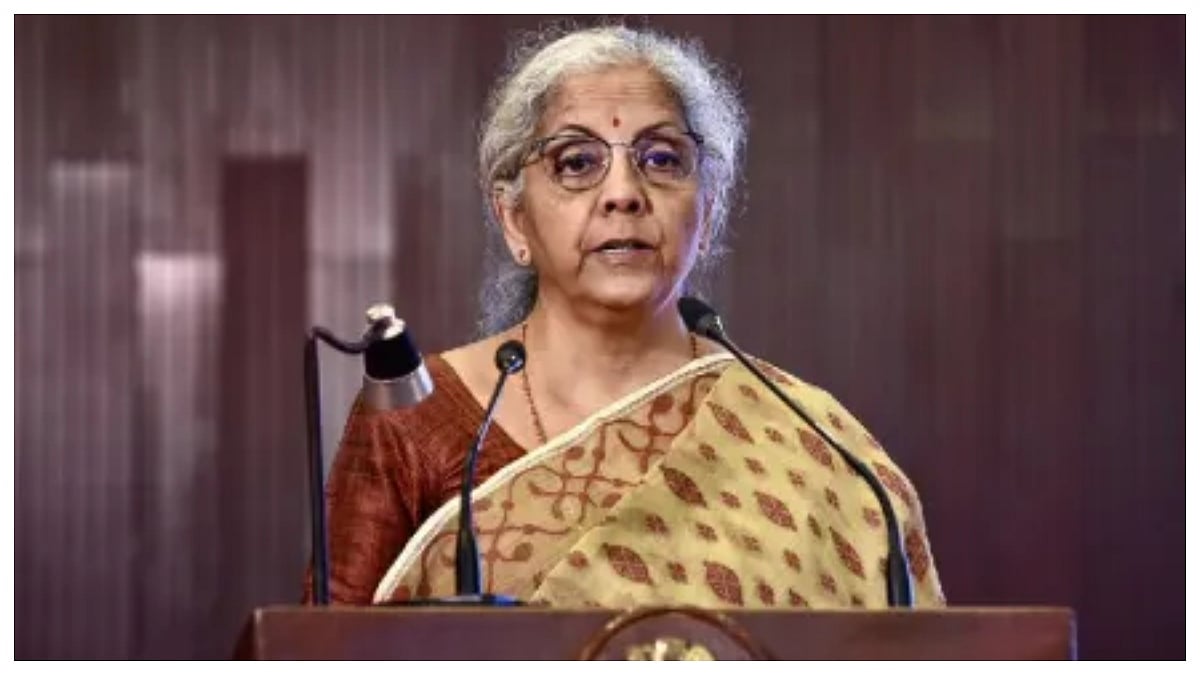
Finance Minister Nirmala Sitharaman has urged global investors to establish manufacturing facilities and technology centres in India, positioning the country as a base for developing products for international markets.
Speaking at a business roundtable in Chicago, Sitharaman highlighted India's economic expansion, reform agenda, skilled workforce, and improving infrastructure as key attractions for long-term investment. The meeting focused on the theme 'Manufacture in India — for India and for the world.'
Sitharaman said India's investment potential extends across sectors, supported by its large domestic market, engineering capabilities, manufacturing scale, and technology ecosystem. She encouraged international companies to collaborate with Indian businesses to co-develop and co-produce goods for global markets.
The minister identified areas such as AI, analytics, engineering, product development, semiconductors, and electronics as potential areas for development of higher-value capabilities. She also pointed to the expansion of Global Capability Centres, which are increasingly taking on innovation-focused roles.
Sitharaman highlighted India's manufacturing opportunity, which is moving beyond basic assembly towards component production, engineering, and advanced technologies. Policy initiatives such as production-linked incentives are supporting this transition as global companies reassess supply chains.
The minister also highlighted GIFT City as an emerging international financial hub, offering opportunities in banking, fund management, and sustainable finance. Infrastructure development is another major investment avenue, with freight corridors, railway modernisation, and high-speed rail creating demand for technology and materials.
Sitharaman invited global investors to explore the National Investment and Infrastructure Fund as a platform for participating in India's infrastructure growth. With its large domestic market and improving infrastructure, India is poised to play a greater role in global supply chains.
The country's digital public infrastructure, including Aadhaar, UPI, and DigiLocker, has created technology platforms operating at population scale. This, combined with its skilled workforce and reform agenda, makes India an attractive destination for long-term investment.
As India continues to expand its economic capabilities, it is likely to become an increasingly important player in global markets. With its focus on innovation and technology, the country is well-positioned to develop higher-value capabilities and attract international investment.
In conclusion, Sitharaman's invitation to global investors to manufacture in India is a significant opportunity for companies looking to expand their presence in international markets. With its skilled workforce, improving infrastructure, and large domestic market, India is an attractive destination for long-term investment.
The Indian government's efforts to promote manufacturing and innovation in the country are likely to have a positive impact on the economy, creating new opportunities for growth and development. As the country continues to expand its economic capabilities, it is likely to become an increasingly important player in global markets.
Overall, India's potential as a manufacturing hub for global markets is significant, and Sitharaman's invitation to investors is a major step towards realizing this potential. With its focus on innovation, technology, and infrastructure development, India is well-positioned to attract international investment and become a major player in global supply chains.
Frequently asked questions
What is the theme of the business roundtable where Nirmala Sitharaman spoke?
The theme of the business roundtable is 'Manufacture in India — for India and for the world.'
What areas did Sitharaman identify as potential areas for development of higher-value capabilities?
Sitharaman identified areas such as AI, analytics, engineering, product development, semiconductors, and electronics as potential areas for development of higher-value capabilities.