China Restores Native-Tree Islands
China's 20-year study shows native-tree islands help restore damaged forests. Biodiversity recovery is slow.
'%3E%3Crect%20width%3D'96'%20height%3D'96'%20fill%3D'%231B5E20'%2F%3E%3Ccircle%20cx%3D'30'%20cy%3D'24'%20r%3D'44'%20fill%3D'%23fff'%20opacity%3D'.12'%2F%3E%3Ccircle%20cx%3D'60'%20cy%3D'74'%20r%3D'40'%20fill%3D'%23000'%20opacity%3D'.10'%2F%3E%3C%2Fg%3E%3Cg%3E%3Ccircle%20cx%3D'48'%20cy%3D'48'%20r%3D'15'%20fill%3D'%23fff'%2F%3E%3Cpath%20d%3D'M43%2034%20Q50%2048%2043%2062'%20fill%3D'none'%20stroke%3D'%238a94a6'%20stroke-width%3D'2.4'%2F%3E%3Cpath%20d%3D'M47%2033%20Q54%2048%2047%2063'%20fill%3D'none'%20stroke%3D'%238a94a6'%20stroke-width%3D'1.8'%20stroke-dasharray%3D'1.5%203'%2F%3E%3C%2Fg%3E%3C%2Fsvg%3E)
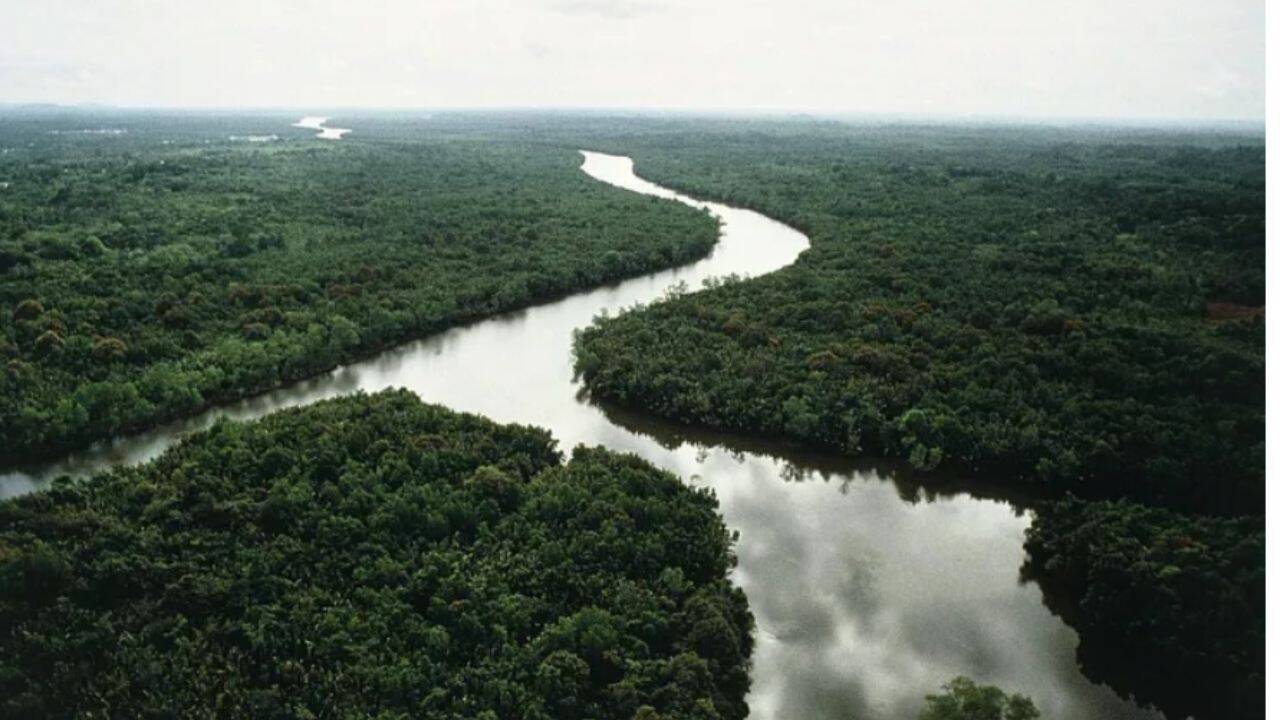
A recent study conducted in southwest China over 20 years has found that planting small patches of native trees can be an effective way to restore damaged tropical forests. This approach, which focuses on restoring specific areas rather than entire landscapes, has been shown to successfully rebuild forest cover.
However, the researchers also found that biodiversity and mature forest conditions take much longer to recover. This suggests that long-term restoration efforts are still necessary to fully restore damaged forests.
The study's findings have significant implications for forest restoration efforts, particularly in tropical regions. By planting native-tree islands, conservationists can begin to restore damaged forests without having to plant entire landscapes.
The researchers' approach is based on the idea that small patches of native trees can serve as a catalyst for broader forest restoration. By creating these islands of native vegetation, conservationists can help to attract wildlife and promote the growth of new plant species.
Despite the success of this approach in rebuilding forest cover, the study's findings also highlight the challenges of restoring biodiversity and mature forest conditions. The researchers found that these aspects of forest health take much longer to recover, and that sustained restoration efforts are necessary to achieve full recovery.
The study's results are likely to be of interest to conservationists and researchers working in tropical regions, where forest damage is a significant concern. By providing a new approach to forest restoration, the study offers hope for the recovery of damaged forests and the preservation of biodiversity.
In the context of global efforts to restore damaged forests, the study's findings are particularly relevant. With many countries working to restore their forests and promote biodiversity, the approach outlined in the study could provide a useful model for conservation efforts.
Overall, the study's results suggest that restoring damaged forests is a complex and ongoing process that requires sustained effort and commitment. While planting native-tree islands can be an effective way to begin the restoration process, long-term conservation efforts are necessary to fully restore forest health and biodiversity.
Frequently asked questions
How long did the study on native-tree islands in China take?
The study took 20 years to complete.
What was the outcome of the native-tree island restoration approach?
The approach successfully rebuilt forest cover, but biodiversity and mature forest conditions recovered much more slowly.