Children's Books Tackle Caste Issues
New books help kids understand caste, Dignity of labour through stories
'%3E%3Crect%20width%3D'96'%20height%3D'96'%20fill%3D'%231B5E20'%2F%3E%3Ccircle%20cx%3D'30'%20cy%3D'24'%20r%3D'44'%20fill%3D'%23fff'%20opacity%3D'.12'%2F%3E%3Ccircle%20cx%3D'60'%20cy%3D'74'%20r%3D'40'%20fill%3D'%23000'%20opacity%3D'.10'%2F%3E%3C%2Fg%3E%3Cg%3E%3Ccircle%20cx%3D'48'%20cy%3D'48'%20r%3D'15'%20fill%3D'%23fff'%2F%3E%3Cpath%20d%3D'M43%2034%20Q50%2048%2043%2062'%20fill%3D'none'%20stroke%3D'%238a94a6'%20stroke-width%3D'2.4'%2F%3E%3Cpath%20d%3D'M47%2033%20Q54%2048%2047%2063'%20fill%3D'none'%20stroke%3D'%238a94a6'%20stroke-width%3D'1.8'%20stroke-dasharray%3D'1.5%203'%2F%3E%3C%2Fg%3E%3C%2Fsvg%3E)
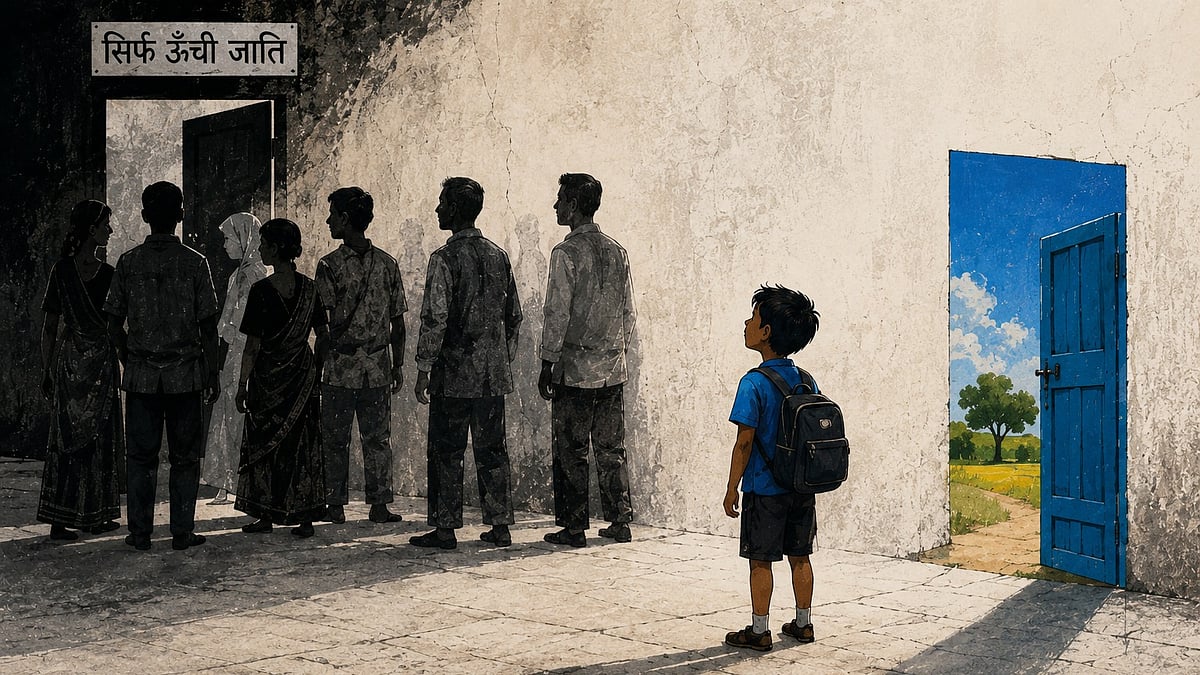
A new wave of children's books is tackling the sensitive topic of caste in India. These books aim to help young readers understand the complexities of caste through storytelling rather than instruction. One such book is 'BLUE', written by Devashish Makhija and illustrated by Satwik Gade, which raises questions about caste without providing easy answers.
The book is part of the Hook Series and takes a unique approach by allowing children to encounter caste through the emotional world of the story. The illustrator, Satwik Gade, focused on conveying emotions like wonder, curiosity, and doubt rather than explaining the concept of caste.
This approach is significant because it distinguishes between explaining and expressing. Art does not always have to provide answers, and in this case, the visual form of the book allows children to encounter the idea of caste before being asked to define it.
Other Indian children's publishing houses, such as Navayana, have also used the graphic form to explore caste and anti-caste thought. Books like 'Bhimayana' and 'A Gardener in the Wasteland' have used striking visual vocabulary to reimagine episodes from the lives of prominent figures like B.R. Ambedkar and Jyotirao and Savitribai Phule.
In addition to these books, others like 'My Name is Gulab' by Sagar Kolwankar have approached the subject of caste through everyday experiences. The book tells the story of a young girl who faces humiliation because of her father's occupation as a manual scavenger.
Another approach is to focus on the dignity of labour, as seen in books like 'Turning the Pot, Tilling the Land: Dignity of Labour in Our Times' by Kancha Ilaiah. This book directly challenges the caste hierarchy by highlighting the importance of all types of work.
These books are significant because they help children understand the complexities of caste in a way that is both accessible and engaging. By tackling this sensitive topic, they provide a valuable resource for young readers to learn about and think critically about the social issues that affect their lives.
The importance of these books lies in their ability to spark conversations and encourage children to think about the world around them. They provide a unique perspective on the issue of caste and help children develop empathy and understanding for those who may be affected by it.
In conclusion, the new wave of children's books that tackle the topic of caste is a significant development in Indian children's publishing. These books provide a valuable resource for young readers to learn about and think critically about the social issues that affect their lives.
What these books mean for Mumbai and India is that they provide a platform for children to engage with complex social issues in a way that is both accessible and engaging. They help to promote empathy, understanding, and critical thinking, which are essential skills for children to develop as they grow and navigate the world around them.
Frequently asked questions
What is the approach of the new children's books on caste?
The new children's books on caste approach the topic through storytelling rather than instruction, allowing children to encounter the idea of caste in a way that is both accessible and engaging.
How do the books help children understand caste?
The books help children understand caste by providing a unique perspective on the issue, sparking conversations, and encouraging children to think critically about the social issues that affect their lives.