Half Of MP Students Drop Out By Higher Secondary Level
Madhya Pradesh sees high dropout rate, despite better teacher-student ratio. Nearly half of students drop out by higher secondary level.

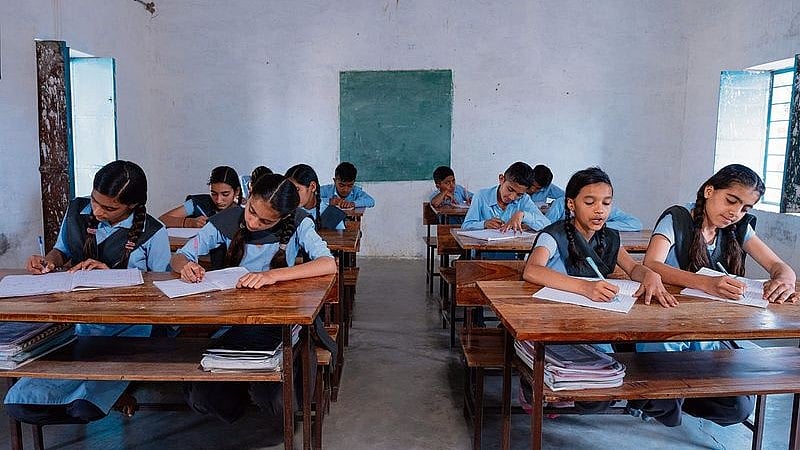
A recent report by UDISE+ has revealed that despite having a favourable teacher-student ratio of 21:1, Madhya Pradesh is struggling with a high dropout rate of students. The state has approximately 1.52 crore students and 119,694 schools, with an average of one teacher for every 21 students.
However, the report highlights that nearly half of the students drop out as they progress from primary to higher secondary classes. This is despite various schemes such as School Chalein Hum and the distribution of free textbooks, uniforms, laptops, scooters, bicycles, and scholarships.
The teacher-student ratio in the state's schools is better than the standards prescribed by the National Education Policy 2020 and the Right to Education Act. However, there are still 2,269 single-teacher schools in the state, catering to 62,151 students.
The dropout rate is merely 0.1% at the primary level but rises to 13% at the higher secondary level. This indicates a significant retention challenge in the state's education system. On average, 126 students are enrolled per school in the state, but the equitable distribution of teachers and resources remains a challenge.
The report suggests that the biggest challenge is not merely getting children into schools, but retaining them within the education system up to Class 12. While school enrolment in Madhya Pradesh has improved, student retention declines as they progress to higher grades.
State-level data indicates that while most students remain within the education system at the primary level, this number drops significantly by the time they reach the higher secondary level. This trend is a cause for concern and highlights the need for targeted interventions to improve student retention in the state.
The findings of the report have significant implications for the state's education system and policymakers. It emphasizes the need to focus on retaining students in schools, particularly at the higher secondary level.
The report's findings are a reminder that improving education outcomes requires a sustained effort to address the complex challenges facing the education system. By understanding the reasons behind the high dropout rate and implementing targeted interventions, the state can work towards improving student retention and ensuring that more students complete their education.
In conclusion, the UDISE+ report highlights the need for Madhya Pradesh to focus on improving student retention, particularly at the higher secondary level. By addressing the challenges facing the education system and implementing targeted interventions, the state can work towards improving education outcomes and ensuring that more students complete their education.
The issue of high dropout rates is not unique to Madhya Pradesh and is a challenge faced by many states in India. However, by prioritizing education and implementing effective policies, states can work towards improving education outcomes and ensuring that more students complete their education.
This has significant implications for the country as a whole, as improving education outcomes is critical to India's economic and social development. By addressing the challenges facing the education system and implementing targeted interventions, India can work towards improving education outcomes and ensuring that more students complete their education.
In the context of India's demographic dividend, it is essential to ensure that the country's youth are educated and skilled to contribute to the economy. The high dropout rate in Madhya Pradesh and other states is a challenge that needs to be addressed to ensure that India can reap the benefits of its demographic dividend.
Overall, the report's findings highlight the need for a sustained effort to improve education outcomes in Madhya Pradesh and other states in India. By prioritizing education and implementing effective policies, India can work towards improving education outcomes and ensuring that more students complete their education.