Bill Gates Warns AI Era Will Be Historically Turbulent
Bill Gates cautions on AI disruption, calls for global regulation. AI may bring great benefits or injustices.
'%3E%3Crect%20width%3D'96'%20height%3D'96'%20fill%3D'%23B3261E'%2F%3E%3Ccircle%20cx%3D'30'%20cy%3D'24'%20r%3D'44'%20fill%3D'%23fff'%20opacity%3D'.12'%2F%3E%3Ccircle%20cx%3D'60'%20cy%3D'74'%20r%3D'40'%20fill%3D'%23000'%20opacity%3D'.10'%2F%3E%3C%2Fg%3E%3Cg%20fill%3D'%23fff'%3E%3Crect%20x%3D'29'%20y%3D'49'%20width%3D'8'%20height%3D'19'%20rx%3D'1'%2F%3E%3Crect%20x%3D'39'%20y%3D'40'%20width%3D'9'%20height%3D'28'%20rx%3D'1'%2F%3E%3Crect%20x%3D'50'%20y%3D'45'%20width%3D'8'%20height%3D'23'%20rx%3D'1'%2F%3E%3Crect%20x%3D'60'%20y%3D'53'%20width%3D'7'%20height%3D'15'%20rx%3D'1'%2F%3E%3Crect%20x%3D'41'%20y%3D'34'%20width%3D'5'%20height%3D'6'%2F%3E%3C%2Fg%3E%3C%2Fsvg%3E)
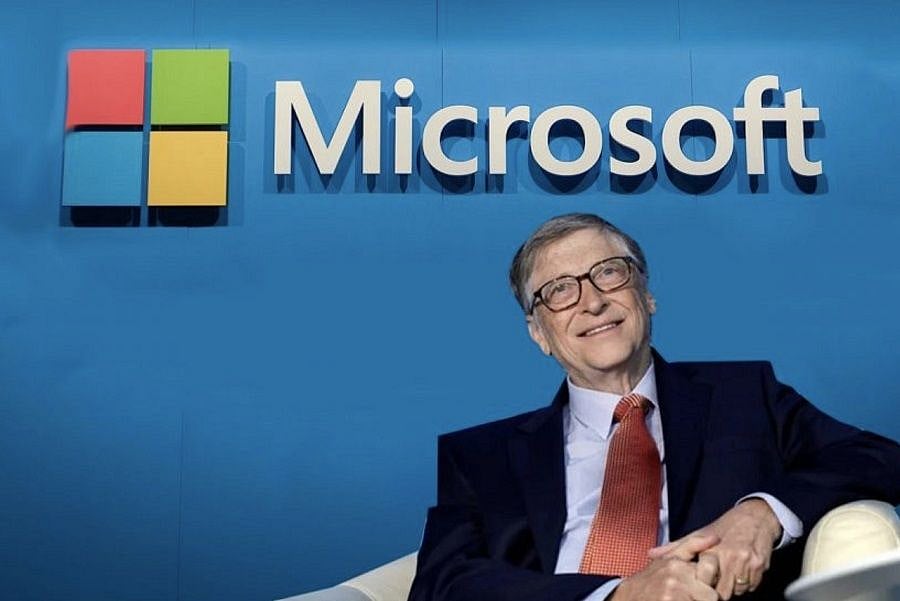
Bill Gates, the Microsoft co-founder and Gates Foundation chair, has warned that the shift into the AI era will be one of the most turbulent periods in human history. In an essay published on his blog, Gates Notes, Gates argued that artificial intelligence could either become 'the greatest equalizer ever invented' or 'the worst source of injustice,' depending on the choices made in the coming years.
Gates wrote that comparisons between AI and earlier technological shifts, such as the move from agricultural to office-based work, understate what is coming. Past transitions unfolded over generations and created new categories of work requiring human judgement, whereas AI is capable of substituting directly for human cognition across various sectors.
The disruption caused by AI will play out over roughly a decade, leaving little time for workers and institutions to adjust. Gates also pushed back on the idea that AI's limitations mean its impact is being overstated, stating that reliability gaps are closing quickly as models learn to check and improve their own output.
Gates identified three major risks associated with the AI transition: job losses, misuse by bad actors, and harm to child development and human relationships. Job losses will hit entry- and mid-level roles hardest, potentially triggering unemployment that may not recover on its own. Misuse by bad actors, including AI-assisted cyberattacks and bioterrorism, is advancing faster than defensive measures.
The harm to child development and human relationships is an area of concern, particularly with regards to AI companion apps. A study by Stanford and Carnegie Mellon found that heavier use of AI companion apps correlated with worse wellbeing outcomes, particularly among people with smaller social networks.
Despite these risks, Gates also highlighted the potential benefits of AI across health, agriculture, and education. However, he emphasized the need for a global regulatory framework to ensure that AI is developed and used responsibly.
The AI era will require significant adjustments from governments, industries, and communities. Gates' warning serves as a call to action, urging stakeholders to work together to mitigate the risks and maximize the benefits of AI.
In conclusion, the AI transition will be a historically turbulent period, and it is crucial that we take proactive steps to prepare for it. By understanding the risks and benefits of AI, we can work towards creating a future where AI is used to improve human lives, rather than exacerbate existing inequalities.
The need for a global regulatory framework is pressing, and it requires immediate attention from policymakers and industry leaders. The development and use of AI must be guided by a set of principles that prioritize human wellbeing, transparency, and accountability.
As we navigate the AI era, it is essential to prioritize education and re-skilling programs that prepare workers for the changing job market. We must also invest in research and development that focuses on the ethical and responsible use of AI.
Ultimately, the AI era presents both opportunities and challenges. By working together and taking a proactive approach, we can ensure that AI is used to create a better future for all.
Frequently asked questions
What are the risks associated with the AI transition?
The risks include job losses, misuse by bad actors, and harm to child development and human relationships.
What is the potential benefit of AI?
AI has the potential to improve health, agriculture, and education, but its development and use must be guided by a set of principles that prioritize human wellbeing.