SC to Examine Anti-Defection Law Challenge
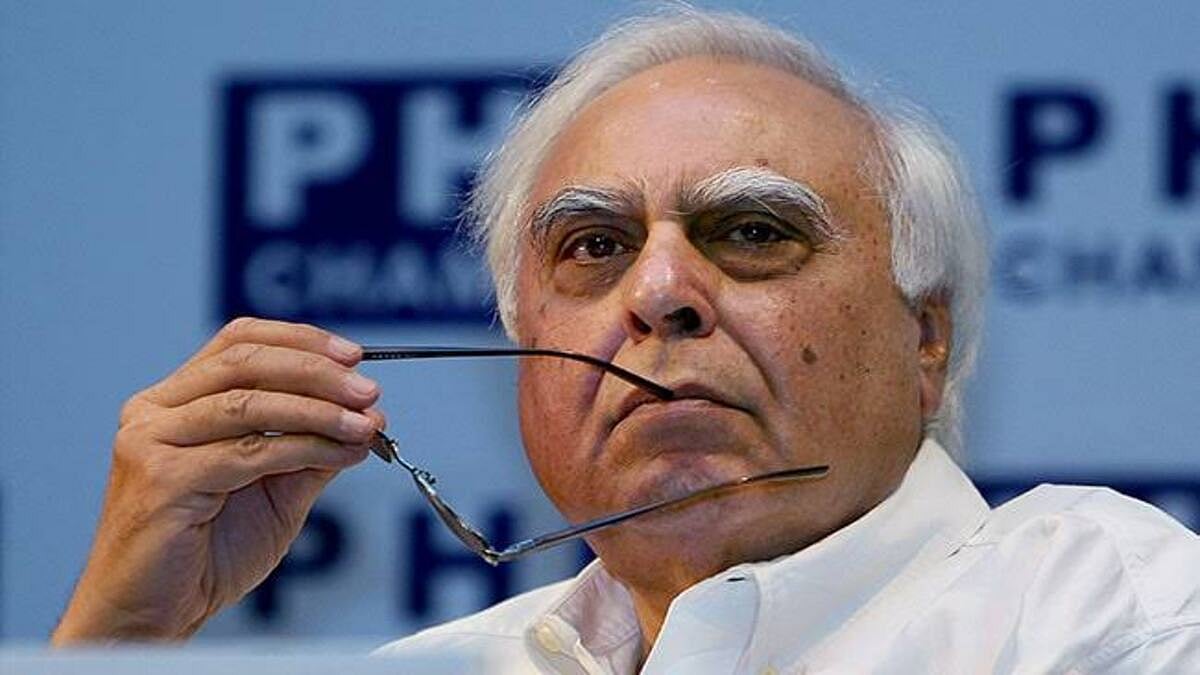
Kapil Sibal challenges law, SC to review merger rule
'%3E%3Crect%20width%3D'96'%20height%3D'96'%20fill%3D'%231A5276'%2F%3E%3Ccircle%20cx%3D'30'%20cy%3D'24'%20r%3D'44'%20fill%3D'%23fff'%20opacity%3D'.12'%2F%3E%3Ccircle%20cx%3D'60'%20cy%3D'74'%20r%3D'40'%20fill%3D'%23000'%20opacity%3D'.10'%2F%3E%3C%2Fg%3E%3Cg%20fill%3D'%23fff'%3E%3Cpath%20d%3D'M31%2041%20L48%2031%20L65%2041%20Z'%2F%3E%3Crect%20x%3D'33'%20y%3D'43'%20width%3D'4'%20height%3D'17'%2F%3E%3Crect%20x%3D'41'%20y%3D'43'%20width%3D'4'%20height%3D'17'%2F%3E%3Crect%20x%3D'51'%20y%3D'43'%20width%3D'4'%20height%3D'17'%2F%3E%3Crect%20x%3D'59'%20y%3D'43'%20width%3D'4'%20height%3D'17'%2F%3E%3Crect%20x%3D'30'%20y%3D'62'%20width%3D'36'%20height%3D'4'%20rx%3D'1'%2F%3E%3C%2Fg%3E%3C%2Fsvg%3E)

The Supreme Court of India has agreed to examine a challenge to the anti-defection law, specifically the tenth schedule merger rule, filed by senior advocate and former Union Minister Kapil Sibal.
The anti-defection law, which was enacted in 1985, aims to prevent elected representatives from switching parties. The tenth schedule of the Constitution deals with the disqualification of members of Parliament and state legislatures on the grounds of defection.
Sibal's petition argues that the merger rule, which allows two-thirds of the members of a legislative party to merge with another party without inviting disqualification, is unconstitutional. The petition claims that this rule goes against the spirit of the anti-defection law, which is to prevent horse-trading and ensure stability in the government.
The Supreme Court has decided to examine the constitutional validity of the merger rule and its implications on the functioning of democratic institutions. The court's decision to take up the matter is significant, as it could have far-reaching consequences for the political landscape of the country.
The anti-defection law has been a subject of debate for many years, with some arguing that it restricts the freedom of elected representatives to change their political affiliations. Others argue that it is necessary to prevent political instability and ensure that elected representatives remain accountable to their constituents.
The tenth schedule merger rule has been used by several political parties in the past to merge with other parties without facing disqualification. However, the rule has also been criticized for being misused by parties to engineer defections and gain political advantage.
The Supreme Court's examination of the merger rule is expected to be a lengthy and complex process, involving arguments from various stakeholders, including political parties, constitutional experts, and civil society organizations. The court's decision could have significant implications for the functioning of democratic institutions in India and the stability of governments at the center and in the states.
In recent years, there have been several instances of defections and mergers, which have raised questions about the effectiveness of the anti-defection law. The Supreme Court's decision to examine the merger rule is a welcome step, as it could help to clarify the law and prevent its misuse.
The outcome of the case is likely to be closely watched by political parties, constitutional experts, and citizens, as it could have a significant impact on the political landscape of the country. The Supreme Court's decision could also lead to a re-examination of the anti-defection law and its provisions, which could result in significant changes to the law.
In conclusion, the Supreme Court's decision to examine the challenge to the anti-defection law is a significant development, which could have far-reaching consequences for the political landscape of India. The court's examination of the merger rule is expected to be a complex and lengthy process, involving arguments from various stakeholders. The outcome of the case is likely to be closely watched by political parties, constitutional experts, and citizens, as it could have a significant impact on the functioning of democratic institutions in India.
Frequently asked questions
What is the anti-defection law?
The anti-defection law aims to prevent elected representatives from switching parties and was enacted in 1985.
What is the tenth schedule merger rule?
The tenth schedule merger rule allows two-thirds of the members of a legislative party to merge with another party without inviting disqualification.