JNPA Explores DFC Rail Nodes To Boost Container Movement
JNPA explores rail nodes to speed up container evacuation. Improves connectivity with Bhiwandi logistics hub.
'%3E%3Crect%20width%3D'96'%20height%3D'96'%20fill%3D'%23B3261E'%2F%3E%3Ccircle%20cx%3D'30'%20cy%3D'24'%20r%3D'44'%20fill%3D'%23fff'%20opacity%3D'.12'%2F%3E%3Ccircle%20cx%3D'60'%20cy%3D'74'%20r%3D'40'%20fill%3D'%23000'%20opacity%3D'.10'%2F%3E%3C%2Fg%3E%3Cg%20fill%3D'%23fff'%3E%3Crect%20x%3D'29'%20y%3D'49'%20width%3D'8'%20height%3D'19'%20rx%3D'1'%2F%3E%3Crect%20x%3D'39'%20y%3D'40'%20width%3D'9'%20height%3D'28'%20rx%3D'1'%2F%3E%3Crect%20x%3D'50'%20y%3D'45'%20width%3D'8'%20height%3D'23'%20rx%3D'1'%2F%3E%3Crect%20x%3D'60'%20y%3D'53'%20width%3D'7'%20height%3D'15'%20rx%3D'1'%2F%3E%3Crect%20x%3D'41'%20y%3D'34'%20width%3D'5'%20height%3D'6'%2F%3E%3C%2Fg%3E%3C%2Fsvg%3E)
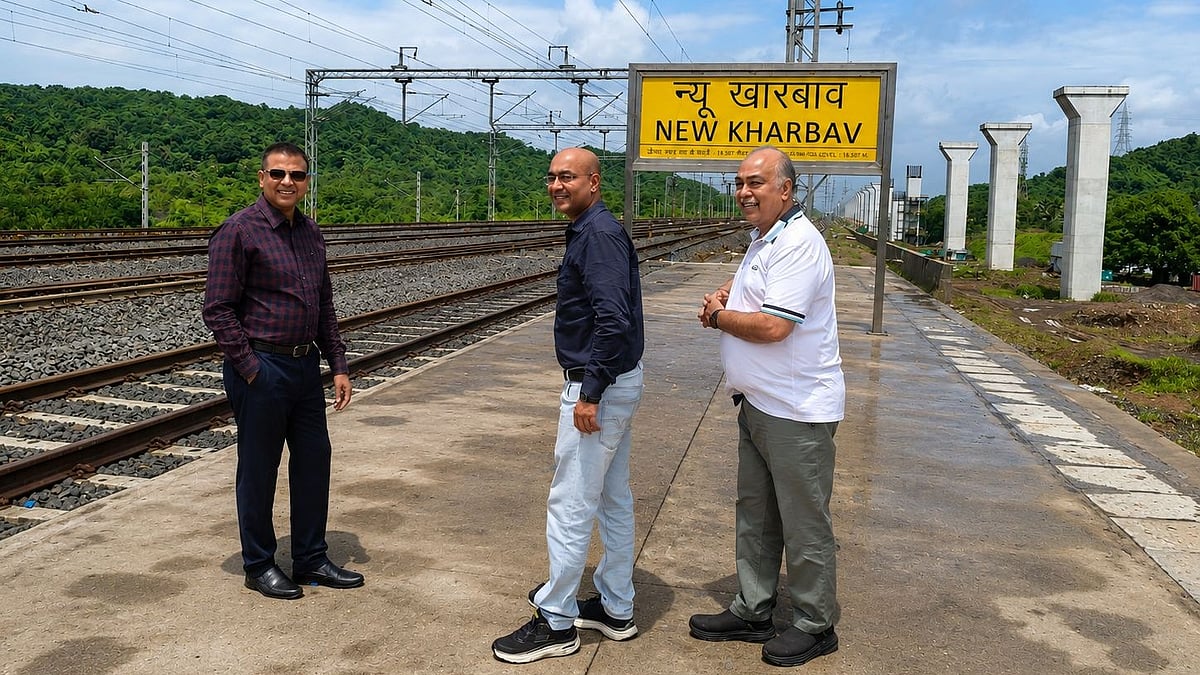
The Jawaharlal Nehru Port Authority (JNPA) is exploring the use of strategic railway nodes along the Dedicated Freight Corridor (DFC) to accelerate container evacuation from the port and enhance connectivity with major logistics hubs in Bhiwandi.
On Sunday, JNPA Chairman Gaurav Dayal, IAS, Deputy Chairman Ravish Singh, IRTS, and senior port officials inspected key railway infrastructure along the DFC route. The delegation visited the newly developed Kharbhav Railway Station to assess its operational potential for handling freight movement linked to the DFC.
The integration of Kharbhav into JNPA's freight network is expected to facilitate faster movement of containerised cargo from the port to major consumption and distribution centres in Bhiwandi. This will reduce transit time and dependence on road transport.
The officials also inspected the Bhiwandi Warehousing Hub to assess its supply chain capacity, last-mile logistics efficiency, and storage readiness. The visit included an inspection of the New Nilanje Railway Station, where the delegation examined its potential to function as an additional freight node in the expanding rail-freight network.
According to Dayal, efficient multimodal connectivity is crucial for modern port operations. By maximising the potential of the DFC through strategic rail nodes like Kharbhav and Nilanje, JNPA aims to offer seamless, faster, and environmentally sustainable container evacuation routes directly to key commercial clusters like Bhiwandi.
Singh stated that increasing the share of container traffic transported by rail would help lower logistics costs and reduce turnaround time. The initiative is part of JNPA's broader efforts under the PM Gati Shakti National Master Plan to promote integrated infrastructure development and improve cargo-handling efficiency.
The proposed strengthening of rail connectivity is also aimed at easing road congestion and enhancing the port's links with key consumption and distribution centres in the hinterland. This move is expected to have a positive impact on the logistics and trade industry in the region.
The use of DFC rail nodes is a significant step towards improving the efficiency of container movement from the port to logistics hubs. It will not only reduce transit time but also lower logistics costs and minimize the environmental impact of transportation.
In recent years, JNPA has been working to improve its infrastructure and services to cater to the growing demand for containerised cargo. The exploration of DFC rail nodes is a part of this effort, and it is expected to have a positive impact on the port's operations and the logistics industry as a whole.
The PM Gati Shakti National Master Plan is a comprehensive plan aimed at promoting integrated infrastructure development in the country. The plan focuses on improving the efficiency of cargo movement and reducing logistics costs. JNPA's efforts to strengthen rail connectivity are in line with this plan, and they are expected to contribute to the growth of trade and industry in the region.
In conclusion, the exploration of DFC rail nodes by JNPA is a significant step towards improving the efficiency of container movement from the port to logistics hubs. It is expected to have a positive impact on the logistics and trade industry in the region, and it is in line with the PM Gati Shakti National Master Plan.
The initiative is a testament to JNPA's commitment to improving its infrastructure and services to cater to the growing demand for containerised cargo. It is expected to reduce transit time, lower logistics costs, and minimize the environmental impact of transportation, making it a win-win situation for all stakeholders involved.
As the logistics industry continues to grow, the need for efficient and sustainable transportation solutions will become increasingly important. JNPA's efforts to strengthen rail connectivity are a step in the right direction, and they are expected to contribute to the growth of trade and industry in the region.
The use of DFC rail nodes is a significant development in the logistics industry, and it is expected to have a positive impact on the economy. As the industry continues to evolve, it is likely that we will see more initiatives aimed at improving the efficiency of cargo movement and reducing logistics costs.
In the long run, the exploration of DFC rail nodes by JNPA is expected to have a positive impact on the environment, the economy, and the logistics industry as a whole. It is a significant step towards creating a more efficient and sustainable transportation system, and it is expected to contribute to the growth of trade and industry in the region.
The initiative is a testament to JNPA's commitment to improving its infrastructure and services to cater to the growing demand for containerised cargo. It is expected to reduce transit time, lower logistics costs, and minimize the environmental impact of transportation, making it a win-win situation for all stakeholders involved.
The exploration of DFC rail nodes is a significant development in the logistics industry, and it is expected to have a positive impact on the economy. As the industry continues to evolve, it is likely that we will see more initiatives aimed at improving the efficiency of cargo movement and reducing logistics costs.
In conclusion, the exploration of DFC rail nodes by JNPA is a significant step towards improving the efficiency of container movement from the port to logistics hubs. It is expected to have a positive impact on the logistics and trade industry in the region, and it is in line with the PM Gati Shakti National Master Plan.
Frequently asked questions
What is the purpose of JNPA's exploration of DFC rail nodes?
The purpose is to accelerate container evacuation from the port and improve connectivity with major logistics hubs in Bhiwandi.
How will the use of DFC rail nodes benefit the logistics industry?
It will reduce transit time, lower logistics costs, and minimize the environmental impact of transportation.