Merab Dvalishvili Responds to Makhachev
Dvalishvili reacts to Makhachev's comment, explains his stance
'%3E%3Crect%20width%3D'96'%20height%3D'96'%20fill%3D'%231B5E20'%2F%3E%3Ccircle%20cx%3D'30'%20cy%3D'24'%20r%3D'44'%20fill%3D'%23fff'%20opacity%3D'.12'%2F%3E%3Ccircle%20cx%3D'60'%20cy%3D'74'%20r%3D'40'%20fill%3D'%23000'%20opacity%3D'.10'%2F%3E%3C%2Fg%3E%3Cg%3E%3Ccircle%20cx%3D'48'%20cy%3D'48'%20r%3D'15'%20fill%3D'%23fff'%2F%3E%3Cpath%20d%3D'M43%2034%20Q50%2048%2043%2062'%20fill%3D'none'%20stroke%3D'%238a94a6'%20stroke-width%3D'2.4'%2F%3E%3Cpath%20d%3D'M47%2033%20Q54%2048%2047%2063'%20fill%3D'none'%20stroke%3D'%238a94a6'%20stroke-width%3D'1.8'%20stroke-dasharray%3D'1.5%203'%2F%3E%3C%2Fg%3E%3C%2Fsvg%3E)
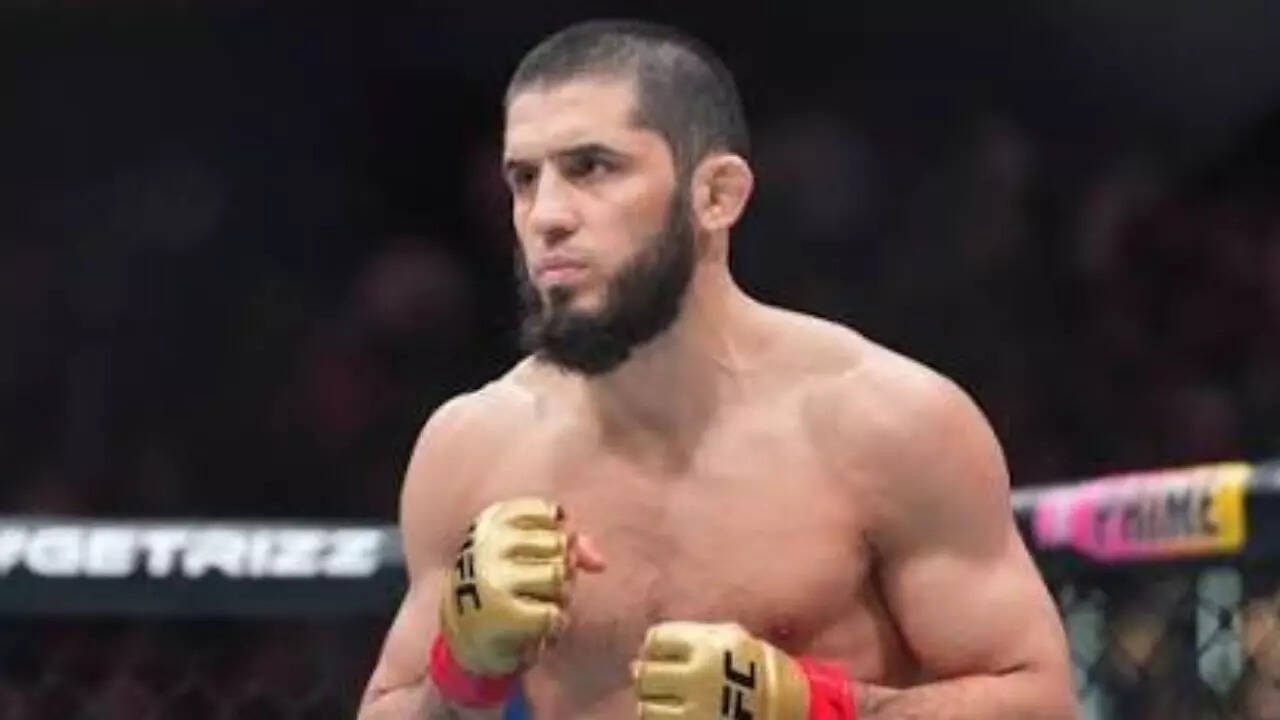
Merab Dvalishvili has responded to Islam Makhachev's recent comment, in which Makhachev suggested that Dvalishvili should stay quiet. This exchange occurred after Dvalishvili's win at UFC 330.
Dvalishvili clarified his reaction to Makhachev's display of the Russian flag, stating that he respects Makhachev as a person, but has personal and historical grievances against the Russian government. He emphasized that his opposition is to the Russian government's policies, not to the Russian people themselves.
Makhachev had previously made a comment suggesting that Petr Yan could silence Dvalishvili, which added to the tension between the two fighters. Dvalishvili's response highlights the complex intersection of sports and politics, particularly in the context of the ongoing geopolitical tensions between Russia and Georgia.
Dvalishvili's personal history and experiences have likely played a significant role in shaping his views on this matter. As a Georgian fighter, he may have been influenced by the historical conflicts between Russia and Georgia, including the 2008 war.
The display of national flags and symbols in sports events can be a sensitive issue, particularly when it involves countries with complex and often contentious relationships. In this case, Makhachev's display of the Russian flag may have been seen as a provocation by Dvalishvili, given the historical context.
The ongoing discussion between Dvalishvili and Makhachev serves as a reminder that sports and politics are often intertwined. Athletes, like anyone else, can hold strong opinions and beliefs, and these can sometimes be at odds with those of their opponents or colleagues.
In the world of mixed martial arts, fighters often come from diverse backgrounds and may hold different views on politics and social issues. The UFC, as a global organization, has to navigate these complexities and ensure that its events are conducted in a respectful and inclusive manner.
The reaction of the UFC and the wider martial arts community to this issue will be closely watched, as it has the potential to set a precedent for how similar situations are handled in the future. For now, the exchange between Dvalishvili and Makhachev serves as a reminder of the complex and often sensitive nature of the intersection of sports and politics.
The significance of this issue extends beyond the world of sports, as it highlights the ongoing tensions and complexities of international relations. The relationship between Russia and Georgia is just one example of the many complex geopolitical issues that exist around the world, and the display of national symbols and flags can be a sensitive issue in these contexts.
In conclusion, Merab Dvalishvili's response to Islam Makhachev's comment has highlighted the complex and often sensitive nature of the intersection of sports and politics. The ongoing discussion between the two fighters serves as a reminder that athletes can hold strong opinions and beliefs, and that these can sometimes be at odds with those of their opponents or colleagues.
What this means for Mumbai or India is that the issue serves as a reminder of the importance of respecting different cultures and opinions, particularly in the context of international sports events. The display of national symbols and flags can be a sensitive issue, and it is essential to approach these situations with respect and sensitivity.
Frequently asked questions
What was Makhachev's comment to Dvalishvili?
Makhachev suggested that Dvalishvili should stay quiet
What is the context of the tension between Dvalishvili and Makhachev?
The tension is related to the display of the Russian flag and the historical conflicts between Russia and Georgia