Chimpanzees Who Changed Intelligence Research Meet Tragic End
Famous chimps faced harsh conditions, overlooked by history. New research reveals their forgotten stories.
'%3E%3Crect%20width%3D'96'%20height%3D'96'%20fill%3D'%23C2185B'%2F%3E%3Ccircle%20cx%3D'30'%20cy%3D'24'%20r%3D'44'%20fill%3D'%23fff'%20opacity%3D'.12'%2F%3E%3Ccircle%20cx%3D'60'%20cy%3D'74'%20r%3D'40'%20fill%3D'%23000'%20opacity%3D'.10'%2F%3E%3C%2Fg%3E%3Cpath%20fill%3D'%23fff'%20d%3D'M48%2031%20l4.6%2010.2%2011.2%201%20-8.4%207.5%202.5%2011%20-9.9%20-5.8%20-9.9%205.8%202.5%20-11%20-8.4%20-7.5%2011.2%20-1%20z'%2F%3E%3C%2Fsvg%3E)
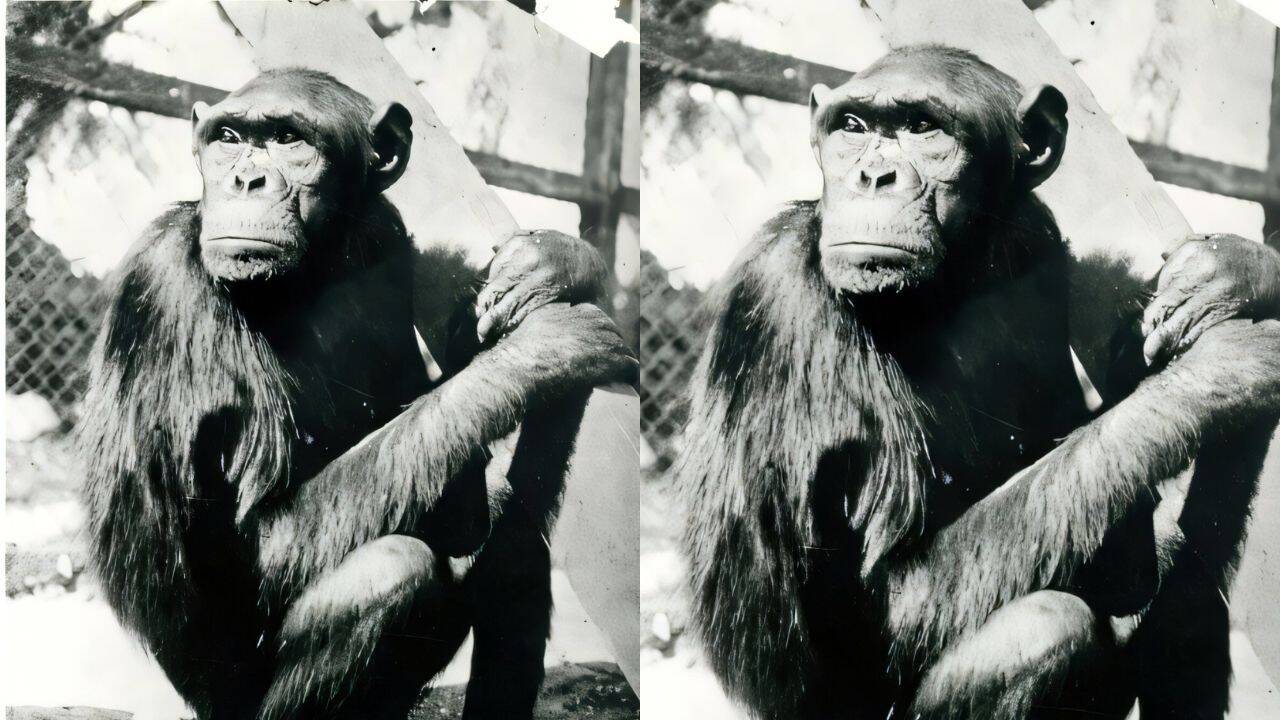
A group of chimpanzees who played a crucial role in changing human intelligence research met a tragic end, facing harsh conditions in Berlin after their experiments were concluded.
These pioneering apes were part of groundbreaking experiments that revealed their advanced intelligence and problem-solving skills, demonstrating insight and challenging the long-held notion of human uniqueness in reasoning.
The experiments, which took place several decades ago, were a significant milestone in the field of intelligence research, shedding new light on the cognitive abilities of chimpanzees. However, after the research was completed, the welfare of these intelligent animals declined, and their lives were largely overlooked by history.
New research has now highlighted the forgotten stories of these chimpanzees, bringing to light the ethical responsibilities that come with scientific research involving animals. The study serves as a reminder of the importance of ensuring the welfare and well-being of animals used in research, even after their participation has ended.
The chimpanzees' advanced intelligence and problem-solving skills were a significant discovery, challenging the conventional wisdom that humans possess unique reasoning abilities. Their ability to demonstrate insight and adapt to new situations has had a lasting impact on our understanding of intelligence and cognition.
Despite their significant contributions to science, the chimpanzees faced harsh conditions in Berlin, where they were kept after the experiments were concluded. Their lives were marked by neglect and oversight, with their welfare declining significantly over time.
The new research highlights the need for greater accountability and responsibility in scientific research involving animals. It emphasizes the importance of ensuring that animals used in research are treated with dignity and respect, and that their welfare is prioritized throughout their lives.
The story of these chimpanzees serves as a reminder of the ethical complexities involved in scientific research and the need for a more nuanced understanding of the responsibilities that come with it. As we continue to push the boundaries of scientific knowledge, it is essential that we prioritize the welfare and well-being of the animals that contribute to our understanding of the world.
In conclusion, the tragic end of the chimpanzees who changed human intelligence research is a sobering reminder of the importance of ethical responsibility in science. Their forgotten stories highlight the need for greater accountability and a commitment to prioritizing the welfare and well-being of animals used in research.