Lok Sabha Passes Vande Mataram Bill Amid Parliament Unrest
Lok Sabha passes bill, Rajya Sabha sees uproar over Manusmriti remarks
'%3E%3Crect%20width%3D'96'%20height%3D'96'%20fill%3D'%231A5276'%2F%3E%3Ccircle%20cx%3D'30'%20cy%3D'24'%20r%3D'44'%20fill%3D'%23fff'%20opacity%3D'.12'%2F%3E%3Ccircle%20cx%3D'60'%20cy%3D'74'%20r%3D'40'%20fill%3D'%23000'%20opacity%3D'.10'%2F%3E%3C%2Fg%3E%3Cg%20fill%3D'%23fff'%3E%3Cpath%20d%3D'M31%2041%20L48%2031%20L65%2041%20Z'%2F%3E%3Crect%20x%3D'33'%20y%3D'43'%20width%3D'4'%20height%3D'17'%2F%3E%3Crect%20x%3D'41'%20y%3D'43'%20width%3D'4'%20height%3D'17'%2F%3E%3Crect%20x%3D'51'%20y%3D'43'%20width%3D'4'%20height%3D'17'%2F%3E%3Crect%20x%3D'59'%20y%3D'43'%20width%3D'4'%20height%3D'17'%2F%3E%3Crect%20x%3D'30'%20y%3D'62'%20width%3D'36'%20height%3D'4'%20rx%3D'1'%2F%3E%3C%2Fg%3E%3C%2Fsvg%3E)
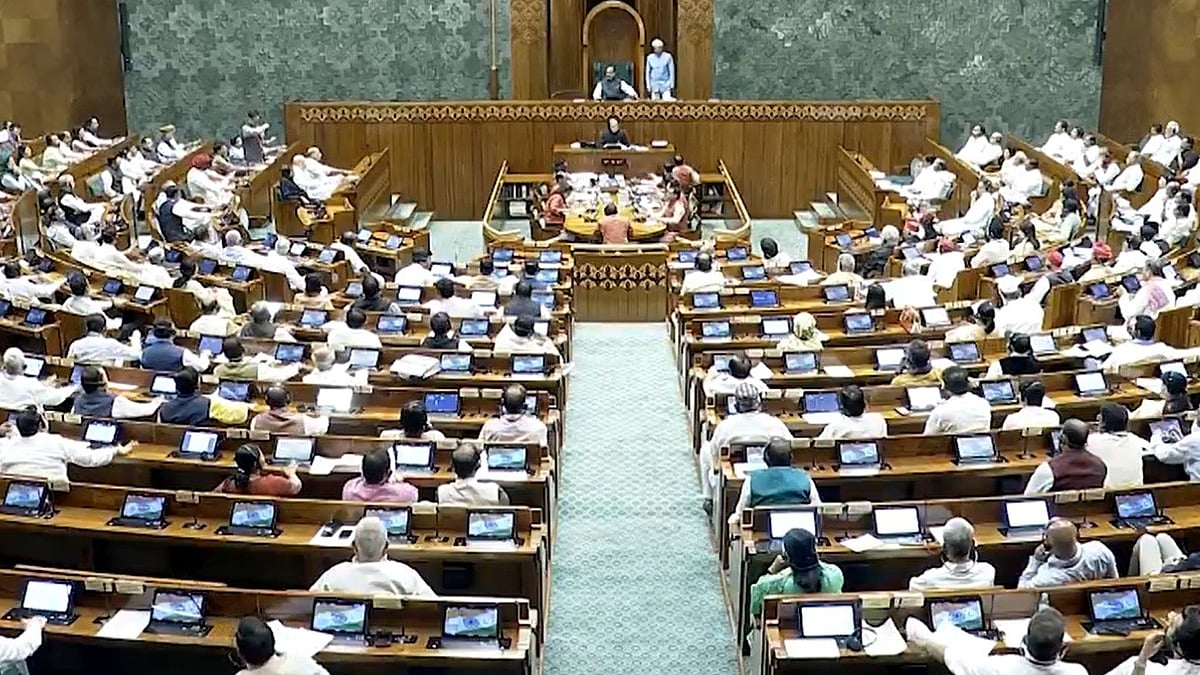
The Lok Sabha has passed the Vande Mataram Bill, making intentional insult or disruption during the singing of the national song a punishable offence. This development comes a day after the bill was cleared by the Rajya Sabha.
The passage of the bill was preceded by a heated debate in the Lok Sabha, with Leader of Opposition Rahul Gandhi and Parliamentary Affairs Minister Kiren Rijiju engaging in a face-off. Gandhi alleged that Home Minister Amit Shah had authorised police firing against student protesters, prompting a strong response from Rijiju, who termed the allegation 'baseless'.
In the Rajya Sabha, a major uproar erupted after Congress President Mallikarjun Kharge made remarks about the Manusmriti, alleging that it promotes casteism in education. Union Minister JP Nadda responded, saying that Kharge's remarks were divisive and could harm society. The Chairman of the Rajya Sabha later announced that Kharge's remarks would be expunged.
The Lok Sabha is scheduled to take up the Supreme Court (Number of Judges) Amendment Bill, 2026 on Thursday. The Public Examinations (Prevention of Unfair Means) Amendment Bill, 2026, also known as the anti-paper leak bill, was passed in the Lok Sabha by voice vote on Tuesday.
The ongoing Monsoon Session of Parliament has seen several heated debates and face-offs between the ruling party and the opposition. The opposition has been demanding the resignation of Union Education Minister Dharmendra Pradhan, which was eventually accepted.
The Vande Mataram Bill has been a subject of debate, with some arguing that it is necessary to protect the national song, while others see it as an attempt to curb free speech. The bill's passage in the Lok Sabha is a significant development, and it will now be sent to the President for assent.
The Monsoon Session of Parliament has been marked by protests and disruptions, with the opposition demanding action on various issues, including the anti-paper leak bill and the resignation of the Union Education Minister. The session has also seen several important bills being introduced and passed, including the Vande Mataram Bill.
The passage of the Vande Mataram Bill is significant, as it reflects the government's efforts to protect the national song and promote patriotism. However, the opposition has raised concerns about the bill's potential impact on free speech and the right to protest.
In conclusion, the Lok Sabha's passage of the Vande Mataram Bill is a significant development in the ongoing Monsoon Session of Parliament. The bill's passage has been marked by heated debates and face-offs between the ruling party and the opposition, reflecting the complexities and challenges of the Indian parliamentary system.
The Vande Mataram Bill is likely to have a significant impact on the country, as it reflects the government's efforts to promote patriotism and protect the national song. However, the opposition's concerns about the bill's potential impact on free speech and the right to protest must be taken into account, and the government must ensure that the bill is implemented in a way that balances the need to protect the national song with the need to protect individual rights and freedoms.
Frequently asked questions
What is the Vande Mataram Bill?
The Vande Mataram Bill makes intentional insult or disruption during the singing of the national song a punishable offence.
Why did the Rajya Sabha see an uproar over Manusmriti remarks?
The Rajya Sabha saw an uproar after Congress President Mallikarjun Kharge made remarks about the Manusmriti, alleging that it promotes casteism in education.